



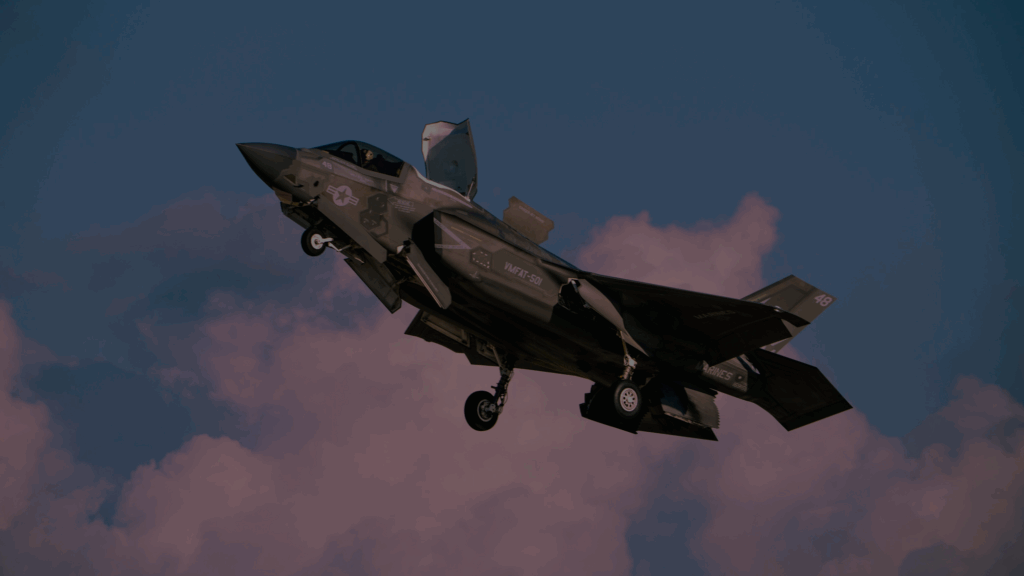





No Thermal Distortion
Particles bond in the solid state, so parts avoid the residual stress and warping that come with melting.

Cold Spray builds metal parts in the solid state, firing metal powder at supersonic speed so it bonds without ever melting. The result is strong, corrosion-resistant metal with no thermal distortion, well suited to aerospace, space, and defense parts.
Titomic Kinetic Fusion, also called Cold Spray Additive Manufacturing, is a solid-state process. It accelerates metal powder to supersonic speed and fuses it onto a surface without melting the material. That high-velocity bonding builds strong, corrosion-resistant parts with the mechanical properties needed for extreme environments like spaceflight and missile defense.
Because it skips the heat, Cold Spray avoids thermal stress and distortion. That makes it a good fit for large, high-strength parts with complex geometry or multi-material layering, and it can produce parts that would normally require casting, forging, or machining on a much shorter timeline.
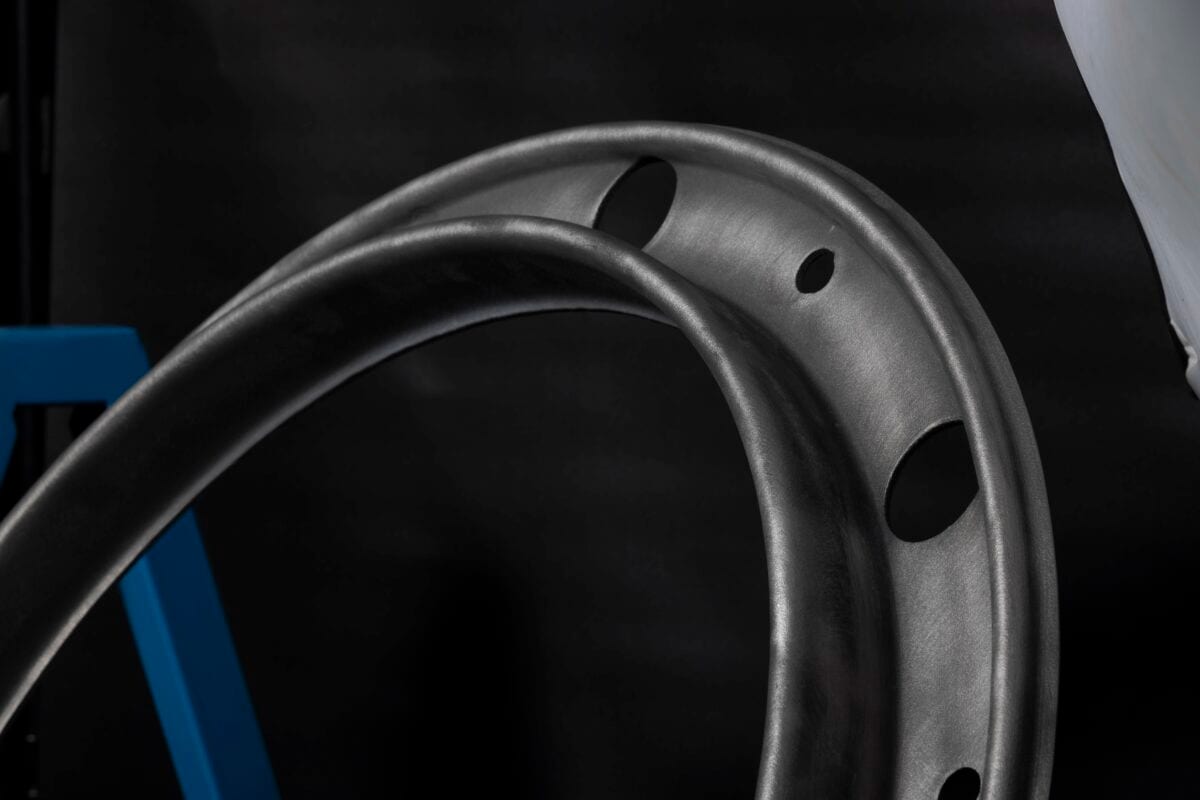
Evology and Titomic run a manufacturing partnership that pairs precision forming with advanced additive. We use our Digital Sheet Metal Forming process to build complex, tooling-free metal substrates quickly and at low cost.
Titomic then uses those formed parts as core substrates for the Kinetic Fusion Cold Spray process, bonding metal powder at supersonic speed to build production-ready components. Together the two steps deliver a scalable path for mission-critical parts in aerospace, space, and defense.
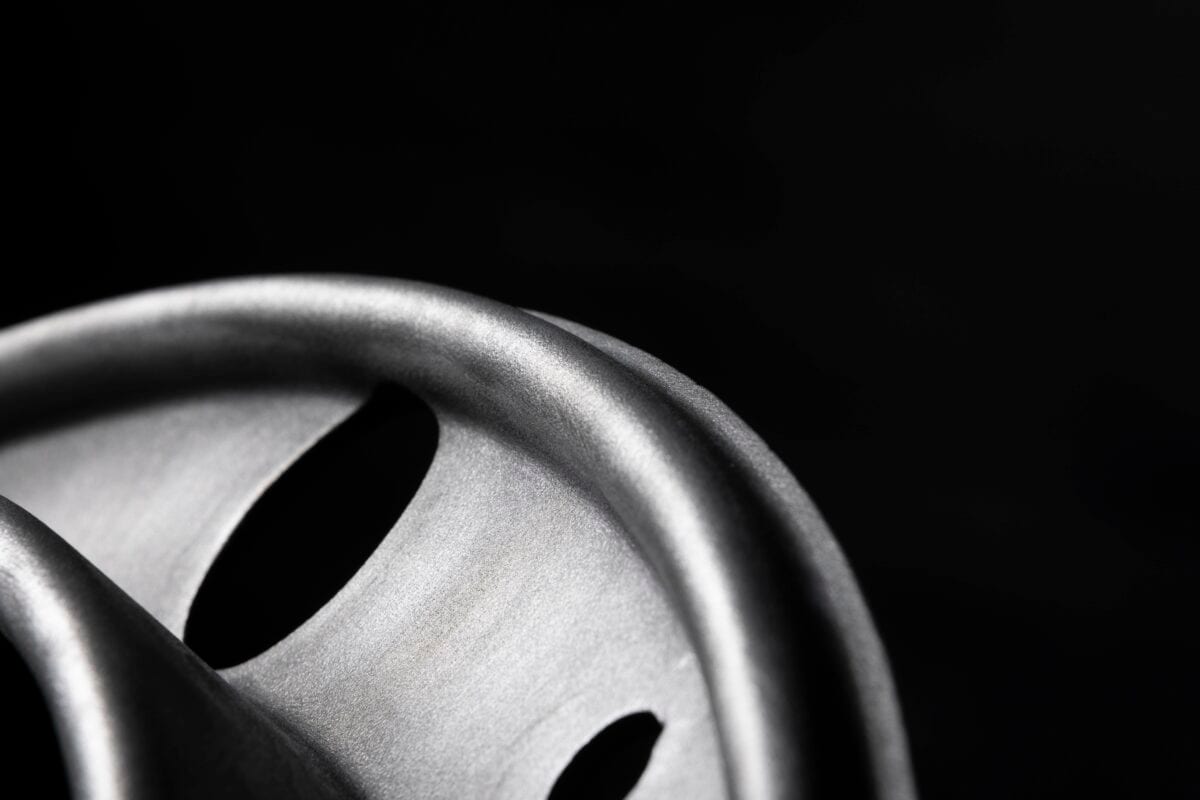
The solid-state process gives Cold Spray a set of traits that heat-based metal methods struggle to match.
Particles bond in the solid state, so parts avoid the residual stress and warping that come with melting.
Deposition reaches roughly 13 lb (6 kg) per hour, which makes the process practical for large or high-volume parts.
The bonded material holds high density, tensile strength, and corrosion resistance.
Cold spray can combine metals like steel and titanium in a single component or layered structure.
Worn or eroded surfaces can be rebuilt in place, restoring geometry and function without heat damage.
Only the metal that is deposited gets used, with no toxic fumes and minimal scrap.
Cold Spray suits large, durable metal parts and repairs across aerospace, defense, automotive, energy, and medical work. Common uses include:
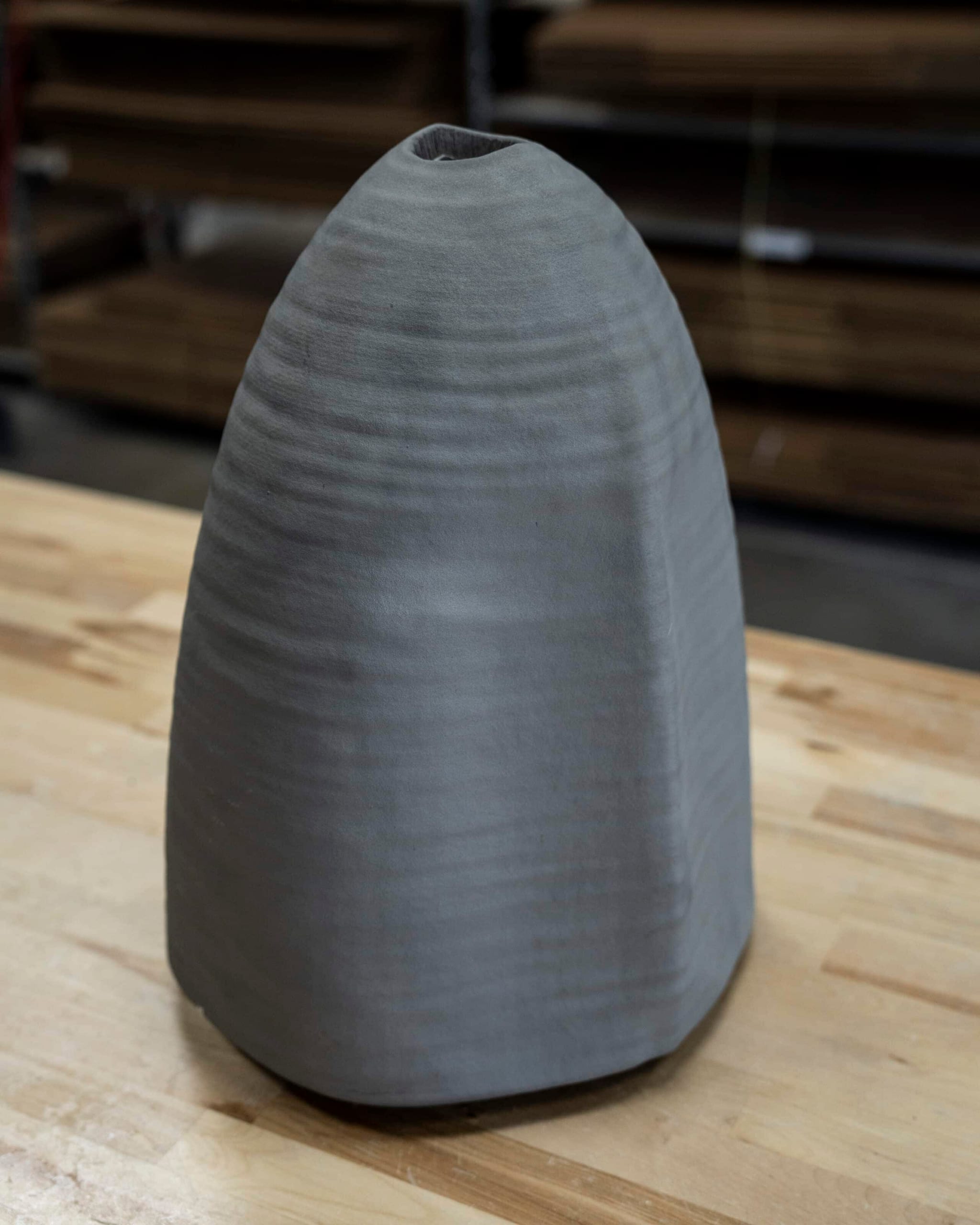
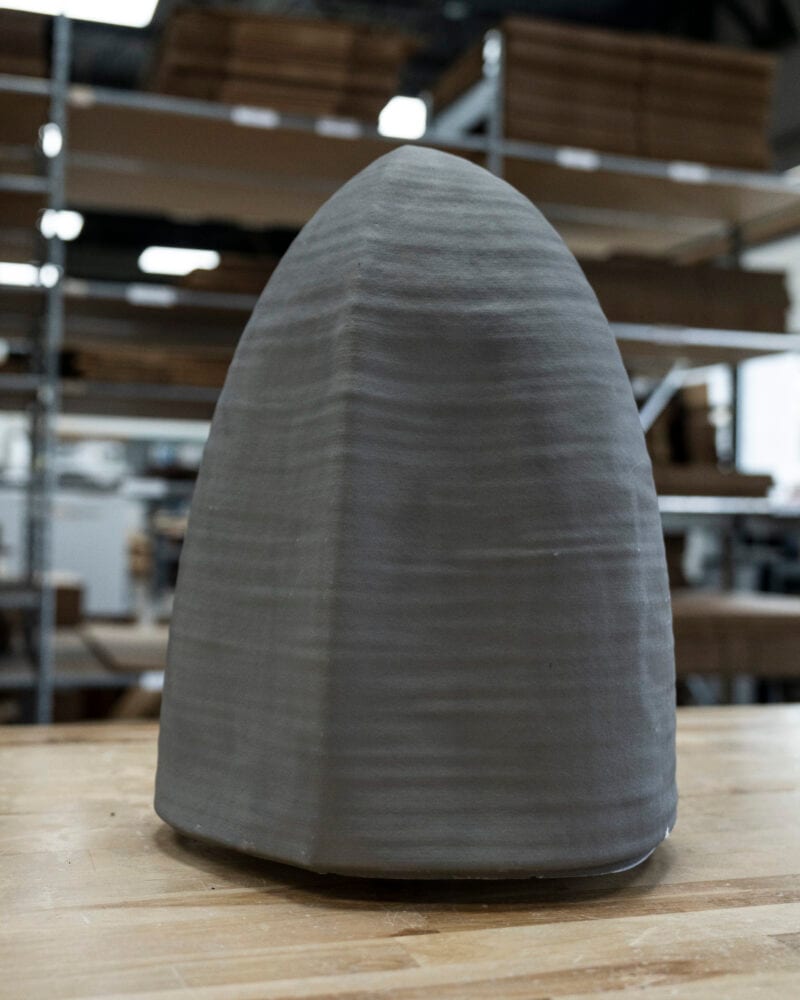
A sample of cold spray parts, including titanium nose cones built over DSMF-formed mandrels and large cylindrical components.
Cold Spray Additive Manufacturing is a solid-state metal process that builds parts by accelerating metal powder to supersonic speed with a high-pressure gas jet. The particles do not melt. They deform on impact and bond to the substrate, so the part keeps the mechanical properties and microstructure of the base material. Because there is no melting, the process avoids the thermal stress and distortion that come with heat-based methods.
Cold spray runs without melting the material, so there is no thermal distortion or residual stress. Build rates reach roughly 13 lb (6 kg) per hour, which suits large or high-volume parts. The deposited metal is dense and strong, with good corrosion resistance, and the process can fuse dissimilar metals such as steel and titanium in one component. It also wastes little material and works well for restoring worn surfaces.
Cold spray is used across aerospace, defense, automotive, energy, and medical manufacturing because it produces large, durable metal parts without the drawbacks of heat-based methods. Common applications include ballistic protection and armor plating, aircraft and satellite component repair, corrosion-resistant coatings for oil and gas parts, biocompatible implant coatings, and large cylindrical structures.
Yes. Cold spray is one of the more effective methods for metal repair and remanufacturing. It rebuilds worn or eroded surfaces without thermal stress, restores original geometry, and adds wear- or corrosion-resistant layers, all without the warping that welding or other thermal repairs can cause. That makes it a good fit for maintaining legacy equipment.
Cold spray works with a wide range of metal powders and blends, including titanium and Ti-6Al-4V, aluminum alloys such as 6061 and 7075, nickel-based alloys like Inconel 625 and 718, copper and precious metals, steel and stainless steel, and refractory metals such as tantalum and tungsten. Because the process does not melt the powder, it suits metals that are difficult to form or sensitive to heat.
Cold spray is more efficient than many traditional metal processes. It deposits only the material it uses, so waste is near zero. It produces no toxic fumes, needs no inert gas environment or high-energy lasers, and extends part life through efficient remanufacturing. For shops working to reduce reliance on overseas supply chains for spares and repairs, it offers a practical alternative.
Through our partnership with Titomic, we deliver precision-formed DSMF components for high-performance Cold Spray. Whether you build for space, aerospace, or defense, send us your part and we will scope the right approach.