



How Evology Helped Bring the EuroWise Cayenne Ultra to Life
How a switch from sheet metal to large-format FDM produced full-size carbon fiber layup molds for a one-off Porsche 958.2 build, on the timeline the project actually needed.
- Industry
- Automotive / Specialty
- Process
- Large-Format FDM
- Material
- ASA
- Application
- Carbon Layup Molds
Craftsmanship on a Deadline
Building a one-off vehicle is a balancing act between craftsmanship and deadlines. Push too hard on one, and the other usually suffers.
We recently worked with the team at EuroWise on their Cayenne project, an ambitious take on the Porsche 958.2 platform that pushes the SUV well past anything Stuttgart had in mind. Like most custom builds, it came with plenty of fabrication work, engineering problems, and last-minute calls that all had to line up before the vehicle's debut. One of those problems landed on our doorstep.
The Challenge: Fenders, Fast
The EuroWise team needed custom fenders for the project. More to the point, they needed the tooling to make those fenders, and they needed it quickly.
We first looked at Digital Sheet Metal Forming. DSMF is a strong option for low-volume, repeatable parts, but the best process on paper is not always the best process for the timeline in front of you.
The Approach: Large-Format FDM
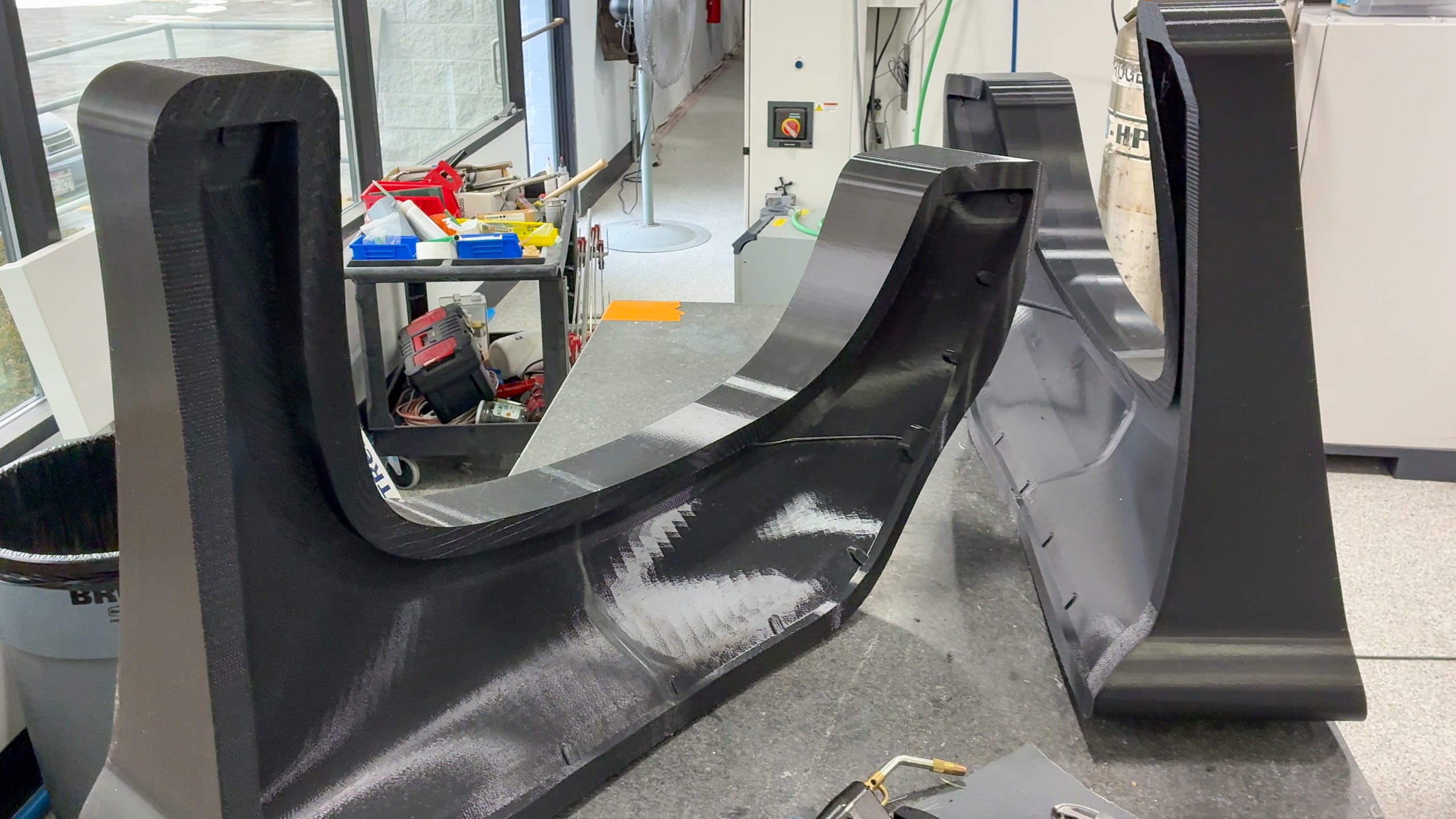
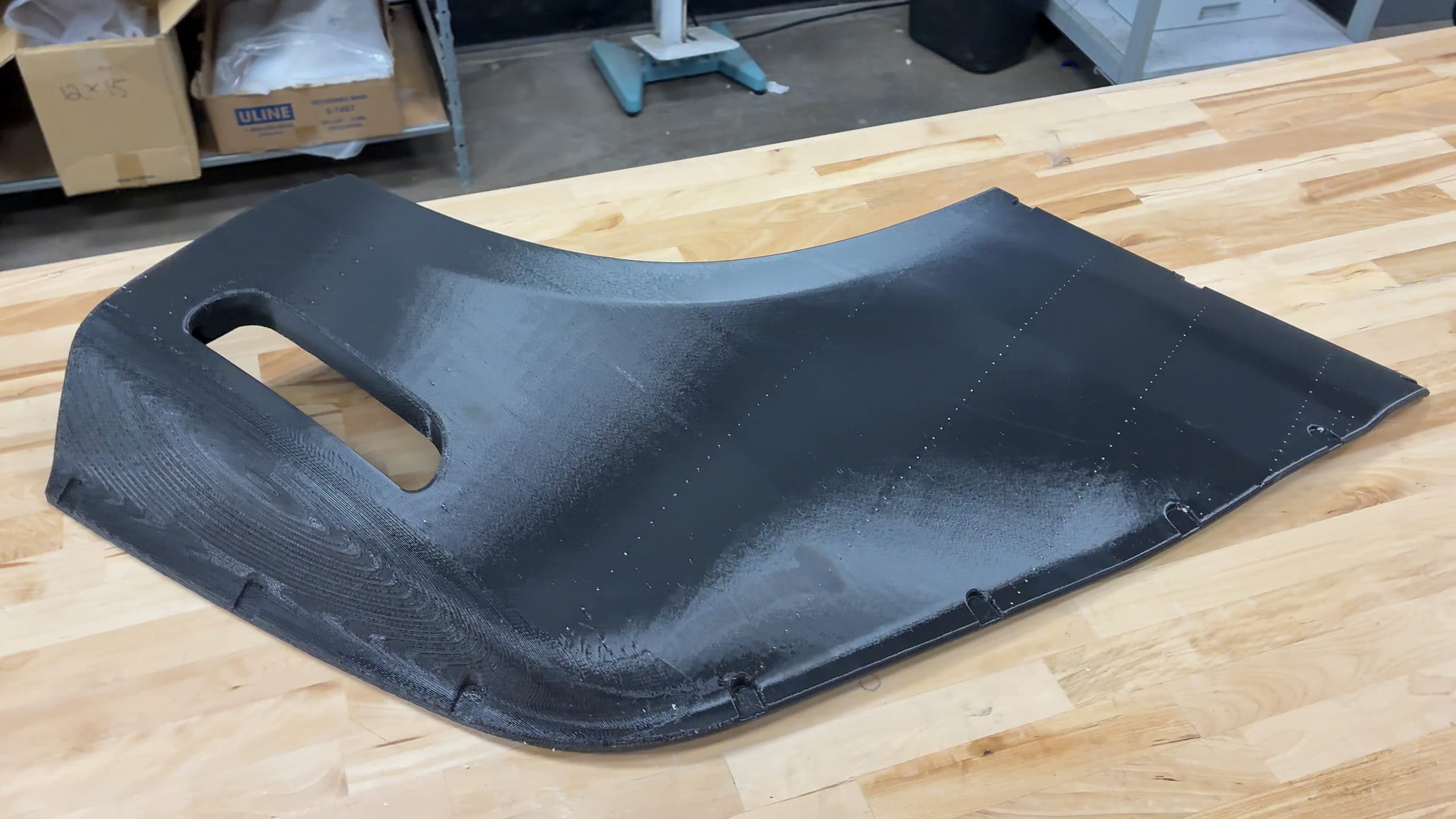
So we changed course and leaned on a strength of additive manufacturing. Using ASA on our Stratasys Fortus 900 FDM systems, we printed a full set of large-format carbon fiber layup molds for the project. Every Fortus 900 on our floor was switched over to the job in under three hours, running at a 0.020 in. layer height to get parts out fast while holding the dimensional accuracy the molds required.
Bigger Than the Build Volume
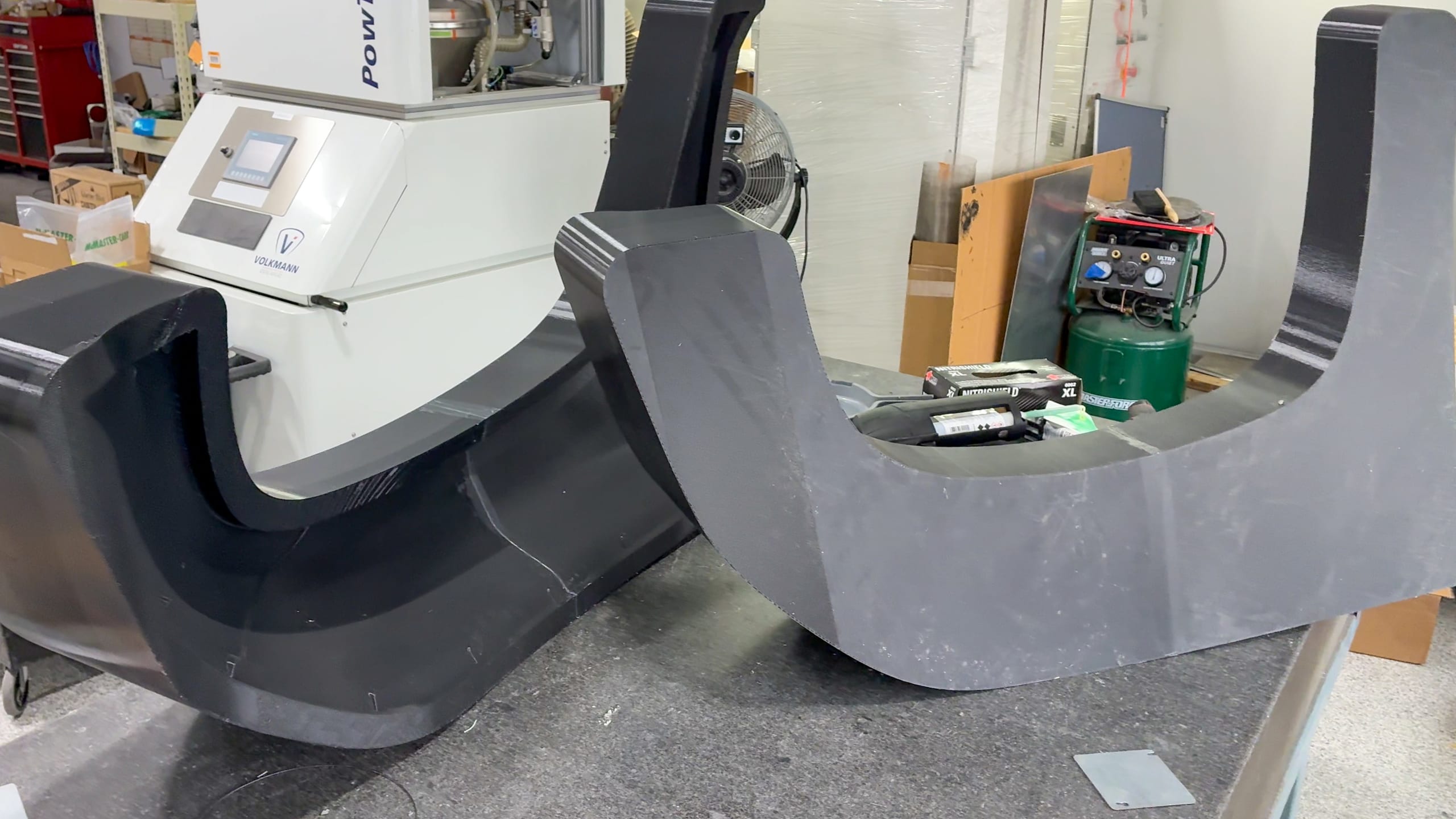
There was one catch. Some of the molds were larger than the machines that printed them. That is less of a problem than it sounds. We engineered the tooling in multiple sections, printed each one, then cut, bonded, and assembled them into the finished molds.
It is a technique we have used on automotive OEM, medical, and other projects where large parts, tight timelines, and complex geometry all show up at once. It worked just as well here.
Printing the Tool, Not the Part
Projects like this show a side of additive manufacturing people tend to overlook. The final product was not 3D printed. The molds that made it were.
Most conversations about additive manufacturing center on printing end-use parts. Some of the biggest gains come from everything around production instead: tooling, fixtures, molds, prototypes, and bridge manufacturing. These are the places where additive can save weeks of development time without changing the end product at all.
We always ask what you are trying to accomplish and what timeline it needs to be accomplished by. One of the reasons we have so many technologies in house is that we can offer multiple manufacturing solutions to the problem in front of us. In this case, we went from sheet metal to printed carbon fiber layup molds in a matter of days to get the customer the best solution for their timeline.
The Right Process for the Project
The Cayenne Ultra has made its debut, and we are proud to have played a part in getting it there. It is a good reminder that manufacturing is not about picking one technology over another. Sometimes the answer is additive. Sometimes it is Digital Sheet Metal Forming. Sometimes it is machining or traditional fabrication.
The goal is to find the right process for the project in front of you. For us, that has always been the fun part.
Project Specs
- Project
- EuroWise Cayenne Ultra
- Platform
- Porsche 958.2
- Technology
- Stratasys Fortus 900 FDM
- Material
- ASA
- Application
- Rapid tooling and composite mold production
- Manufacturing strategy
- Large-format FDM with segmented, bonded assemblies
- Industry
- Automotive, off-road, and specialty vehicle manufacturing
Moving Forward
If you have a build with a hard deadline, the right tooling can be the difference between making the debut and missing it. See how large-format FDM and rapid tooling can move your project forward, and explore the automotive work we support.

Have a Part Like This?
Send us your files and we will scope the right process, recommend a material, and get you a quote. From a single prototype to a low-volume run, our team turns complex parts around fast.