



Manufacturing Capabilities for Complex Geometries, Functional Parts & Production

Additive manufacturing, 3D printing services, precision machining, urethane casting, thermoforming, finishing, and Digital Sheet Metal Forming under one roof. As a single-source service bureau, we take engineering and procurement teams from concept to build-to-print production on timelines they can plan around.

  • Certified Small Business
  • ITAR Registered
  • ISO9001 / AS9100D Pending
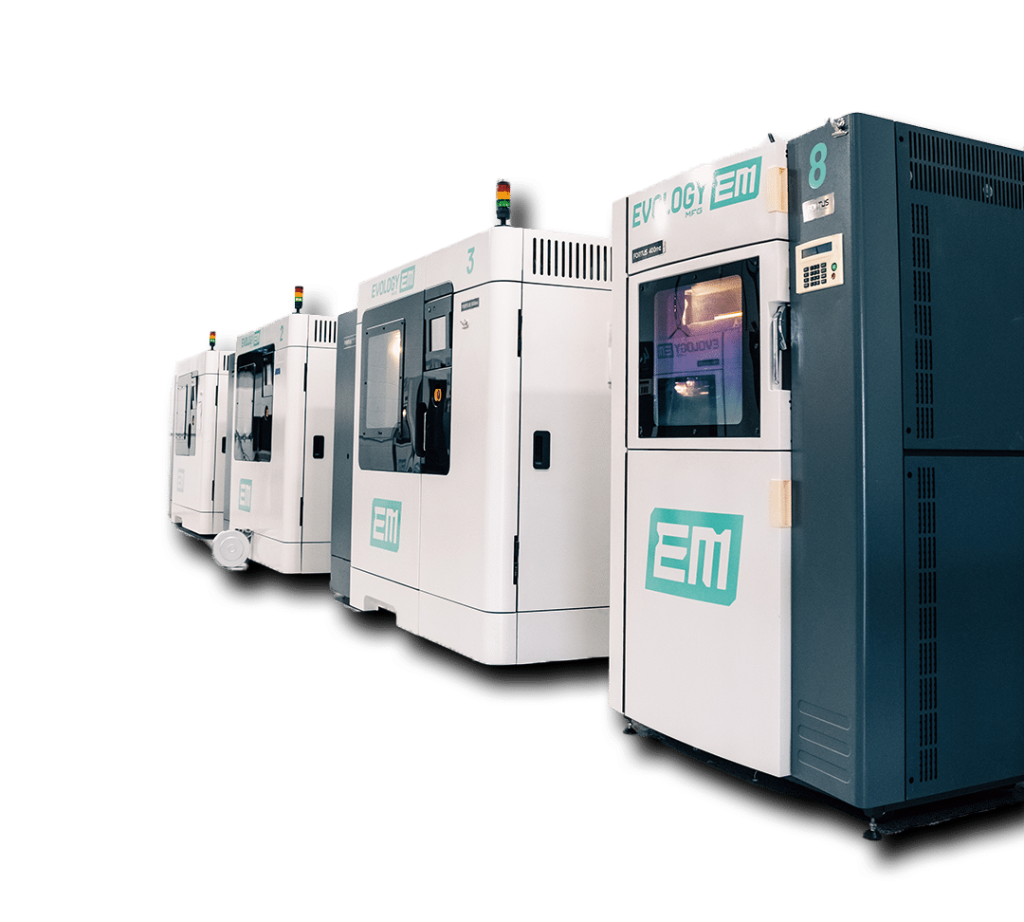
Evology additive and traditional manufacturing machines on the shop floor

Merging the Best in Additive & Traditional Manufacturing

Reliable processes plus additive innovation, so the right method wins for every part.

At Evology, we combine established traditional manufacturing processes with additive manufacturing to turn complex parts, prototypes, and products around quickly. Drawing on both fields lets us build geometries that a single process could not produce on its own.

Whether your program needs metal 3D printing for conformal cooling, large-format FDM tooling, urethane casting for short-run production, or precision machining for certified materials, we deliver build-to-print parts using the process that fits your geometry, volume, and timeline.

Industrial 3D Printing Services for Functional Parts and Production

From metal DMLS and cold spray to large-format FDM and high-detail PolyJet, our additive processes cover rapid prototyping, functional testing, low-volume production, and bridge programs across regulated industries.

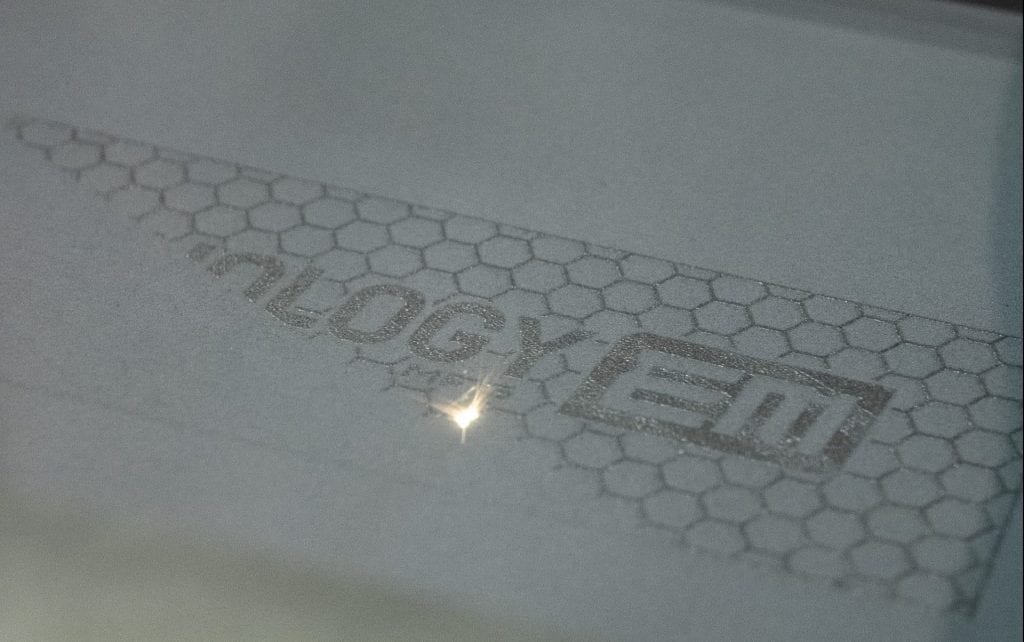
Laser fusing metal powder layer by layer during a DMLS build

Direct Metal Laser SinteringDMLS

DMLS ensures the accurate repeatability of quality metal 3D printed parts. The process allows for greater design flexibility, and no tooling or fixturing means we can print multiple parts with minor design changes between builds.

DMLS metal printing is a powder-bed process that uses microwelding to fuse material together. It excels at heat exchangers, conformal-cooling injection mold inserts, drill bits, casting replacement, and other functional metal parts. Our team has been printing metal on DMLS machines since 2004, and our growing fleet lets us react quickly to larger projects.

Best For
Functional metal parts, conformal cooling, heat exchangers, casting replacement.
Materials
Titanium, Aluminum, Inconel, Tool Steel, Stainless Steel, and more.
Tolerance
As tight as +/- 0.005" (0.13 mm) depending on geometry and post-processing.
Build / Run
Multiple platforms; expanding fleet for larger projects.

Common Use Cases

  • Heat exchangers
  • Conformal cooling inserts
  • Drill bits
  • Casting replacement
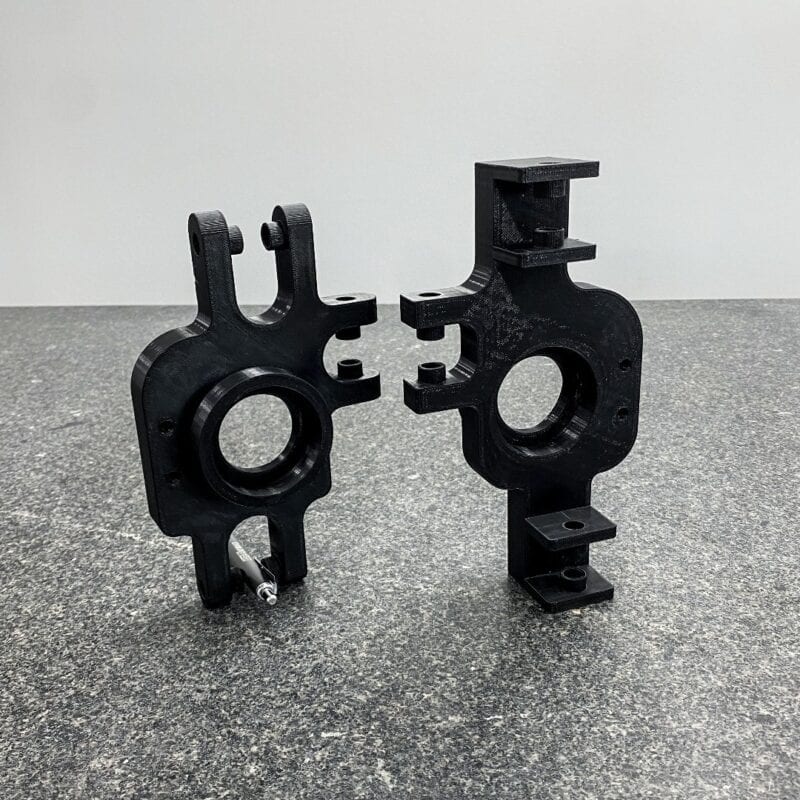
FDM-printed functional brackets in black thermoplastic

Fused Deposition ModelingFDM

FDM, also known as Fused Filament Fabrication, uses thermoplastic polymer filaments to build parts layer by layer along a predetermined path. Industrial-grade equipment lets our teams print larger models, hold tighter tolerances, and produce single-piece parts without reassembly.

Assembly fixtures, rapid tooling, brake-press tooling, rapid thermoforming tools, drill masks, metal-forming tooling, and functional plastic parts are just a few applications. We print in everything from ABS to Ultem, with our Fortus 900 machines providing a 24" x 36" x 36" (610 x 914 x 914 mm) build volume.

Best For
Tooling, fixtures, jigs, drill masks, and large functional polymer parts.
Materials
ABS, ASA, PC, PC-ABS, ESD-safe grades, Nylon 12, Ultem 9085, Ultem 1010, and more.
Tolerance
Industrial machines hold tight, repeatable tolerances over large geometries.
Build / Run
Up to 24" x 36" x 36" (610 x 914 x 914 mm) on Fortus 900.

Common Use Cases

  • Assembly fixtures
  • Brake-press tooling
  • Thermoform tools
  • Drill masks
  • End-use parts
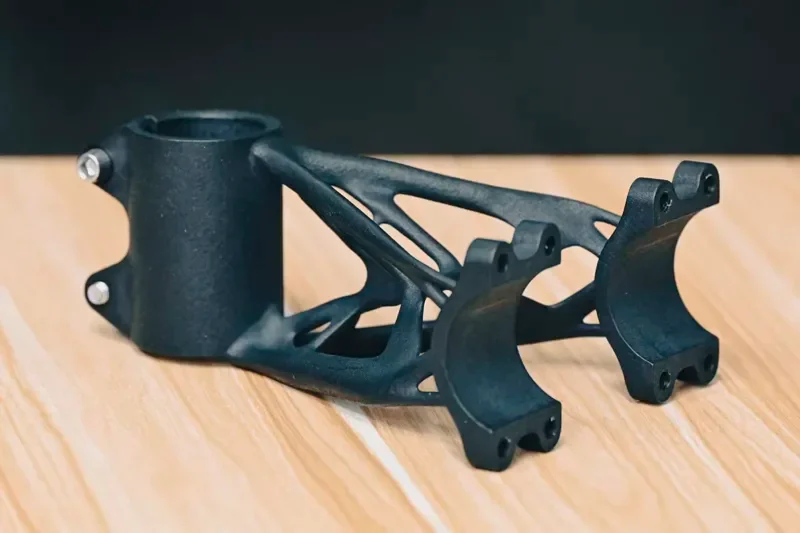
Topology-optimized SLS nylon bike stem from the powder bed

Selective Laser SinteringSLS

A true thermoplastic and a popular choice among engineers and manufacturers, SLS is a strong fit for low-volume production with ROI/break-even paybacks that beat injection molding. Many racing teams, including Formula 1, turn to SLS for strong functional parts with quick iteration for wind-tunnel testing.

Our experts use SLS for rapid prototyping, product mockups, functional prototyping, end-use part production, stop-gap manufacturing, and models. Typically nylon-based, we offer glass-filled and non-glass-filled materials to rapidly grow your future injection-molded component or support low-volume production.

Best For
Functional nylon parts, low-volume production, and bridge tooling.
Materials
Glass-filled Nylon 12 standard; unfilled PA12, carbon-filled nylon, and TPU 88A by request.
Tolerance
Production-grade repeatability suitable for fit and function.
Build / Run
Multiple platforms scaled for prototype through bridge production.

Common Use Cases

  • Wind-tunnel parts
  • End-use components
  • Bridge production
  • Stop-gap manufacturing
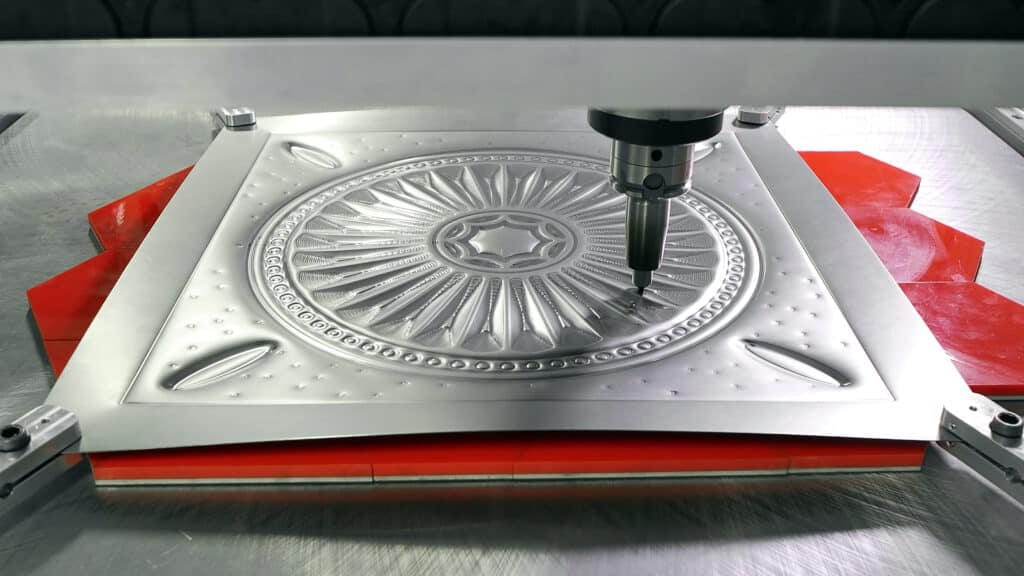
Sheet metal part formed without dies using Digital Sheet Metal Forming

Digital Sheet Metal FormingDSMF

Digital Sheet Metal Forming is the latest advancement in our field. By eliminating expensive die manufacturing, DSMF lets us create sheet metal parts in minutes and hours instead of days and weeks, which saves both time and money.

Single-point forming creates the intricate contours common in automotive, aerospace, and industrial parts. The process holds the accuracy and repeatability to handle complex shapes that used to require hard tooling.

Best For
Complex sheet metal contours, small-to-medium batches, and rapid prototyping without hard tooling.
Materials
Aluminum, steel, stainless, and other formable sheet metals.
Tolerance
Precise, repeatable forming controlled point by point.
Build / Run
Single parts through small and medium production batches.

Common Use Cases

  • Automotive panels
  • Aerospace contours
  • Industrial parts
  • Rapid prototypes
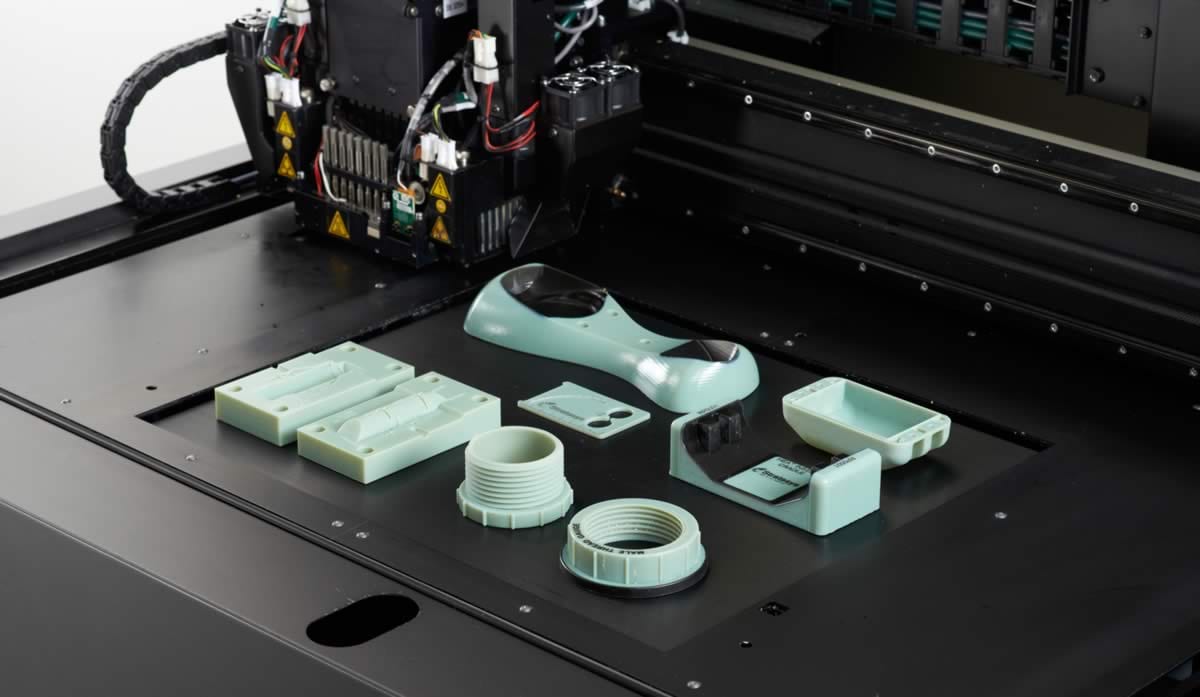
Multi-material PolyJet parts on the printer build tray

PolyJet 3D PrintingPolyJet

PolyJet jets photopolymer droplets and cures them with UV light, building detailed parts and prototypes in hours. The process holds fine features and produces smooth surfaces straight off the machine.

It works well for multi-color parts and accurate assembly models. We have also printed silicone molds from this process for gaskets and other infusion parts.

Best For
Multi-material and multi-color models, detailed prototypes, and silicone tooling masters.
Materials
Rigid, flexible, transparent, and multi-color photopolymers.
Tolerance
Industry-leading accuracy and surface finish.
Build / Run
Production-grade build envelopes for assemblies and presentation models.

Common Use Cases

  • Multi-color prototypes
  • Soft-touch overmolds
  • Silicone mold masters
  • Marketing models
Metal component built with Titomic Kinetic Fusion cold spray additive manufacturing

Titomic Kinetic Fusion Cold SprayTKF

Cold spray builds metal parts by accelerating powder particles to supersonic speeds so they bond on impact, without melting. Because the process stays well below the melting point, parts avoid the heat distortion and residual stress that come with fusion-based metal printing.

Through our partnership with Titomic, we run Titomic Kinetic Fusion to produce large-format metal parts, apply protective coatings, and repair high-value components. It pairs well with Digital Sheet Metal Forming when a project needs near-net metal shapes at scale.

Best For
Large-format metal parts, coatings, and repair of high-value components.
Materials
Titanium, copper, aluminum, nickel alloys, and bi-metallic combinations.
Tolerance
Near-net shapes finished to print with secondary machining.
Build / Run
Large build envelope suited to oversized metal geometries.

Common Use Cases

  • Large metal parts
  • Protective coatings
  • Component repair
  • Bi-metallic structures
Clear SLA resin parts with fine lattice detail

StereolithographySLA

SLA, also known as resin 3D printing, selectively cures polymer resin layer by layer using an ultraviolet laser. Our SLA capabilities deliver very high dimensional accuracy and intricate features, with smooth surface finishes ideal for visual prototypes and detailed assembly models.

We typically print the majority of our SLA parts in clear material to visualize interference fits in complex injection-molded assemblies and to simulate lenses for lighting fixtures.

Best For
High-detail visual prototypes, fit-and-finish models, and clear lens simulations.
Materials
Standard resins, clear, tough, and high-temp options.
Tolerance
Very high dimensional accuracy with smooth surface finish.
Build / Run
Multiple build envelopes for small to medium parts.

Common Use Cases

  • Visual prototypes
  • Lens simulation
  • Interference checks
  • Master patterns

Machining, Casting, Forming & Finishing

Subtractive and forming processes that deliver tight tolerances, certified materials, and production-grade finishes. We pair them with additive whenever a hybrid approach lowers cost or shortens the timeline.

Precision Machining

Also known as subtractive manufacturing, machining creates the desired shape by removing material from a larger workpiece. Our experienced craftspeople and trusted manufacturing partners use machining processes to deliver multi-component parts, products, and prototypes for clients across every major industry.

Best For
Tight-tolerance metal parts, certified materials, and multi-component assemblies.
Materials
Aluminum, steel, stainless, brass, copper, plastics, and engineering alloys.
Tolerance
Held per print; tight tolerances available on critical features.
Build / Run
Trusted partner network for prototype to production runs.

Common Use Cases

  • Aerospace fittings
  • Defense hardware
  • Medical components
  • Industrial assemblies

Turning

Turning is a form of machining that uses a lathe and cutting tool to remove material from external and internal surfaces. We use traditional turning to create precision machined parts and products across aerospace, mechanics, healthcare, and military programs.

Best For
Cylindrical and rotational components requiring tight diameter control.
Materials
Engineering metals, alloys, and machinable plastics.
Tolerance
Precision diameters, surface finish, and concentricity.
Build / Run
Single piece through small-batch production.

Common Use Cases

  • Shafts
  • Bushings
  • Pins
  • Custom fasteners

Milling

Milling is a form of machining that uses rotating cutters to remove material as a tool advances into the workpiece. This method is great for everything from small parts to large, heavy-duty pieces because it can be done at high speed, provides excellent surface finish, increases productivity, and ensures accuracy.

Best For
Pocketed, contoured, and prismatic parts in metal or plastic.
Materials
Engineering metals, alloys, and machinable plastics.
Tolerance
Tight tolerances with quality surface finish.
Build / Run
Small parts to large, heavy-duty pieces.

Common Use Cases

  • Brackets
  • Manifolds
  • Plates
  • Mold bases

Urethane Casting

Similar to injection molding, urethane casting creates parts by injecting polyurethane and additive resins into a soft mold. The process is great for short runs and low-to-medium volume production thanks to its cost efficiency. Temporary silicone molds deliver quality at a lower price point than metal tooling, bridging the gap between printed functional parts and rapid injection molding.

Best For
Production-quality short runs and bridge tooling between print and injection molding.
Materials
Polyurethane resins with additive options for color, hardness, and flexibility.
Tolerance
Production-quality repeatability across the run.
Build / Run
10s through low-hundreds per silicone mold.

Common Use Cases

  • Pre-launch parts
  • Marketing samples
  • Short-run housings
  • Soft-touch components

Thermoforming

By heating thermoplastics and using vacuum or pressure forming, we create parts, products, and prototypes for our clients. Thermoforming is efficient and cost-effective, allows for shorter lead times, and gives engineers greater design freedom.

Best For
Large enclosures, trays, covers, and packaging-style geometries.
Materials
ABS, PETG, polycarbonate, HDPE, and additional thermoplastic sheet.
Tolerance
Suited to medium-tolerance enclosure and tray applications.
Build / Run
Cost-effective for medium and larger sheet sizes.

Common Use Cases

  • Enclosures
  • Trays
  • Covers
  • Packaging prototypes

Finishing & Painting

Our experienced craftspeople use several finishing techniques to add the final details to parts, products, and prototypes. These services let us offer turnkey prototyping that is ready to use the moment it leaves our facility.

Best For
Turnkey delivery of presentation-grade and end-use parts.
Materials
Sanding, smoothing, primer, paint, and texturing on additive and traditional parts.
Tolerance
Cosmetic-grade finish to spec.
Build / Run
Prototype quantities through low-volume production.

Common Use Cases

  • Show models
  • Painted housings
  • Color-matched prototypes
  • Smoothed FDM parts

Combining Technologies to Build Hard-to-Make Parts

Evology handles your project end to end. Our team picks the production method that fits each part and keeps an eye on cost, accuracy, and turnaround. Send us your files to get started.

Process Selection, Tolerances & Production Readiness

Which Evology manufacturing capability is best for functional metal parts?

For most functional metal parts we recommend Direct Metal Laser Sintering (DMLS) when geometry, conformal cooling, or weight savings matter, and precision machining when material certification, surface finish, or cost-per-part are the driving factors. Our team can recommend a process after reviewing your part files and requirements.

What tolerances can DMLS hold at Evology?

DMLS tolerances can be as tight as +/- 0.005" in some cases. Final tolerances depend on geometry, build orientation, post-processing, and material. We have been printing metal on DMLS machines since 2004.

How large can FDM parts be printed?

Our Fortus 900 industrial FDM machines support a build volume of 24" x 36" x 36", enabling large single-piece parts, tooling, and assembly fixtures without reassembly.

Can Evology support low-volume production, not just prototypes?

Yes. SLS, urethane casting, and machining are all good fits for low-to-medium volume production with ROI that frequently beats injection molding for short runs. We also support bridge production while injection tooling is being built.

Do you offer Digital Sheet Forming for short-run sheet metal parts?

Yes. Digital Sheet Forming (DSMF) eliminates expensive die manufacturing by forming sheet metal with a single forming point. It is ideal for small-to-medium production batches and rapid prototyping of automotive, aerospace, and industrial contours.