




Industrial-Scale Printing
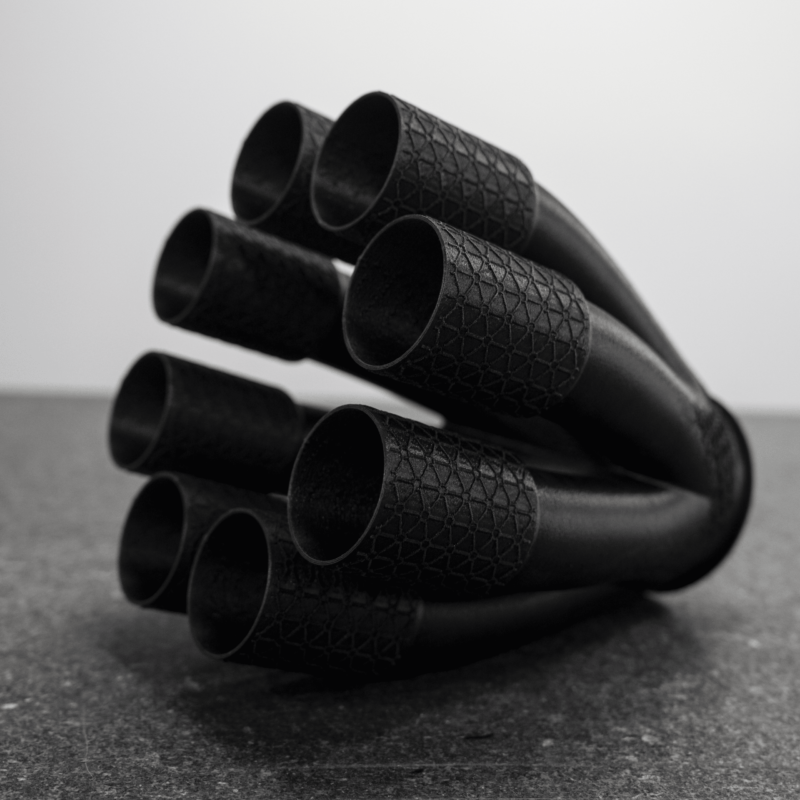
Our industrial machines build large parts in one piece, with no reassembly. That saves time and keeps the part structurally sound where a glued-together model would be weak.

Fused Deposition Modeling (FDM) builds durable thermoplastic parts layer by layer. Our industrial Stratasys Fortus machines take it well past the desktop, printing large, complex parts in production-grade materials with fast turnaround.
FDM is where many hobbyists start, but our fleet of industrial printers works on a different scale. The machines build large, complex parts to tight tolerances, and we turn them around on short timelines.
Because the process needs no tooling, we move from a CAD file to a finished part quickly and revise a design without waiting on new molds or fixtures. That suits prototypes, jigs and fixtures, and end-use production parts alike.
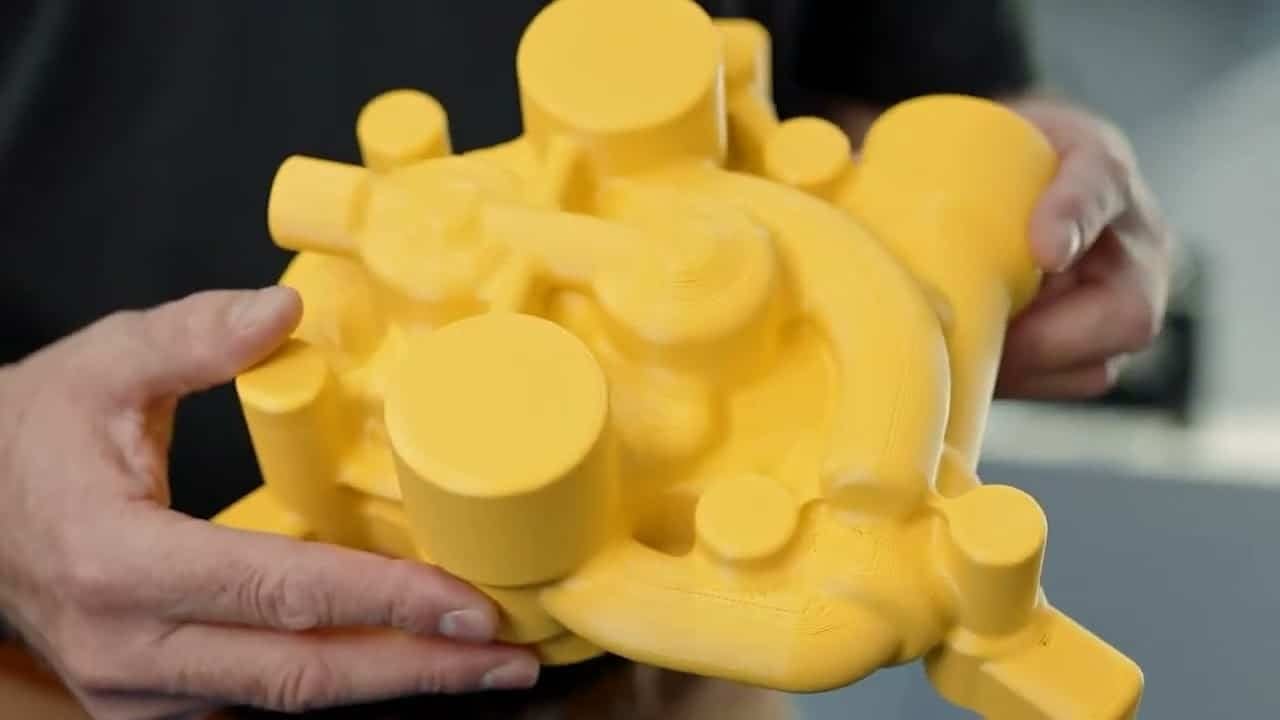
Industrial FDM earns its place where parts need to be large, durable, and ready on a tight schedule. Three traits set our process apart from desktop printing.
Our industrial machines build large parts in one piece, with no reassembly. That saves time and keeps the part structurally sound where a glued-together model would be weak.
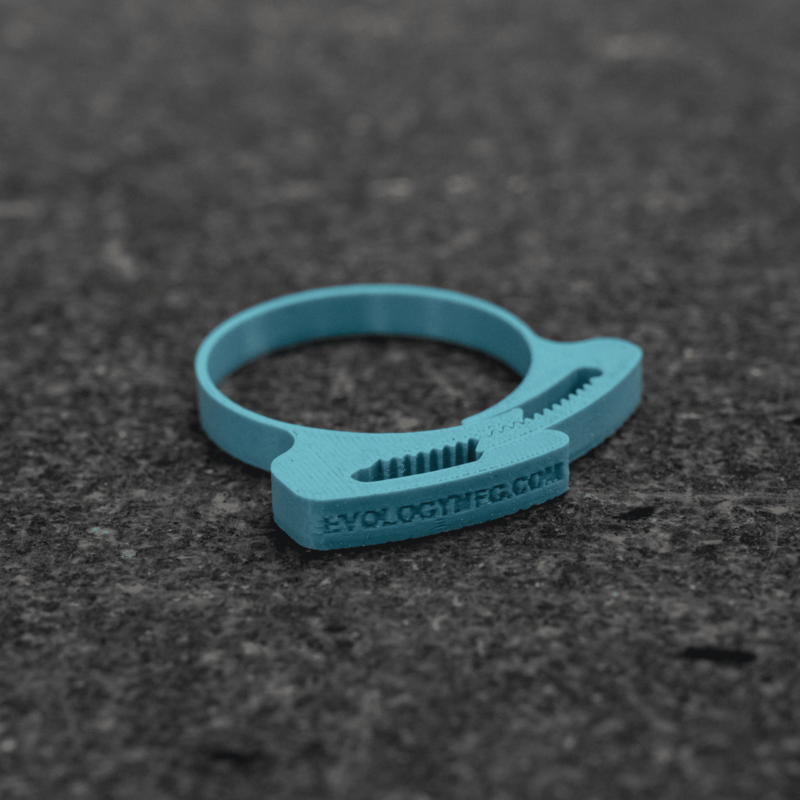
The Fortus platform holds tighter tolerances than most FDM equipment, so detailed features and fine text come out clean. That holds true whether the part is a one-off or a short run.
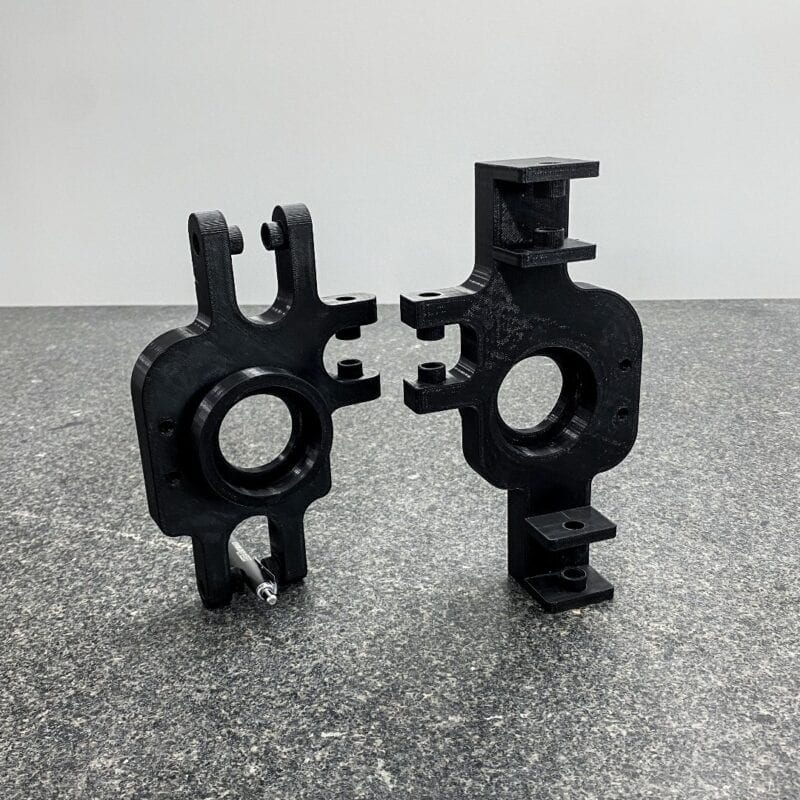
From ABS to Ultem, we run a deep catalog of thermoplastics. That lets us match the material to the load, temperature, and chemical exposure a part will see in service.
FDM handles a wide range of work, from shop-floor tooling to functional plastic parts. Here is where our customers put it to use most often.
Custom holders and locating fixtures that keep parts consistent and speed up work on the assembly line.
Jigs, guides, and short-run tooling produced in days instead of weeks, with no machining setup.
Press brake dies that form sheet metal without the cost or lead time of machined steel tooling.
Form and trim tools for low-volume thermoforming, ready faster than machined aluminum.
Drill guides that locate holes accurately on complex, contoured, or hard-to-reach surfaces.
Durable tooling that holds up under forming loads for prototype and low-volume metal parts.
End-use components in production-grade thermoplastics, from brackets and housings to ducts.
Our Stratasys Fortus 900 machines give us a 36 in. x 24 in. x 36 in. (914 x 610 x 914 mm) build volume, so we can print large parts in one piece. Typical tolerances run +/- 0.004 to 0.008 in. (0.1–0.2 mm) depending on the material and geometry.
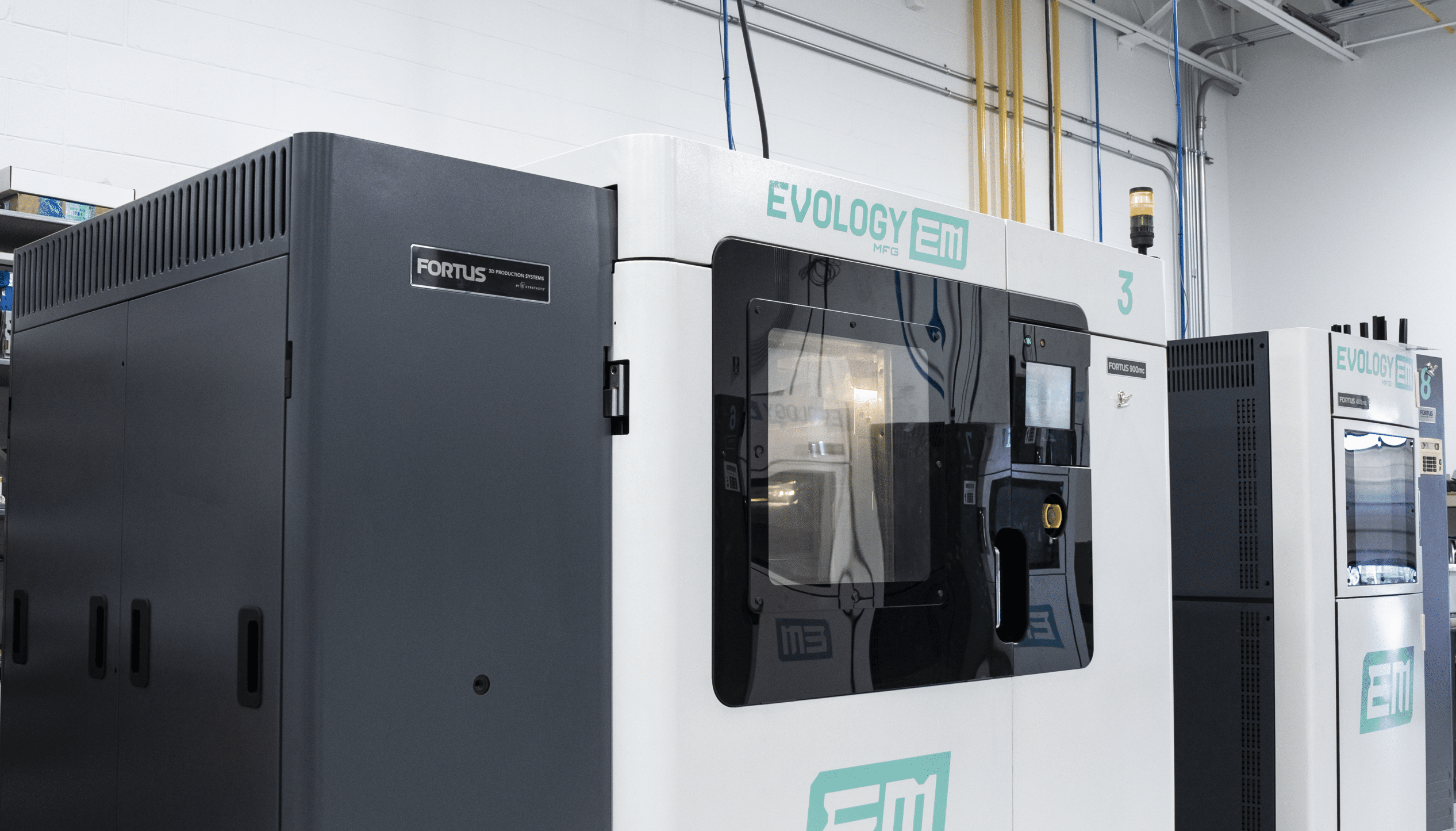
ESD-safe grades are part of our standard FDM offering. Where a material has its own page, open it for typical properties, orientation guidance, and a downloadable datasheet. Beyond the materials below, any thermoplastic in the Stratasys FDM catalog is fair game, from engineering ABS and nylons to high-temp ULTEM, PEKK, and PEEK. Tell us the load, temperature, and chemical exposure your part will see and we will match the material.
Click a material for full specs and a downloadable datasheet.
We run a fleet of industrial Fortus machines, which lets us scale a job up when a deadline is tight and keep printing around the clock. Our FDM parts ship into automotive, aviation, and consumer goods programs.
We use FDM for more than prototypes and models. It produces functional, end-use parts quickly, and it pairs well with the rest of our manufacturing capabilities when a project needs more than one process.
Fused Deposition Modeling, also called Fused Filament Fabrication (FFF), melts a thermoplastic filament through a heated extruder and lays it down layer by layer to build a part. It is widely used for prototyping, functional testing, and small-batch production because it is affordable, works with many materials, and produces durable parts.
FDM is one of the most cost-effective 3D printing methods, and it runs a wide range of thermoplastics, from ABS and nylon to polycarbonate, PEEK, and TPU. The parts are durable enough for functional prototypes, tooling, and end-use applications. When you need volume on a deadline, we can put more machines on the job. That mix of cost, material choice, and turnaround fits work in automotive, aerospace, and consumer goods.
FDM covers functional and aesthetic prototypes, custom tools and jigs for the shop floor, durable end-use parts for small-batch runs, educational models, and replacement parts for older machinery. It adapts to a wide range of designs, which is why it gets used across so many industries.
We print a broad range of thermoplastics, including ABS, ASA, PETG, TPU, polycarbonate, PC-ABS, Nylon 12, carbon-filled nylon, Ultem 9085 and 1010, and Antero (PEK). Each one trades off strength, heat resistance, flexibility, and chemical resistance differently, so we match the material to how the part will be used.
Accuracy depends on machine calibration, material, and layer height. Most FDM parts hold tolerances within +/- 0.004 to 0.008 in. (0.1 to 0.2 mm), which suits prototypes, functional testing, and parts that need moderate precision. We run Stratasys Fortus systems, which hold that range reliably across a variety of thermoplastics.
Our FDM equipment builds parts up to 36 in. x 24 in. x 36 in. (914 x 610 x 914 mm), so we handle everything from small, detailed designs to large industrial components. For oversized work, we can print in sections and assemble them.
Print time depends on layer height, infill, and part complexity. Simple parts can finish in a few hours, while intricate ones may take a day or more. We tune the print settings for each job to balance speed and quality, and more than 90% of our orders ship on or before their projected date.
Our Stratasys Fortus machines are built for production. They use dual-head extrusion, with one head laying down the model and the other building support material, so they print intricate geometry that desktop machines struggle with. Multiple material bays and automatic switchover let them run continuously without constant monitoring.
Send us your design and one of our estimators will review it for FDM. We will confirm the material, build size, and timeline, then get you a quote.
Automotive · Large-Format FDM
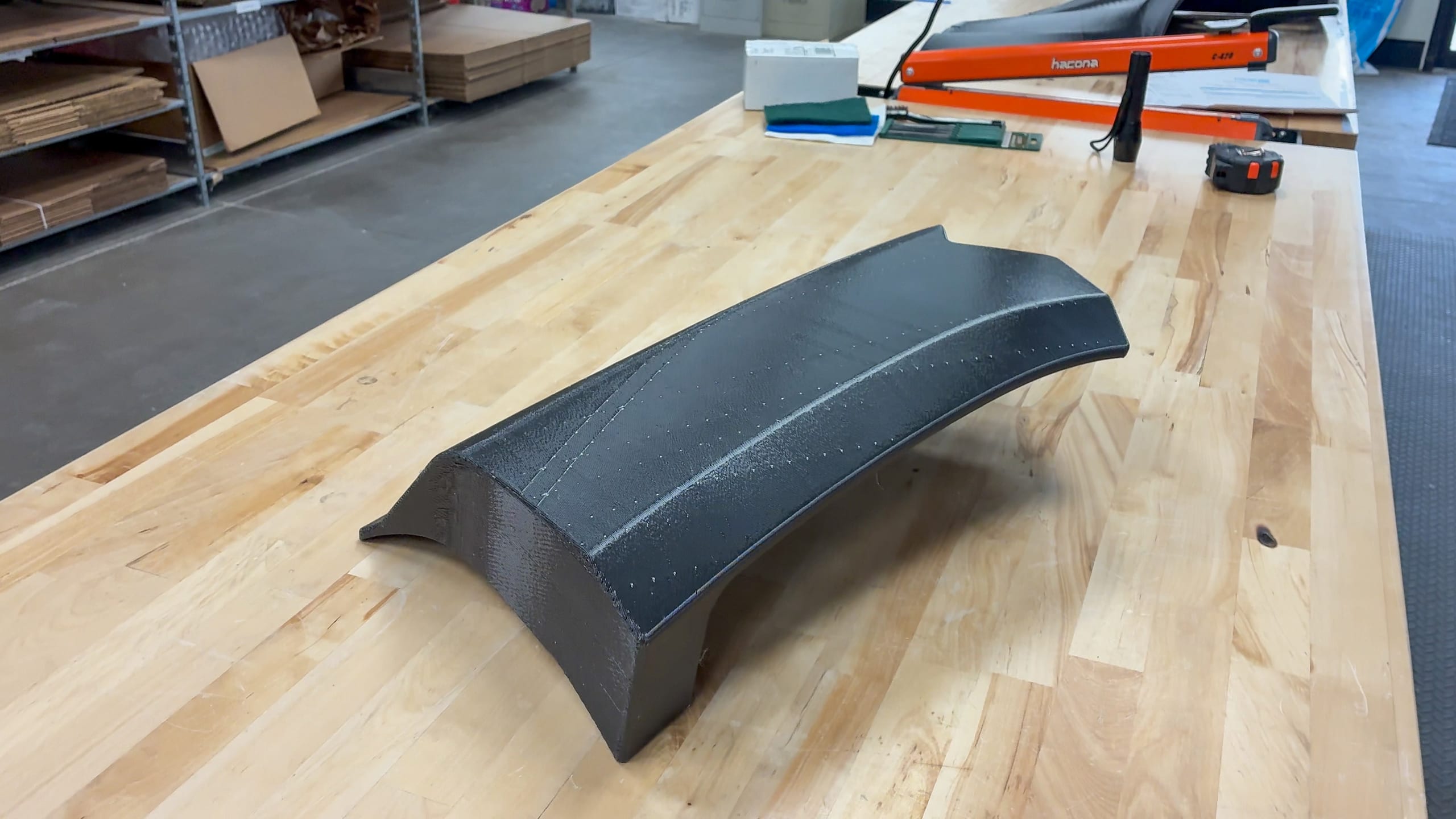
When EuroWise needed custom fenders for their Cayenne Ultra and needed them fast, Evology moved from Digital Sheet Metal Forming to large-format FDM, printing a full set of carbon fiber layup molds in ASA on Stratasys Fortus 900 systems.
Read the Case Study →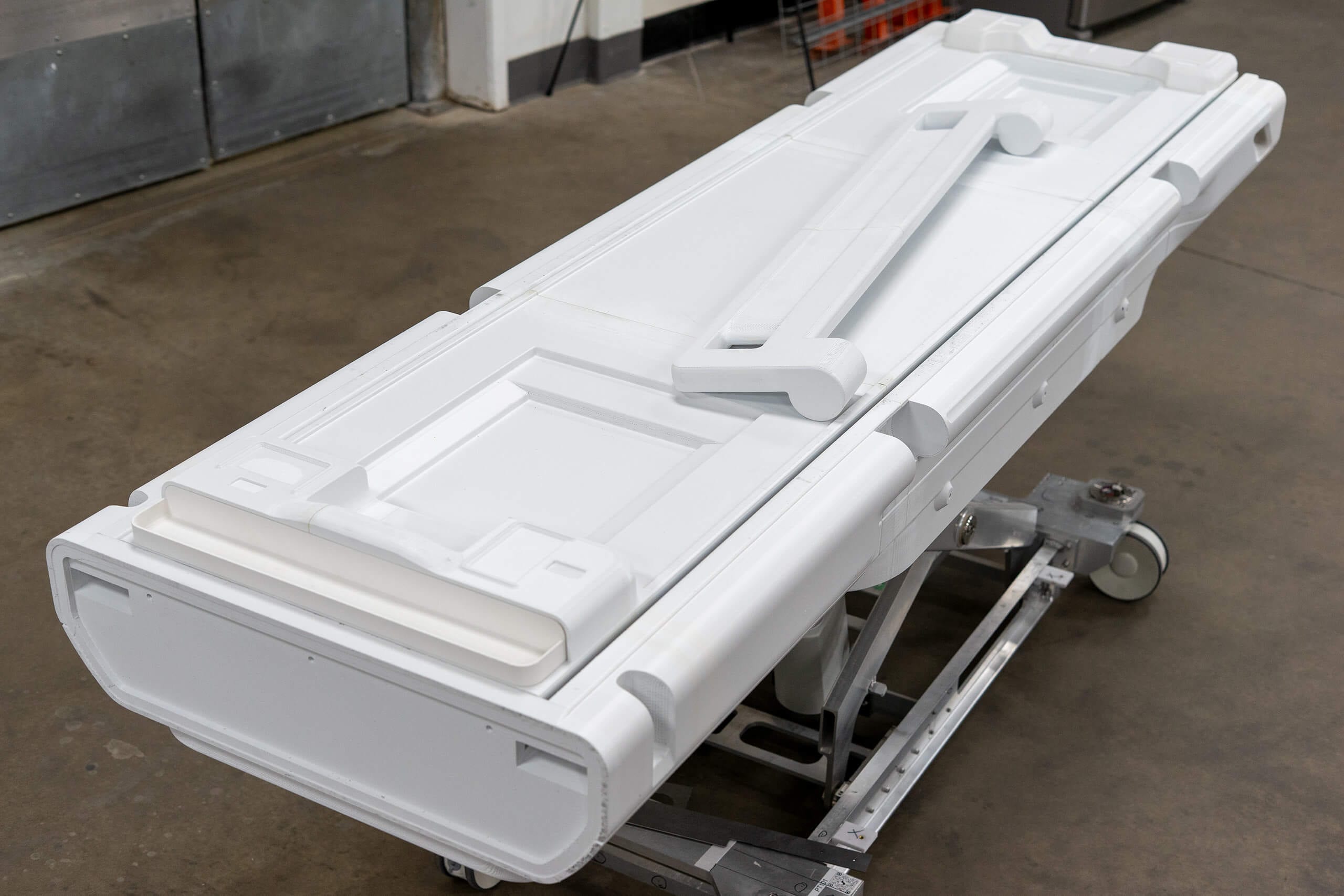
Medical · Large-Format FDM
When a leading medical equipment maker needed full-scale MRI patient tables and docks for a major trade show, traditional methods could not hit the size, complexity, or deadline. Evology delivered with large-format FDM.
Read the Case Study →