







Material Thinning
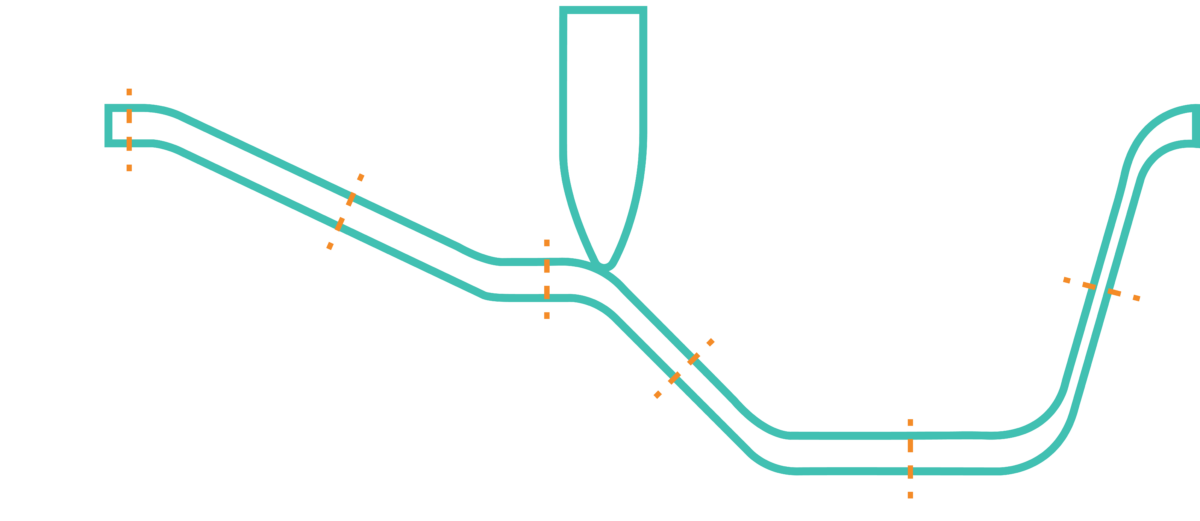
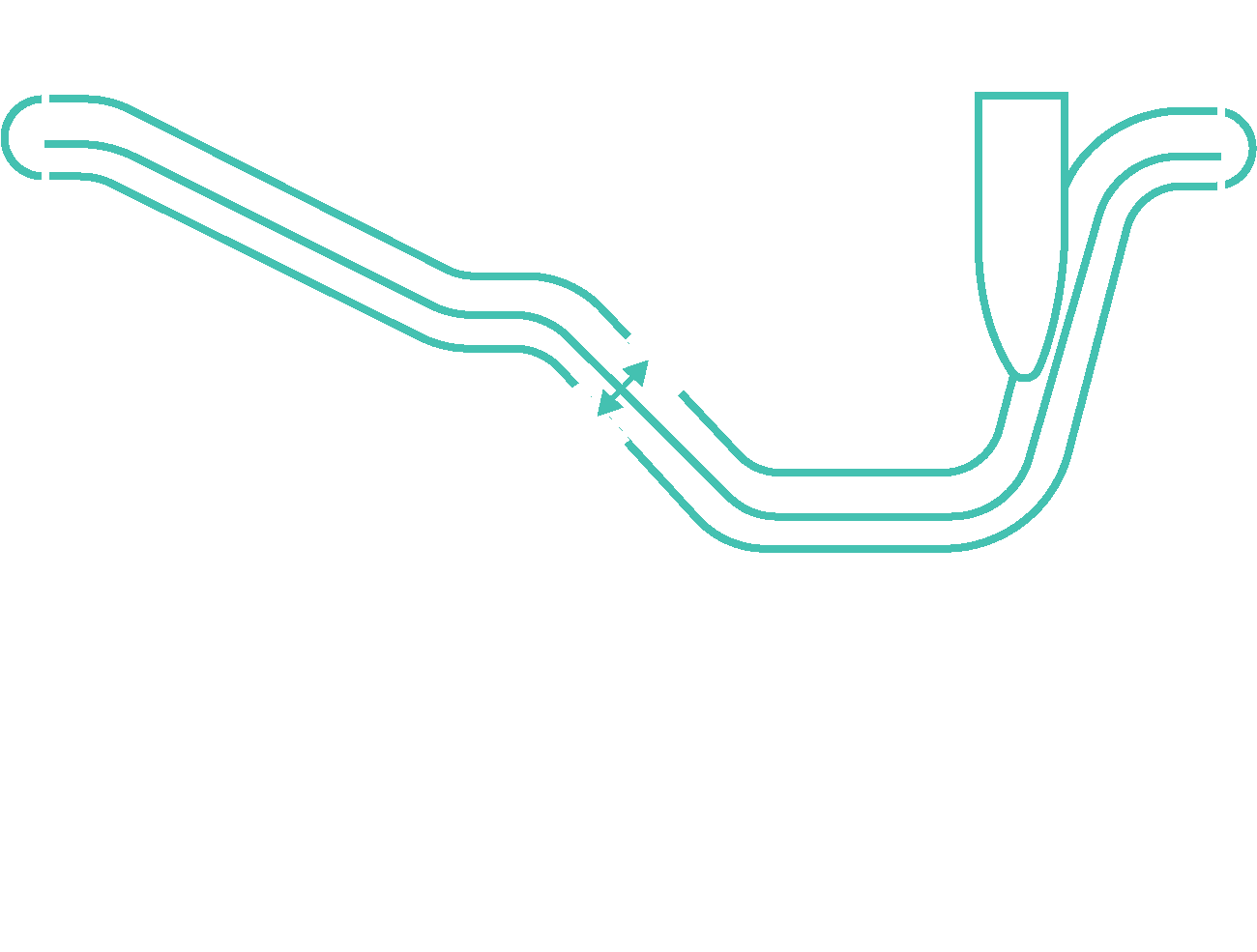
As a part forms, the material is incrementally thinned along each wall. The amount of thinning is driven by the wall angle of the design, so steeper walls thin more than shallow ones.

Digital Sheet Metal Forming (DSMF) shapes sheet metal directly from your CAD file, with no dies and no hard tooling. That means shorter lead times, faster production, and lower cost than traditional stamping. There is virtually no minimum order quantity, so it works just as well for a single prototype as for a low-volume run.
Traditional sheet metal methods depend on expensive dies and stamping tools that can take weeks to build. DSMF skips that step, so you get shorter lead times, faster production, and a lower cost per part.
It also has virtually no minimum order quantity. You can form a single prototype or a short production run, and move from concept to finished metal in hours instead of weeks.
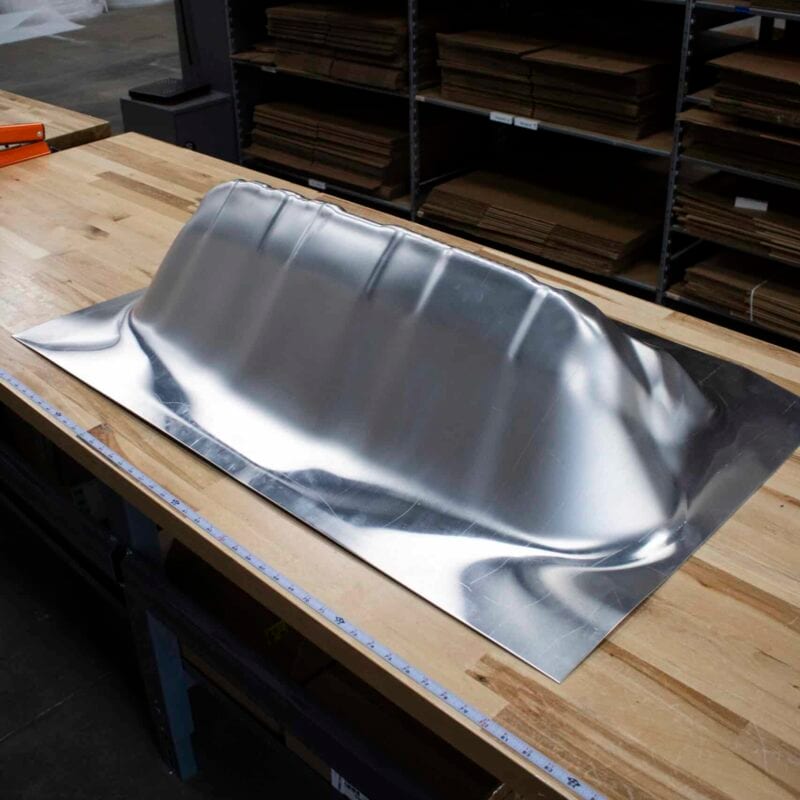
Our Figur G15 machine from Desktop Metal forms parts directly from your design, with no dies, stamping tools, or long tooling lead times.
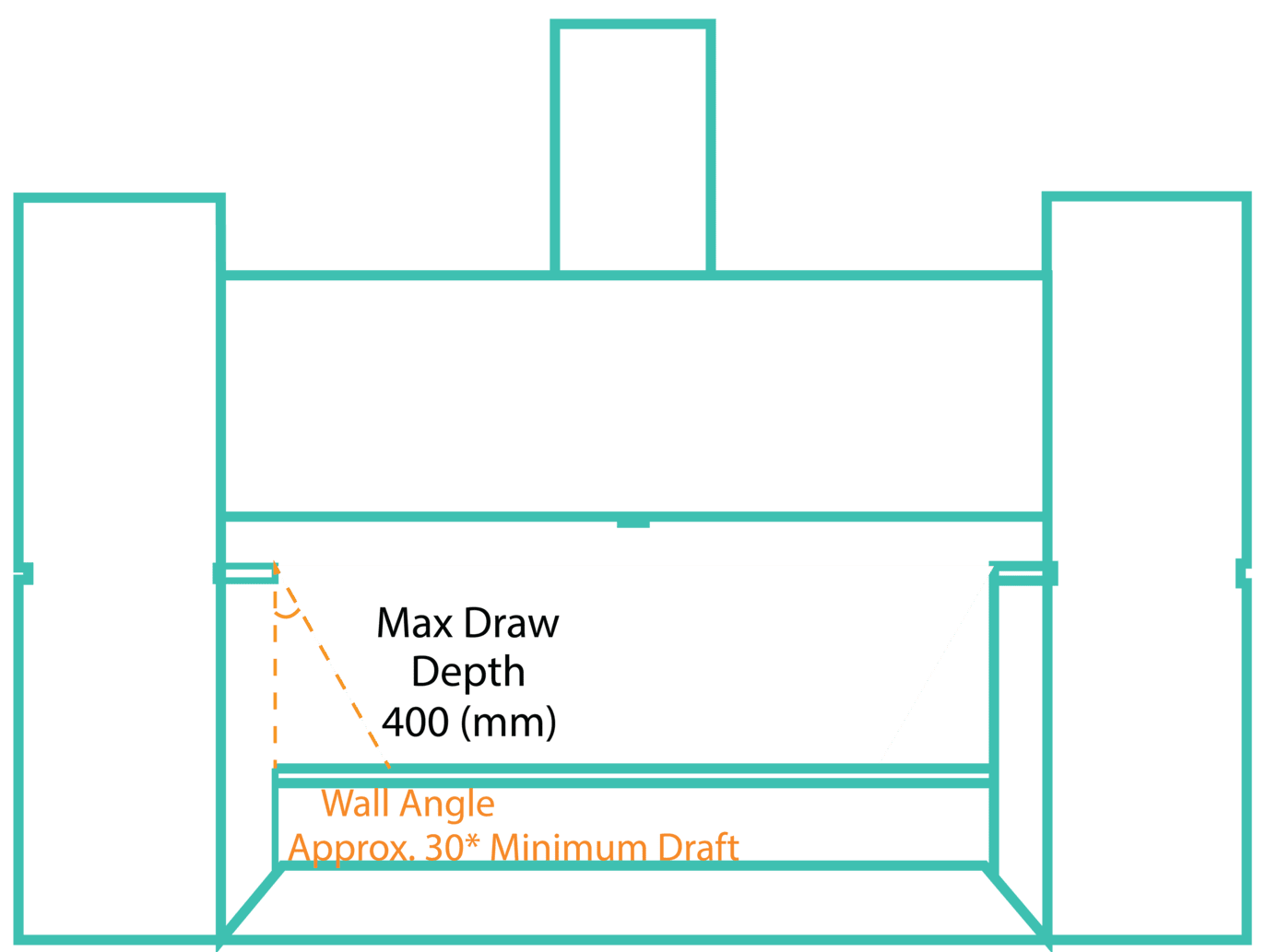
The Figur G15 forms parts up to 57.1 in. x 39.4 in. (1,450 x 1,000 mm) with a maximum draw depth of 15.75 in. (400 mm). Wall angles need roughly 30° of minimum draft, and larger designs can be split into multiple panels.
| Material | Max Thickness (in.) | Max Thickness (mm) | Gauge |
|---|---|---|---|
| Cold Rolled Steel | 0.079 in. | 2 mm | 14 ga. |
| Aluminum 6061 TO | 0.125 in. | 3.175 mm | 9 ga. |
| Material | Max Thickness (in.) | Max Thickness (mm) | Gauge |
|---|---|---|---|
| Stainless Steel 301 | 0.079 in. | 2 mm | 14 ga. |
| Stainless Steel 304 | 0.079 in. | 2 mm | 14 ga. |
| Copper | 0.022 in. | 0.55 mm | 24 ga. |
| Aluminum 1100 TO | 0.063 in. | 1.6 mm | 14 ga. |
| Aluminum 2024 TO | 0.125 in. | 3.175 mm | 9 ga. |
| Aluminum 5052 TO | 0.083 in. | 2.1 mm | 12 ga. |
A few characteristics of the process shape how you design for it. Keep these in mind to get the most accurate, repeatable results from DSMF.
As a part forms, the material is incrementally thinned along each wall. The amount of thinning is driven by the wall angle of the design, so steeper walls thin more than shallow ones.
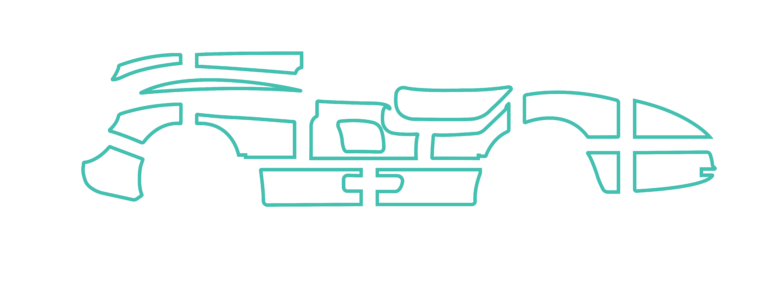
Parts larger than the formable area can be split into multiple panels, usually between two parallel walls greater than 60 degrees, then joined after forming.
General accuracy runs 0.5–2% of the largest part dimension. For best results, design radii to be 2–3x the radius of the forming tool.
DSMF handles a wide range of shapes, but some geometries form more easily than others. Use this guide to gauge how well your part fits the process before you send a design.
DSMF forms everything from bowls and light fixtures to automotive body panels and aerospace structures. Here is a sample of parts we have formed on the Figur G15.
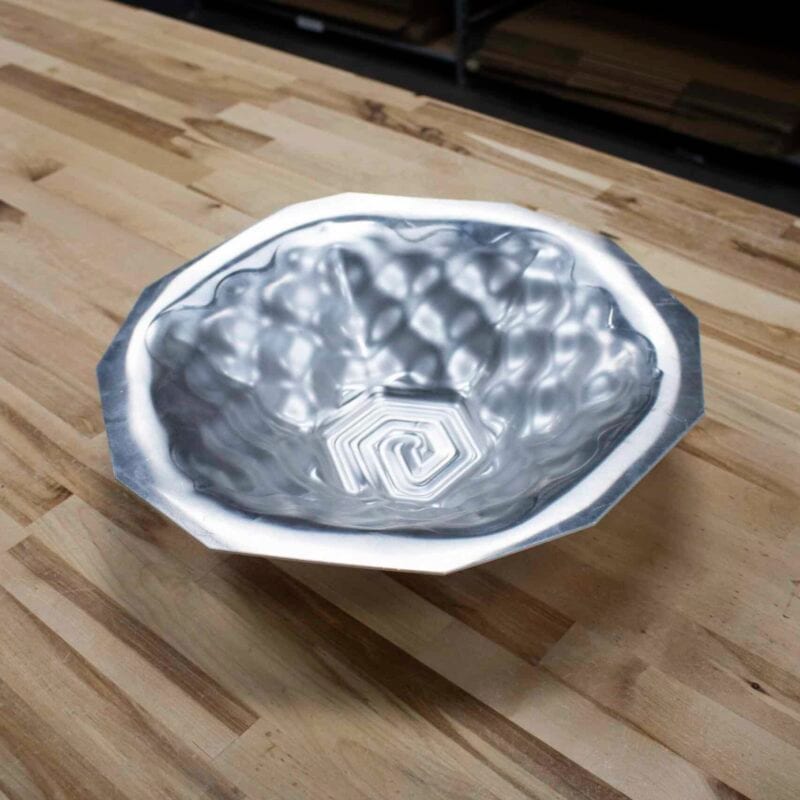
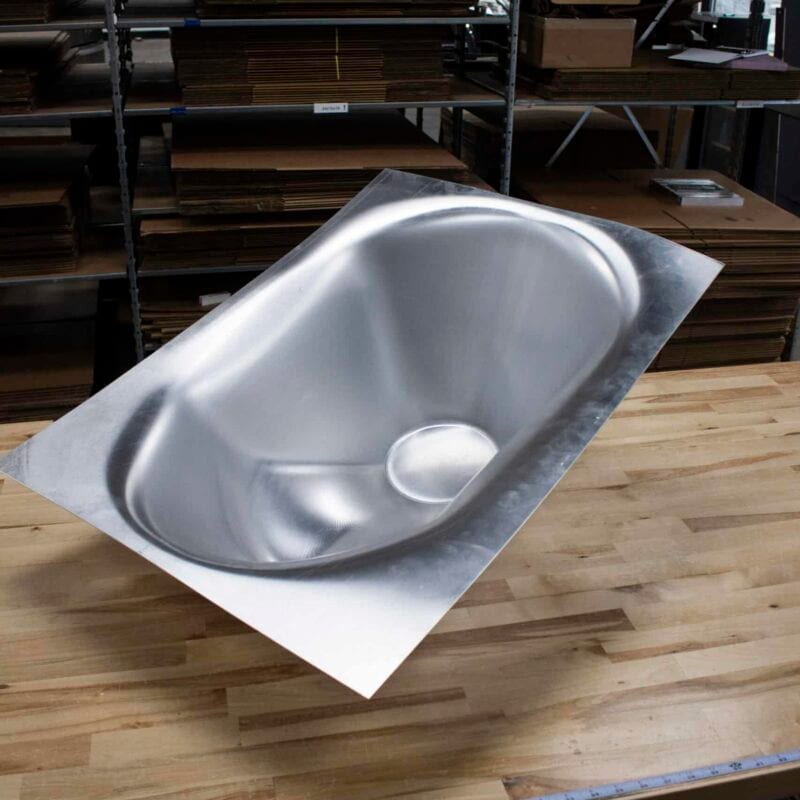
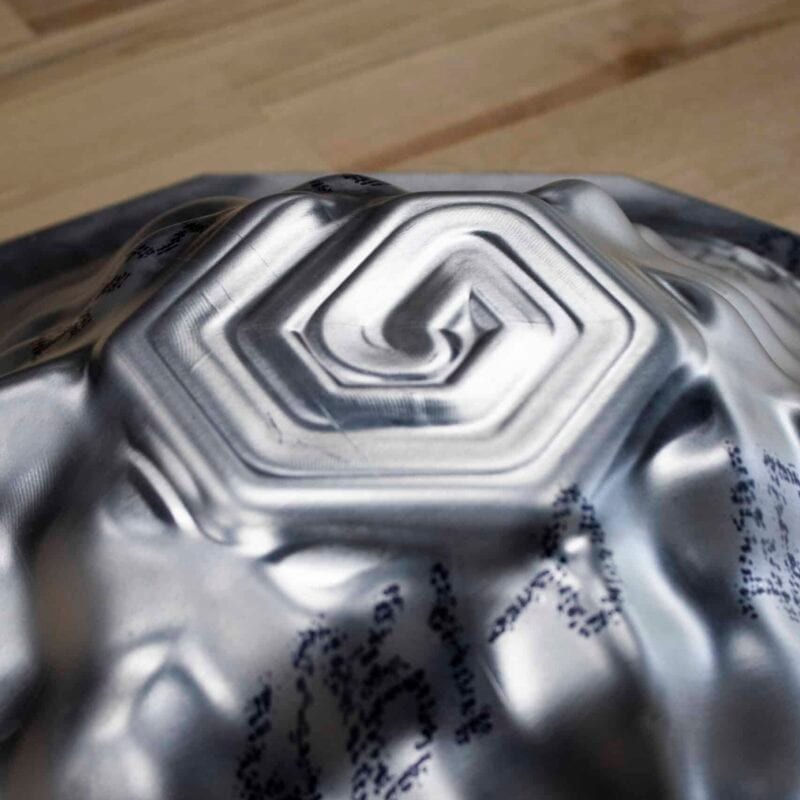
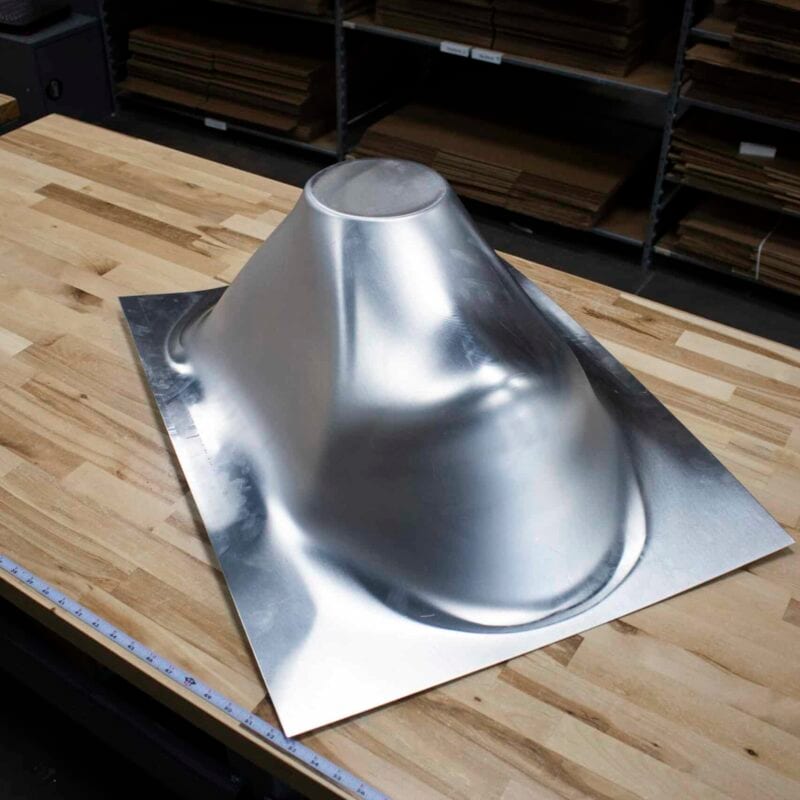
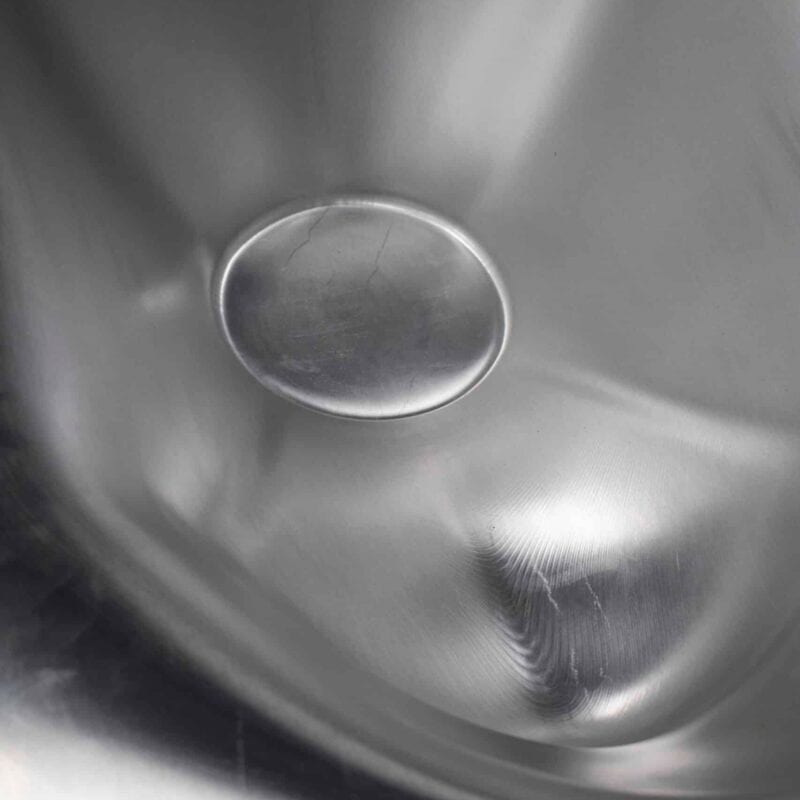
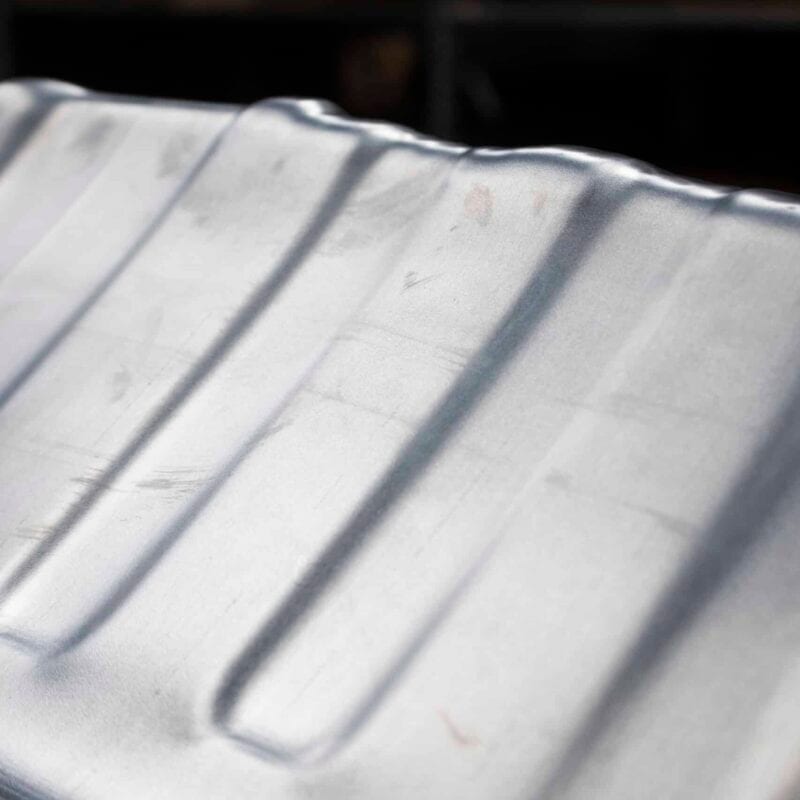
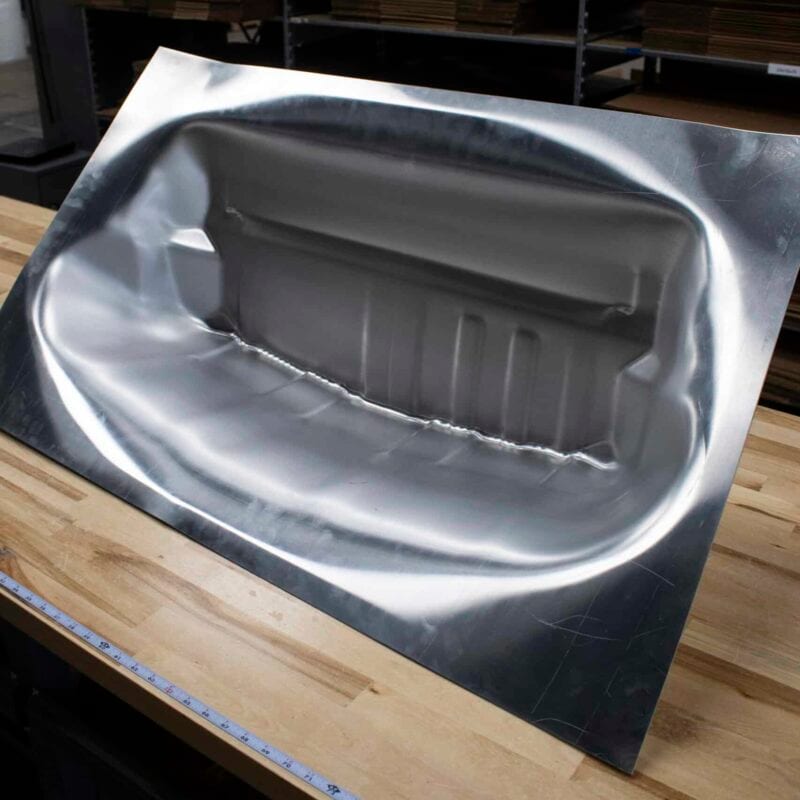
Our work with Digital Sheet Metal Forming spans a wide range of industries, from aerospace and automotive to medical and consumer goods. We have delivered both custom prototypes and production parts across these markets.
Whether you need a quick prototype or a low-volume production run, we can scope the job and turn it around on a reliable timeline. Explore the rest of our manufacturing capabilities to see how DSMF pairs with our additive and traditional processes.
Digital Sheet Metal Forming shapes sheet metal without traditional tooling. A single-point tool traces your design into the metal to create intricate contours, like those found in automotive body panels, industrial components, and aircraft structures. The tooling cost is low and the control is precise, so DSMF suits small to medium production batches and rapid prototyping, and it holds good accuracy and repeatability on complex shapes.
It removes the biggest barrier to entry: long lead times and expensive tooling. With no dies to build, you cut overhead and lower the cost per part, and you can produce parts on demand.
DSMF works for parts across many industries. It is common in aircraft and automotive work, but it can also form items like bowls, light fixtures, and signs. The best candidates are smooth and have less than 60 degrees of draft. Steeper wall angles, convex geometry, and large flat areas make a part harder to form.
The Figur G15 currently supports cold rolled steel up to 0.079 in. (2 mm) thick and 6061 aluminum up to 0.125 in. (3.175 mm) thick. Materials such as 301 and 304 stainless steel, copper, and several other aluminum alloys are in development, with Inconel, gold, and titanium planned for the future.
Tolerances depend on part complexity, material type, part orientation, and tooling. In general, accuracy falls between 0.5% and 2% of the part’s largest dimension. For best results, keep part radii at 2–3x the radius of the tool.
The Figur G15 has a maximum formable area of 57.1 in. x 39.4 in. x 15.75 in. (1,450 x 1,050 x 400 mm). Larger parts can be formed by splitting the design into multiple pieces, typically along two parallel walls greater than 60 degrees.
Digital Sheet Metal Forming can manufacture materials up to 0.125 in. (3.175 mm) in thickness.
Send us your design and one of our estimators will review it for Digital Sheet Metal Forming. We will confirm fit, materials, and timeline, then get you a quote.