






Faster Quotes
Send us your files and get a quote back in hours, not days, so design decisions do not stall.

Additive manufacturing gives automotive teams a faster, more flexible path from design to part. Compared with casting, forging, or stamping, it shortens development cycles, removes most tooling cost, and opens up lighter, stronger components without a minimum order.
Advanced 3D Printing & Rapid Prototyping
Additive manufacturing is reshaping how vehicles get designed and built. It shortens development cycles, cuts the need for expensive tooling, and makes lighter, stronger components possible. Because there is no minimum order quantity, it fits rapid prototyping, low-volume production, custom parts, and performance work equally well.
We match each part to the right process, from metal 3D printing for structural components to FDM tooling and SLA visual prototypes. See the full range on our manufacturing capabilities page.
Quotes in hours, delivery in days. Here is what that looks like for rapid prototyping and low-volume production programs.
Send us your files and get a quote back in hours, not days, so design decisions do not stall.
We scope each part against real machine capacity and commit to dates your program can plan around.
Skipping tooling moves you from approved design to parts in hand far quicker than casting or stamping.
Metal and polymer additive, machining, and sheet forming under one roof means the right process per part.
From cosmetic interior parts to functional metal structures, additive manufacturing supports a wide range of automotive work.
Our work in Digital Sheet Metal Forming and metal additive has served automotive, aerospace, medical, and consumer goods programs. We have delivered custom prototypes and production parts across that range, scaling the same processes from a single component to a full run. Whether you need fast prototyping or low-volume production, we will recommend the right method and turn it around on a reliable timeline.
Yes. Additive manufacturing is used throughout the automotive industry to speed up prototyping, cut tooling costs, and produce some end-use parts. Manufacturers use it to test designs quickly, shorten production timelines, and build low-volume parts without expensive molds or dies. Evology supports automotive R&D and low-volume production with processes like DMLS, FDM, and SLA, holding tight tolerances on quick turnarounds.
Yes, and it already is. Porsche 3D-printed pistons for the 911 GT2 RS using laser metal fusion, producing lighter pistons with optimized geometry that ran cooler and performed better than conventionally made parts. The same metal additive process, DMLS, is available at Evology for engine prototypes, thermal management components, and custom brackets that need aerospace-grade accuracy.
Additive manufacturing shows up across automotive workflows: rapid prototyping of interior parts, trim, and housings; functional testing of underhood components, brackets, and ducts; production tooling such as jigs, fixtures, and gauges; end-use lightweight structural components and low-volume runs; and fast design iteration. Evology combines 3D printing with CNC machining for a hybrid approach when a part calls for it.
Many major brands use 3D printing in automotive manufacturing. Ford was an early adopter for prototyping and production tooling. Porsche prints high-performance engine components, BMW and Volkswagen use additive for production parts, GM applies it across prototyping and validation, and Bugatti and Koenigsegg use metal additive for ultralight components such as titanium brake calipers. Evology brings the same technology to automotive suppliers, R&D projects, and aftermarket performance work.
Additive manufacturing shortens development by moving from CAD to part in days, removes the cost and lead time of tooling, and produces complex geometry that machining cannot easily cut. It also reduces weight for better performance and makes one-off parts and short runs practical. For automotive teams, that means faster iteration and the ability to experiment without committing to molds.
Looking for speed, precision, and design flexibility on your next automotive part? Send us your files and we will scope the right process, recommend a material, and get you a quote.
Motorsport · DMLS
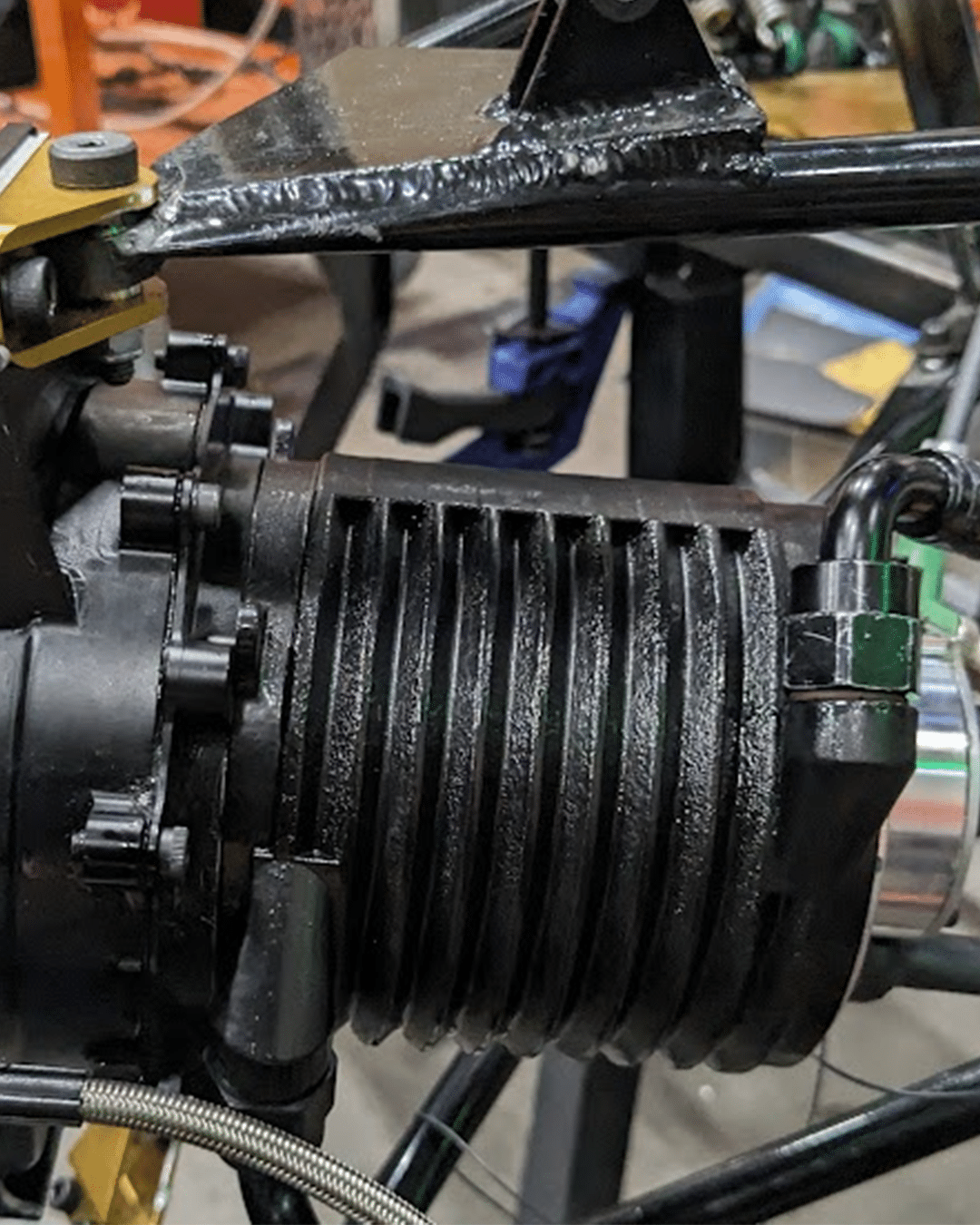
Illini Electric Motorsports designed an indirect DMLS aluminum cooling sleeve with a helical coolant path to keep their AMK motors below the derating cliff. The printed geometry cut convective thermal resistance in half and eliminated derating in endurance running.
Read the Case Study →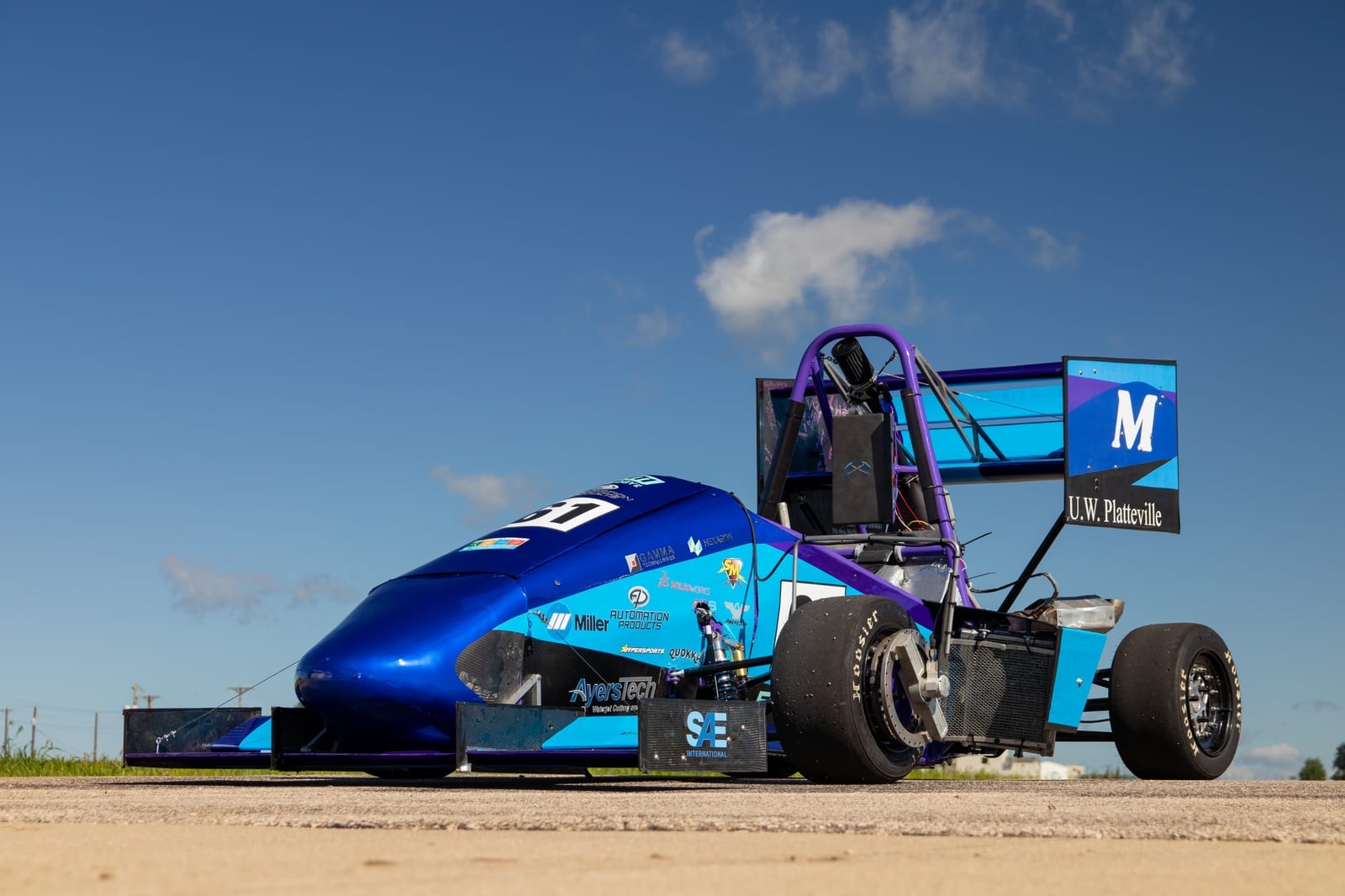
Motorsport · DMLS
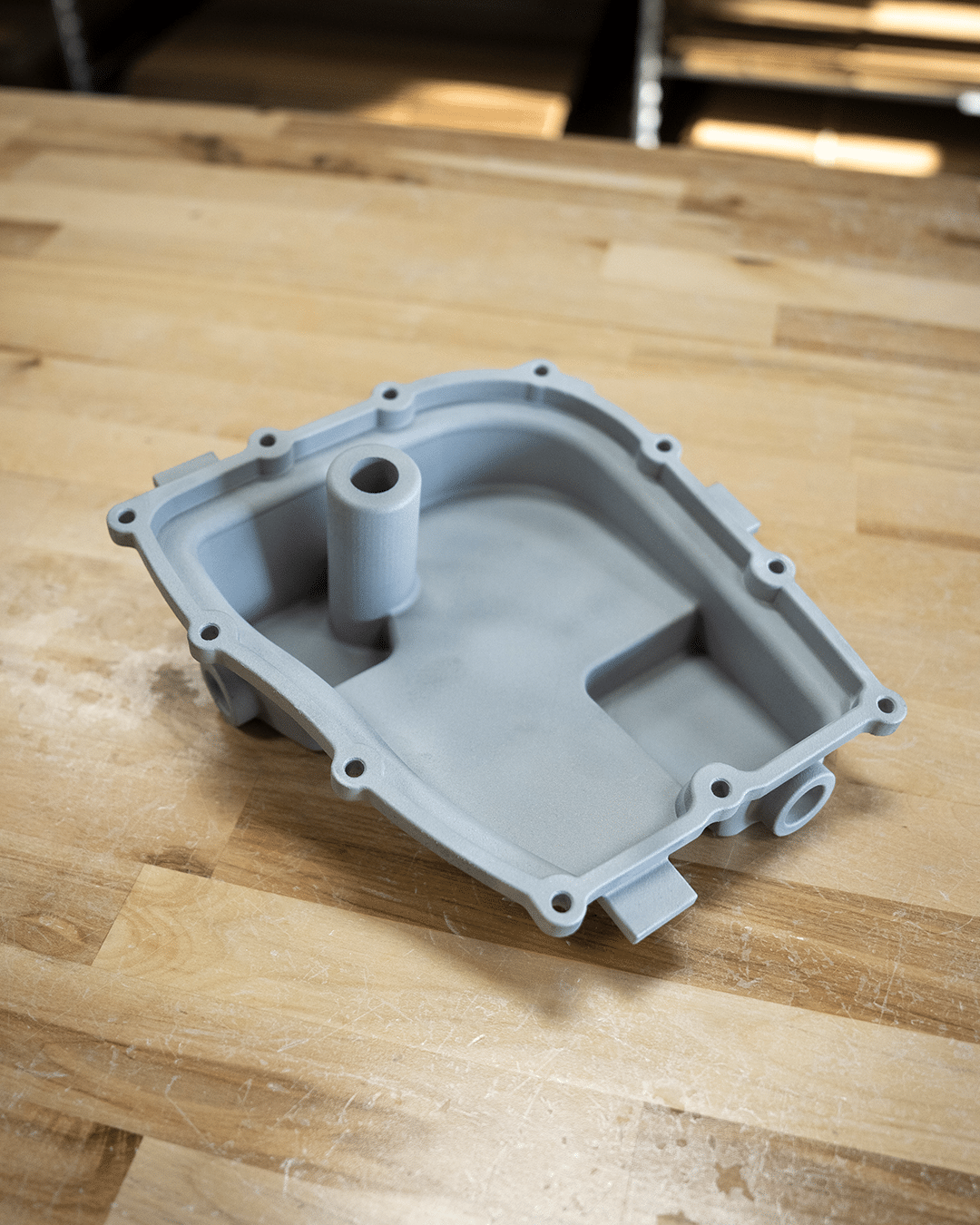
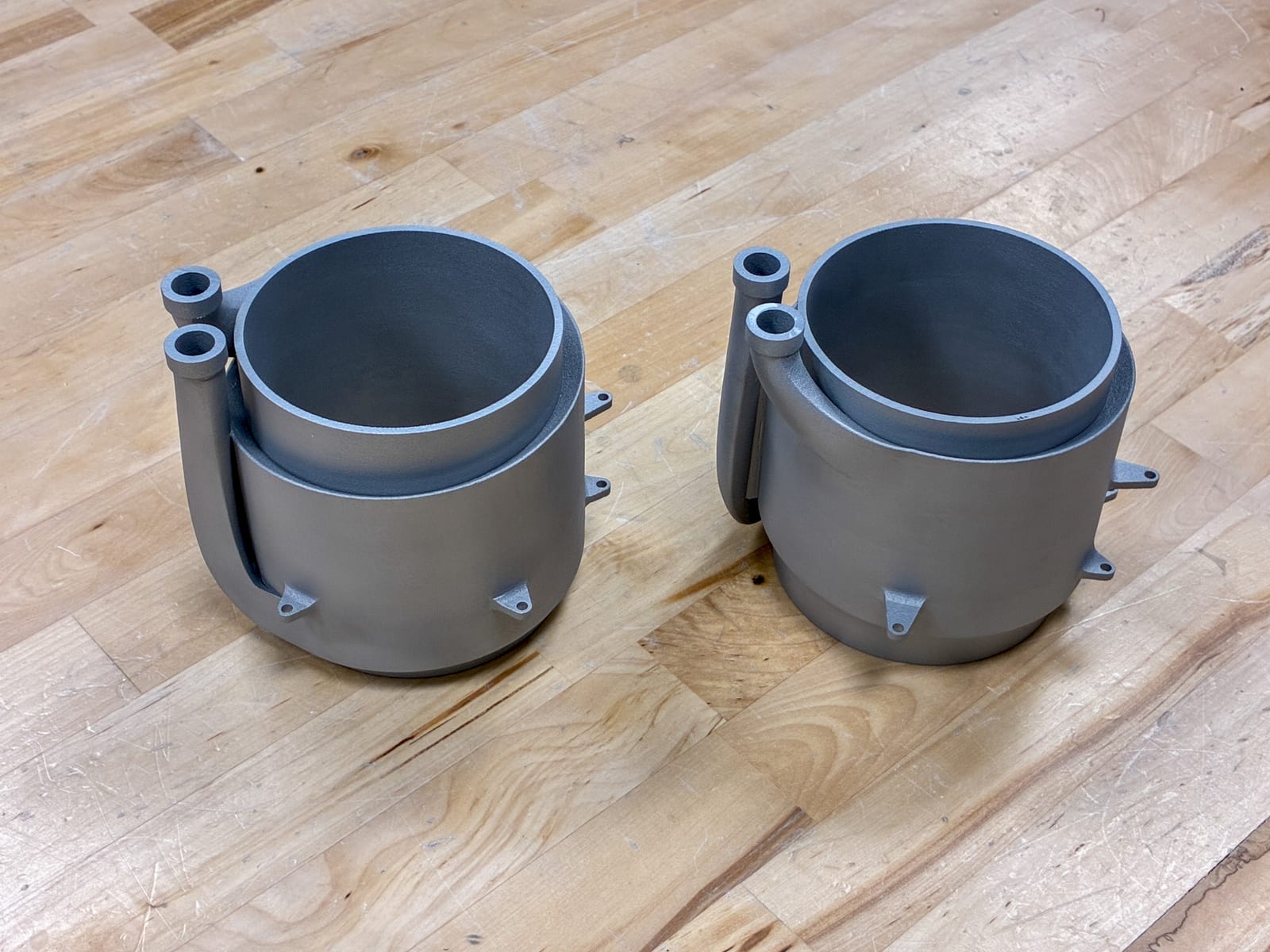
Pioneer Racing designed the PR26 structural dry-sump oil pan for DMLS from the start, cutting weight 37% versus PR25 and 57% versus the original machined concept, while holding a factor of safety above five. The lighter pan helped the team to its best Formula SAE Michigan finish in program history.
Read the Case Study →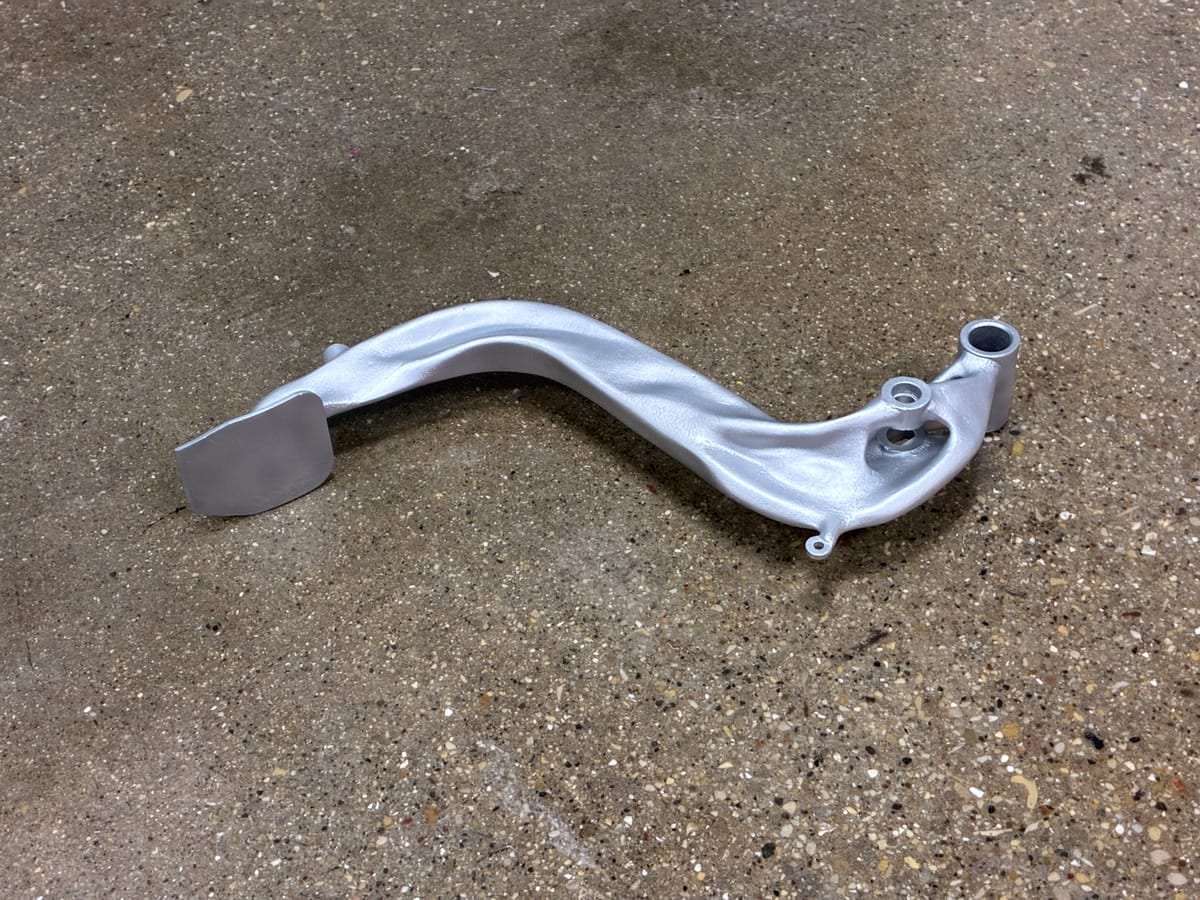
Motorsport · DMLS
Josiah Fallaise of FDF Raceshop designs his own performance parts with generative design, then needed a manufacturer who could print them in metal without cutting corners. Evology printed his hydraulic handbrake and BMW E46 clutch pedal in AlSi10Mg on an EOS M 290, North American made, structurally sound, and detailed enough to show every decision the software made.
Read the Case Study →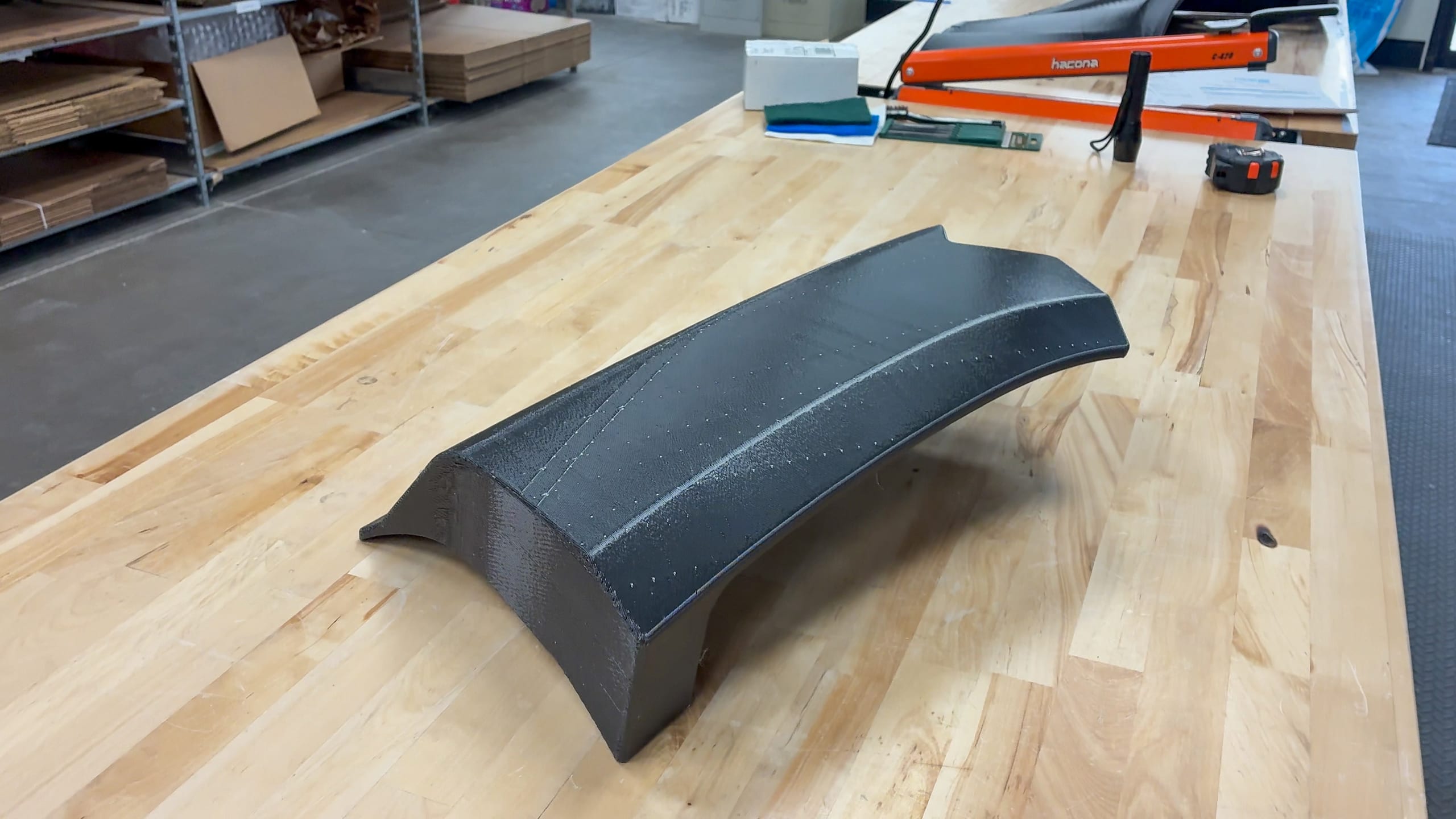
Automotive · Large-Format FDM
When EuroWise needed custom fenders for their Cayenne Ultra and needed them fast, Evology moved from Digital Sheet Metal Forming to large-format FDM, printing a full set of carbon fiber layup molds in ASA on Stratasys Fortus 900 systems.
Read the Case Study →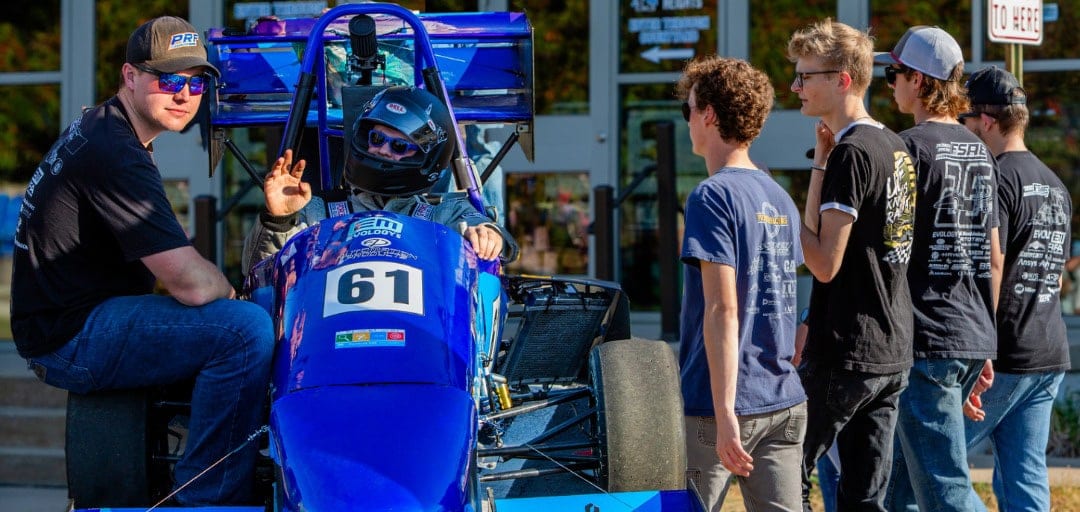
Motorsport · DMLS
For their 2024-2025 season, Pioneer Racing reimagined the PR25 powertrain as part of the chassis. The result was a DMLS oil pan that ties the engine to the rear plates, enables a dry sump system, and could not be machined conventionally.
Read the Case Study →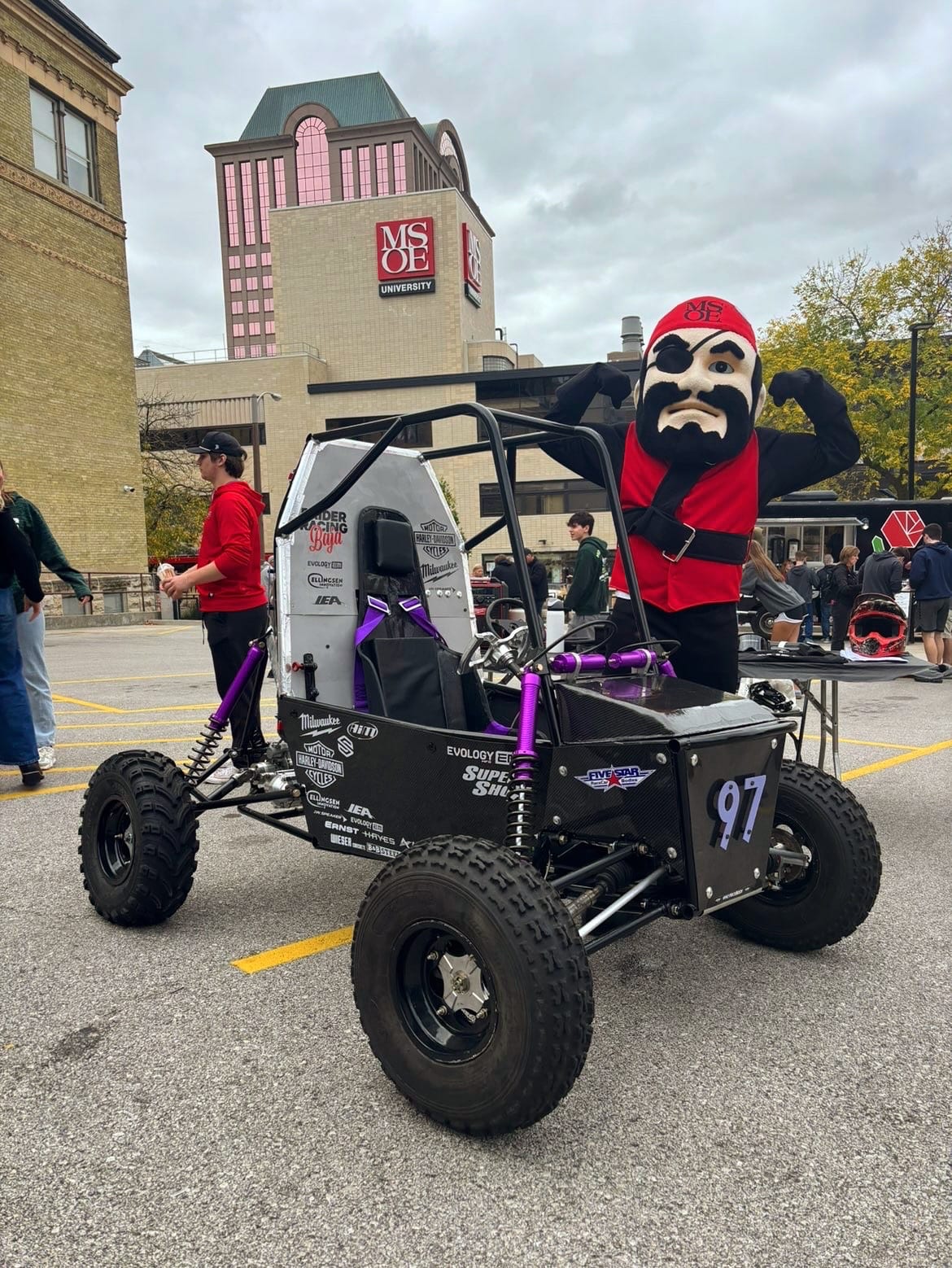
Motorsport · DMLS
MSOE's Raider Racing Baja team redesigned their rear suspension knuckle with DMLS. The new part cut weight, improved structural integrity, and sharpened suspension performance, all on a tight pre-race timeline.
Read the Case Study →