





Faster Quotes
Send us your files and get a quote back in hours, not days, so program decisions do not wait on a supplier.

Additive manufacturing lets space teams design, test, and produce components faster. Compared with casting, forging, or stamping, it shortens development cycles, removes tooling, and builds lightweight, high-strength parts on demand, with no minimum order for satellite and launch vehicle applications.
Advanced 3D Printing for Aerospace
Additive manufacturing is changing how spacecraft and satellite components get designed and built. It reduces development cycles, removes costly tooling, and produces lightweight, high-strength parts on demand. With no minimum order quantity, it fits rapid prototyping, low-volume production, and performance-critical work for orbit.
Our capabilities cover DMLS, FDM, SLS, SLA, and PolyJet, backed by large-format build volumes and redundant equipment for reliable delivery.
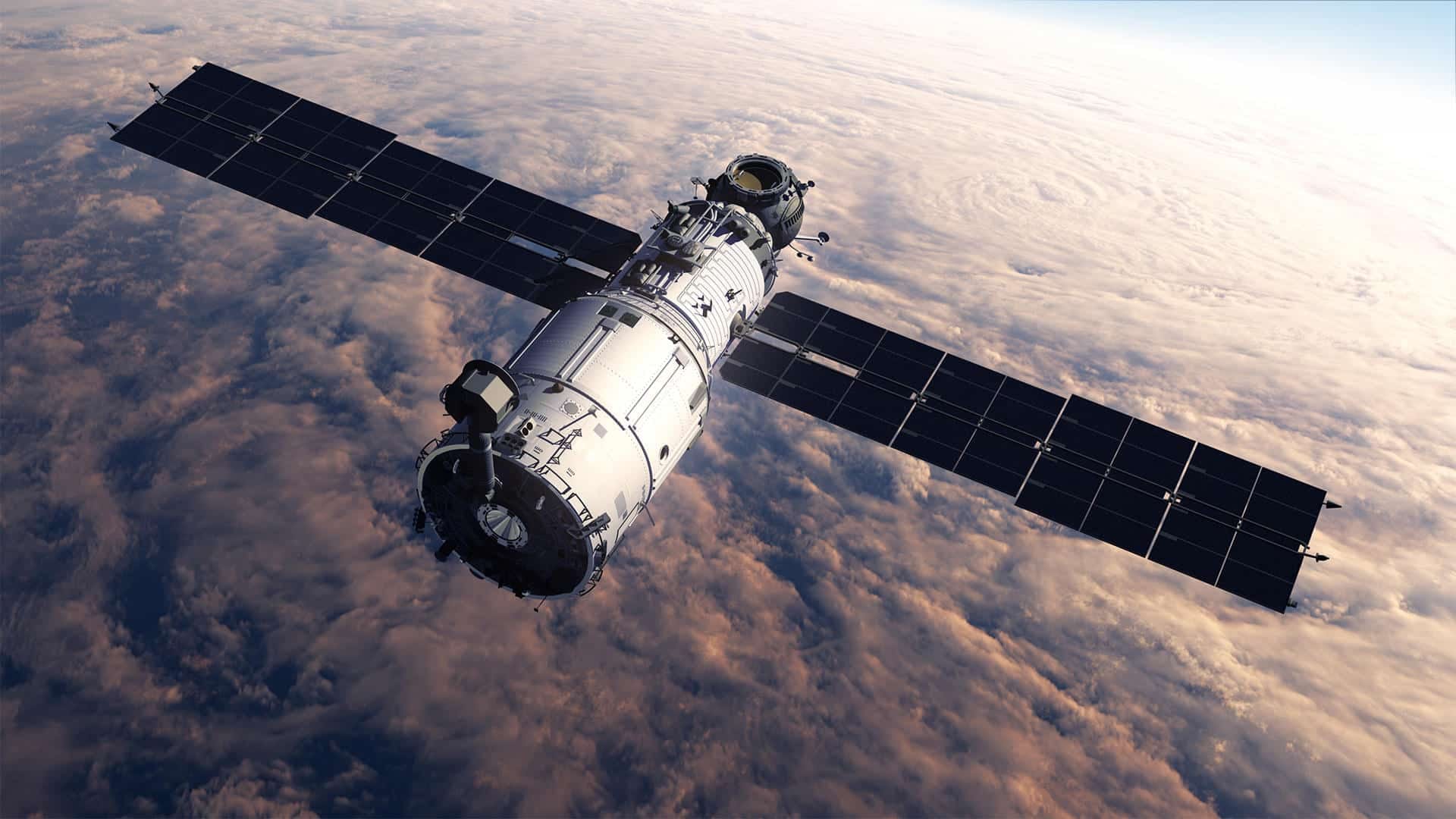
Quotes in hours, delivery in days. Here is what that looks like for rapid prototyping and low-volume aerospace production.
Send us your files and get a quote back in hours, not days, so program decisions do not wait on a supplier.
We scope each part against real machine capacity and commit to dates your launch schedule can plan around.
Skipping tooling moves you from approved design to flight-ready hardware far quicker than casting or forging.
Large-format build volumes and redundant equipment mean reliable delivery of aerospace-grade components.
From satellite structures to propulsion and ground support, additive manufacturing supports a wide range of aerospace work.

Evology is one of the first service providers in the U.S. to offer Digital Sheet Metal Forming alongside metal 3D printing. This hybrid approach removes tooling lead times while producing flight-ready metal parts at speed. Whether it is a one-off satellite bracket or a low-volume run of propulsion components, our in-house work is ITAR-registered and aerospace-compliant, so you can move from prototype to orbit on a reliable timeline.
Yes. Additive manufacturing is already used for satellites, launch vehicles, and even in-space manufacturing. Programs rely on it to produce lightweight structures and flight hardware on demand, often consolidating several machined parts into a single printed component.
Yes. Metal additive manufacturing builds the complex geometries, internal cooling channels, and high-performance alloy parts that are difficult or impossible to machine. That makes it well suited to propulsion housings, injectors, and thermal management hardware where weight and geometry both matter.
It spans propulsion systems, satellite structures, avionics housings, payload adapters, ducting, and ground support and testing fixtures. The same processes that build flight hardware also produce the tooling and fixtures used to test and integrate it.
It cuts development time, reduces launch weight, and shortens innovation cycles while meeting strict aerospace standards. Because there is no tooling and no minimum order, a one-off satellite bracket or a low-volume run of propulsion parts can move from design to flight-ready hardware quickly.
Looking for a partner who can deliver aerospace-grade parts at the speed of innovation? Send us your files and we will scope the right process, recommend a material, and get you a quote.