









High Dimensional Accuracy
SLA holds tight dimensions, so parts that need exact measurements and fine detail come out true to the model.

Stereolithography, or resin 3D printing, cures liquid photopolymer layer by layer with a laser. It was the first additive process ever invented, and it still leads on fine detail and smooth surface finish, which makes it our choice for crisp visual prototypes.
SLA traces each layer into a vat of liquid photopolymer with a laser and cures it solid. The result is a part with a smooth surface and fine detail, which is why we reach for SLA on rapid prototypes, tooling, and molds.
We run most SLA parts in a clear material. It works well for functional testing and presentation, and it lets you see inside an assembly to check fits and show how a design will look.
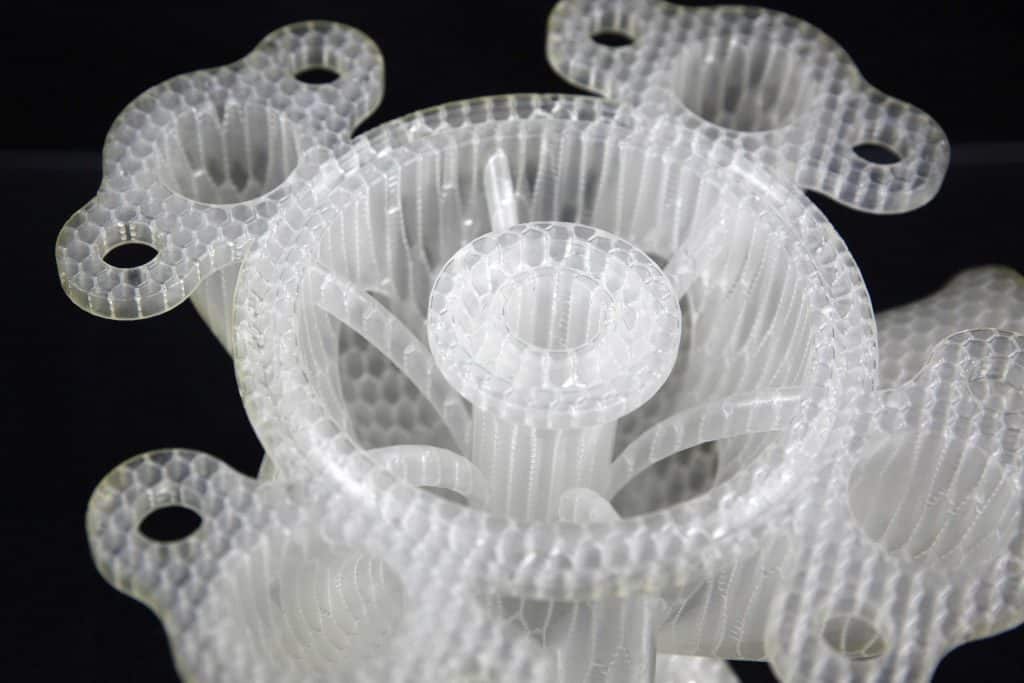
SLA earns its place when a part has to be accurate, detailed, and clean enough to present. Three traits set it apart.
SLA holds tight dimensions, so parts that need exact measurements and fine detail come out true to the model.
A laser cures one fine layer at a time, so complex geometry, thin walls, and small features that other processes struggle with print cleanly.
Parts come off the printer with a smooth surface, which makes SLA a strong choice for visual prototypes and presentation models.
SLA suits work where detail and finish carry the design, from interference-fit checks to simulated lenses. Here is where it earns its place most often.
Smooth, detailed models that present a design the way it will look, ready for review and sign-off.
Clear parts that let you see and verify how components fit together inside a complex assembly.
Transparent parts that stand in for lenses and covers when prototyping lighting fixtures.
Master patterns and tooling for rapid prototyping, casting, and short-run mold making.
See-through parts that hold detail well, useful for both functional testing and aesthetic presentation.
SLA resolves fine detail and leaves an exceptionally smooth finish straight off the printer. The laser follows your geometry precisely, so parts match the model closely with little post-processing.
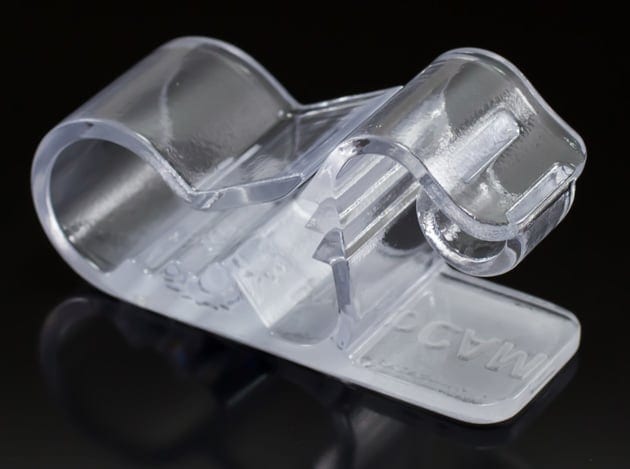
We have spent years refining our SLA process, and we use it across medical, consumer goods, and electronics projects where detail and finish carry the design.
When a part needs more than one process, SLA pairs well with the rest of our manufacturing capabilities, so we can take a project from a clean concept model through to functional testing.
Send us your design and one of our estimators will review it for SLA. We will confirm the material, finish, and timeline, then get you a quote.