





How Evology Helped MSOE Protect 320 Battery Cells for the 2025 Formula Season
Mozee Motorsports needed an accumulator protective structure that could house 320 lithium-ion cells, meet a UL 94 V-0 material requirement, and arrive before it stalled the rest of the car.
- Industry
- Formula Hybrid
- Process
- Large-Format FDM
- Material
- FR-PCABS
- Lead Time
- Under 3 Days
320
Lithium-ion 18650 cells housed
6 MJ
Maximum energy in each segment
V-0
UL 94 flammability requirement
<3 days
Print time on Fortus 900 systems
Finding room for 320 lithium-ion cells is difficult enough. Keeping those cells safe and secure during an endurance race is another challenge entirely. The structure around them has to protect the cells, meet the material requirements, and fit into a racecar with very little space to spare.
For the 2025 season, Mozee Motorsports, the Milwaukee School of Engineering’s Formula Hybrid team, worked with Evology Manufacturing to produce its accumulator protective structure. We printed the structure in flame-retardant PC-ABS, or FR-PCABS, using multiple Stratasys Fortus 900 systems. Printing was completed in less than three days, which kept the team’s competition preparations moving.
The students brought a specific set of requirements and a design that benefited from additive manufacturing. Our job was to match that application with a practical material and get the parts made on their timeline.
A Protective Structure That Had to Fit the Car and the Rules
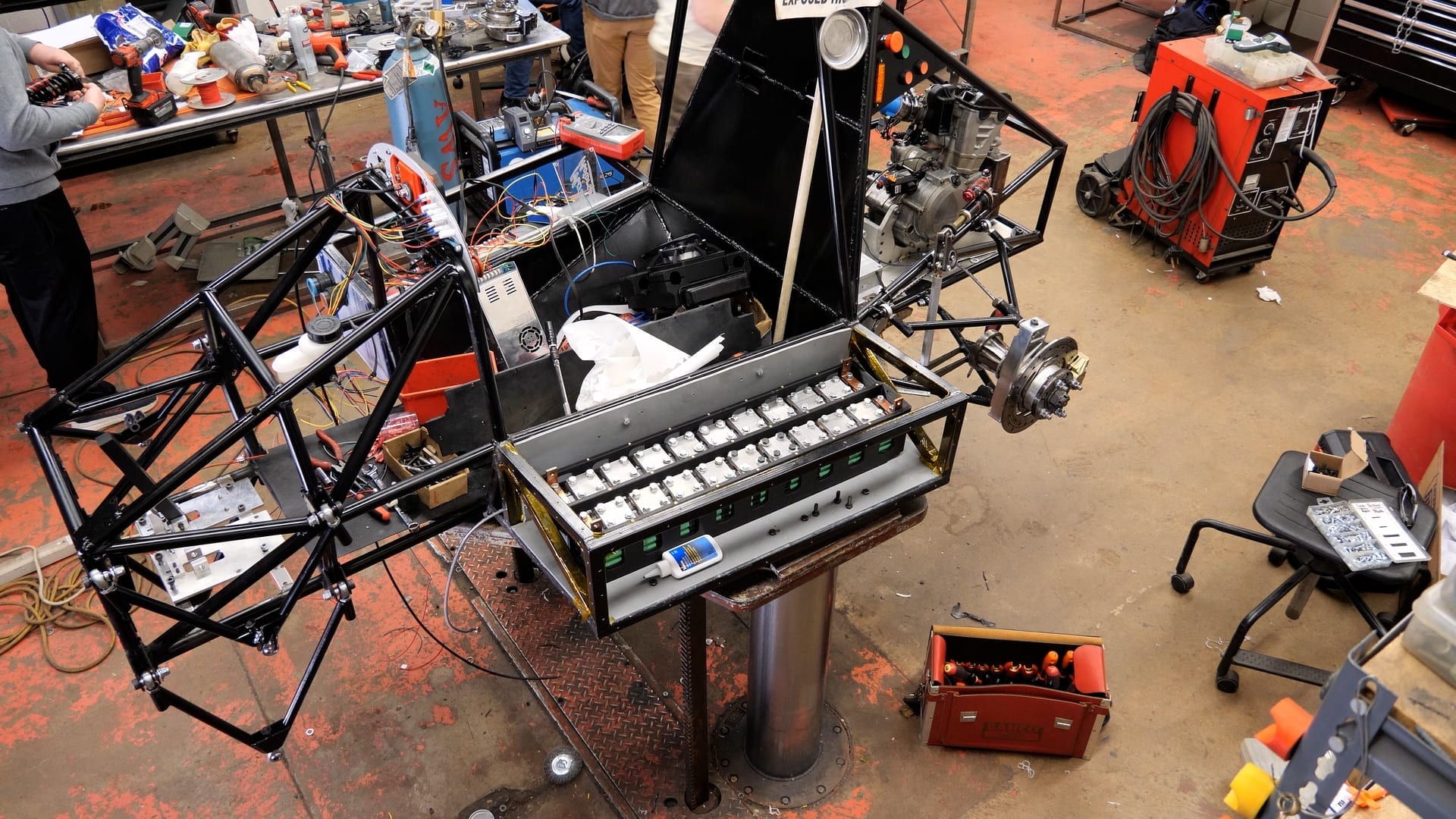
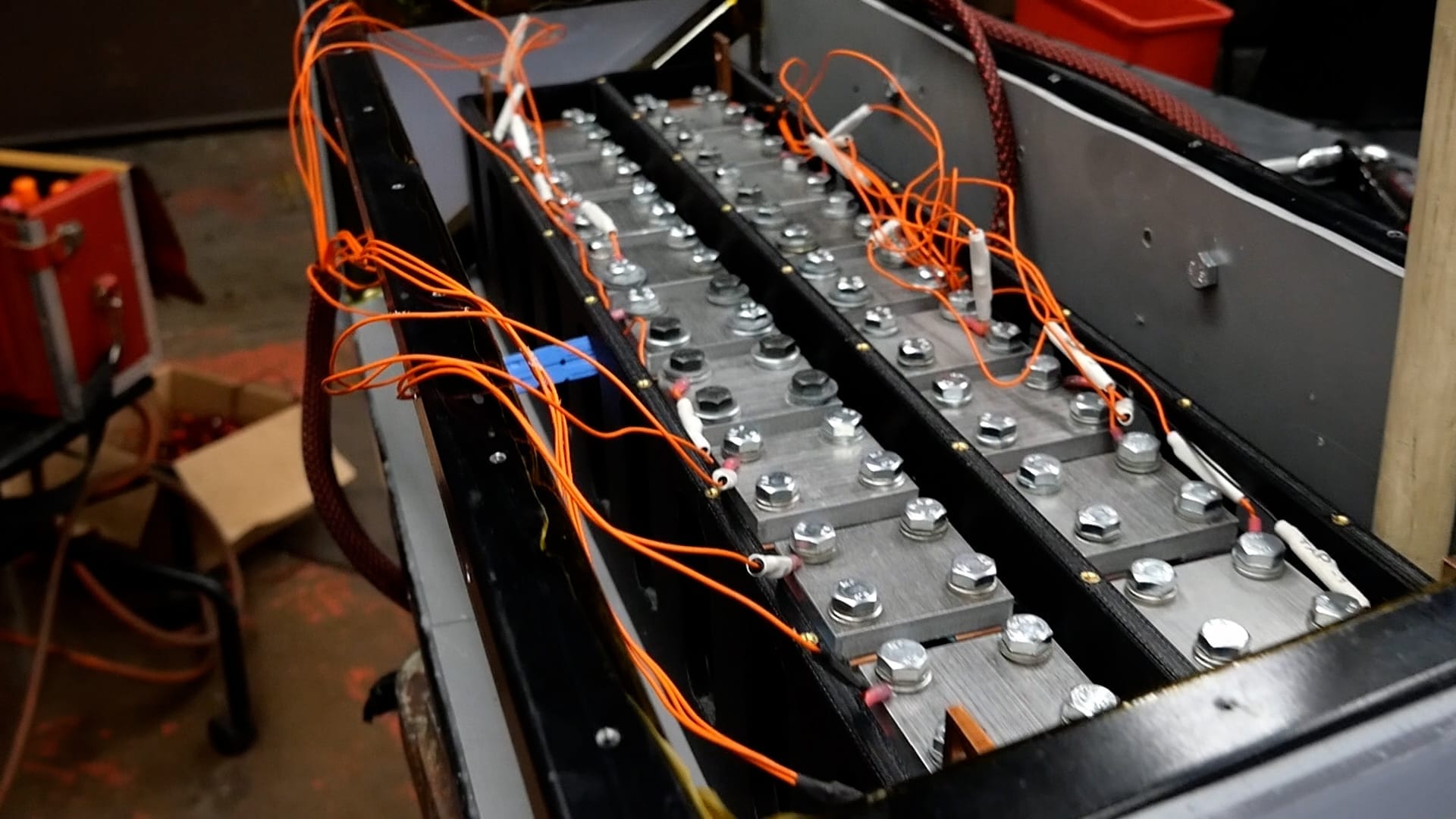
The accumulator is the car’s battery assembly. Within that system, the protective structure houses and protects the team’s 320 lithium-ion 18650 cells. Its geometry also has to work with the rest of the vehicle’s high-voltage packaging.
The team identified two requirements that shaped the project. The material needed to meet UL 94 V-0 flammability requirements, and the cells needed to be separated into segments containing no more than 6 megajoules of energy each. That energy limit applies to each segment, rather than the complete battery assembly.
Those requirements affect different parts of the design. Material selection addresses how the plastic behaves when exposed to flame. The arrangement and separation of the cells address the segment energy limit. Both had to be considered while making the structure fit the space available in the car.
For the students, additive manufacturing opened up more freedom in that geometry. They could design the protective structure around the high-voltage system and use shapes that integrated with the rest of the vehicle, shapes that otherwise would have required significant tooling and machining.
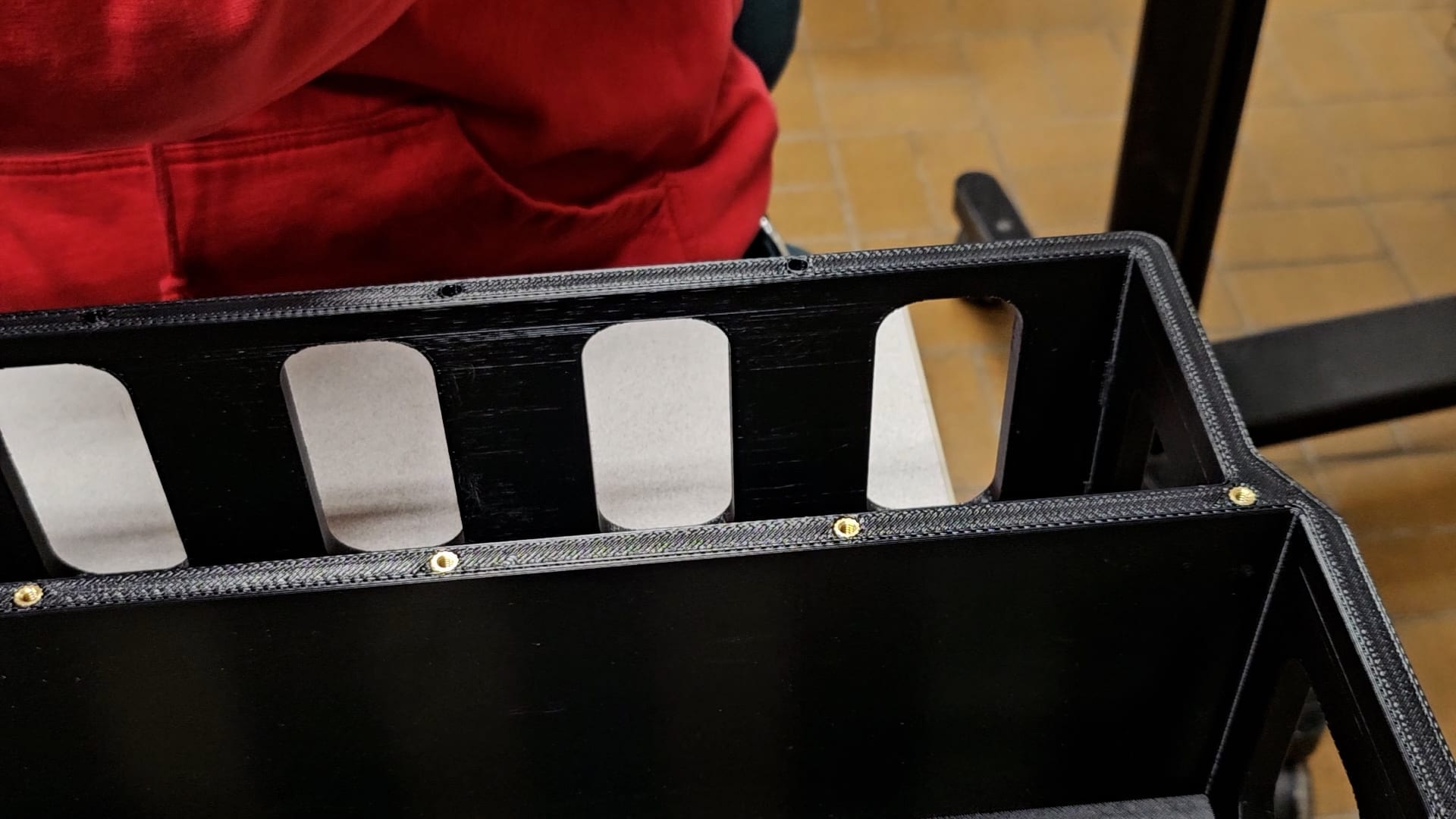
Why We Selected FR-PCABS
The material needed to balance flame resistance, strength, and cost. The team needed a fire-resistant material that was strong without breaking the bank. FR-PCABS fit that combination.
PC-ABS blends polycarbonate with acrylonitrile butadiene styrene. The blend combines useful strength and heat resistance with impact toughness and printability. For this project, we used a flame-retardant formulation with additives that help the plastic self-extinguish after exposure to an ignition source. That formulation was central to the selection because flame resistance was an explicit requirement for the protective structure.
Standard PC-ABS and flame-retardant PC-ABS should not be treated as interchangeable specifications. A material’s flammability performance depends on its particular formulation and the conditions under which it was tested, including specimen thickness. UL 94 V-0 describes performance in a defined flammability test. It does not mean a material is fireproof, and it does not certify the complete battery assembly.
According to the team, the selected material helped them meet the protective-structure requirements. It also gave us a practical route to printing their part while keeping strength and budget in view. The choice started with what the part had to do, then narrowed to a material we could manufacture on the required schedule.
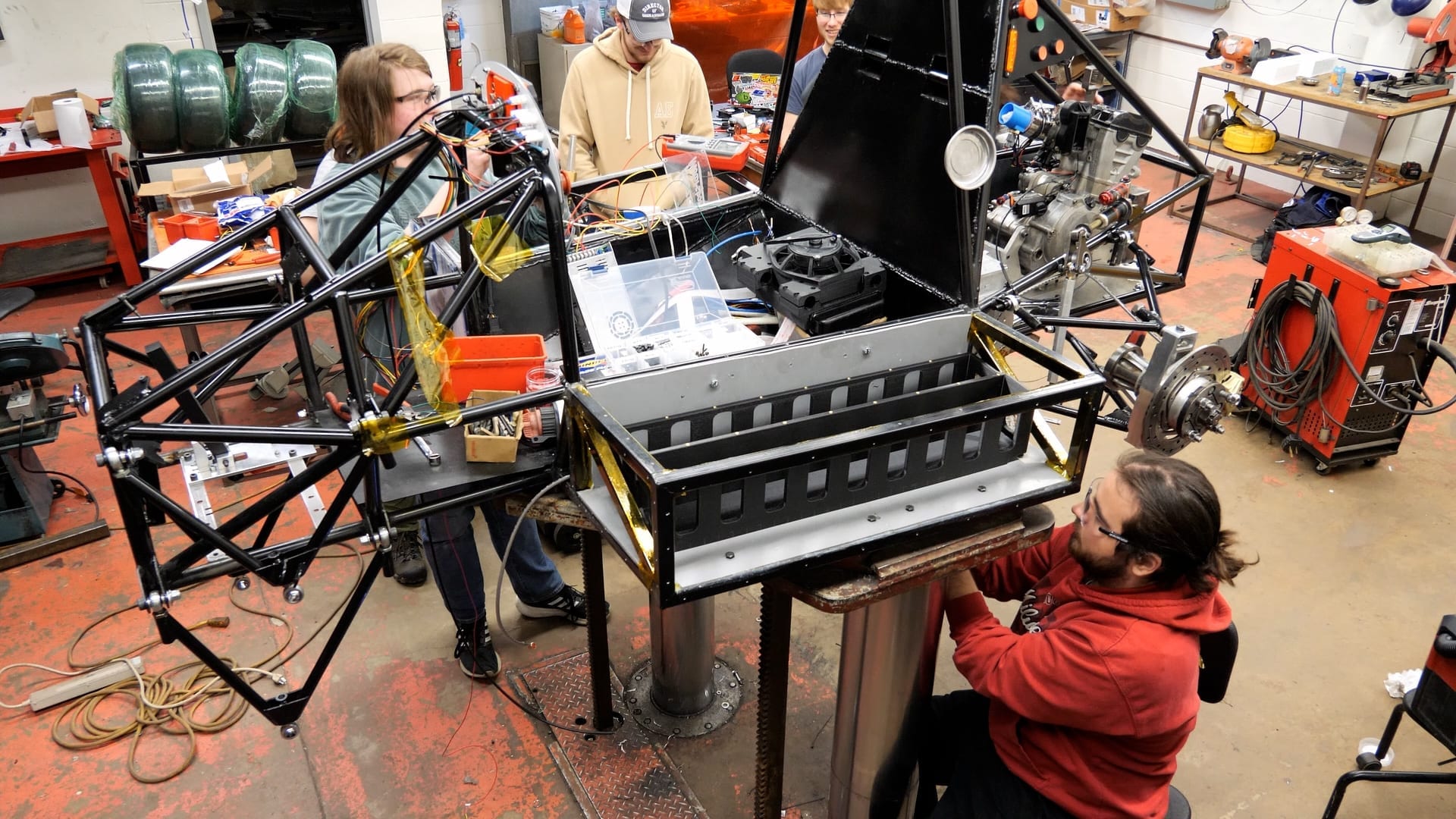
By working with Evology Manufacturing, we were able to utilize additive manufacturing to allow us to use more complex geometry for our protective structure.
Printing Complex Geometry Without Holding Up the Build
We produced the structure with fused deposition modeling (FDM), which builds thermoplastic parts layer by layer from a digital design. The process can manufacture complex geometry without first making a dedicated mold, which made it a fit for this one-off protective structure.
For Mozee Motorsports, that design freedom had a direct benefit: better integration with the car. The team reported that additive manufacturing allowed more complex geometry and greatly improved the packaging of its high-voltage system.
Getting the geometry right was one part of the project. Getting it printed before it held up the rest of the build was the other. We used multiple Fortus 900 printers to complete printing in less than three days. Putting several machines on the project gave us the capacity to work within the team’s competition timeline.
The students described the turnaround as just a few days from their initial inquiry, and said it greatly reduced the downtime that waiting for the structure would have caused. With the part completed, they could continue preparing the car for competition.
Project Specs
- Team
- Mozee Motorsports, MSOE Formula Hybrid
- Season
- 2025
- Part
- Accumulator protective structure
- Cells
- 320 lithium-ion 18650 cells
- Segment limit
- No more than 6 MJ per segment
- Process
- FDM on multiple Stratasys Fortus 900 systems
- Material
- Flame-retardant PC-ABS (FR-PCABS)
- Flammability requirement
- UL 94 V-0
- Print time
- Less than three days
Moving Forward
The result was a protective structure in the selected FR-PCABS material, geometry that worked better with the team’s high-voltage packaging, and a short production timeline at a point when waiting would have disrupted the build.
Working on a part with specific material requirements, a difficult packaging problem, or a tight deadline? Talk with Evology’s manufacturing team about your geometry, operating conditions, and schedule. You can also explore our FDM capability and the automotive work we support.
Follow Mozee Motorsports on Instagram at @Mozeemotorsports.


Have a Part Like This?
Send us your files and we will scope the right process, recommend a material, and get you a quote. From a single prototype to a low-volume run, our team turns complex parts around fast.