









How Evology Helped UW–Madison Baja Make a Carbon Fiber Hood with 3D-Printed Tooling
Wisconsin Baja Racing needed a mold before it could lay up a carbon fiber hood. Evology printed the tooling in ABS so the composite work could start on the team’s timeline.
- Industry
- Baja SAE
- Process
- Large-Format FDM
- Material
- ABS
- Application
- Composite Tooling
0.013 in
Printed layer height
ABS
Tooling material
Fortus 900
FDM platform
March 2024
Resin infusion completed
Before Wisconsin Baja Racing could make its carbon fiber hood, the students needed a mold. Traditional manufacturing would take too long, leaving the team waiting on tooling before it could begin the composite work.
The University of Wisconsin–Madison team came to Evology for a faster way to produce that mold. We printed the tooling in ABS on our Stratasys Fortus 900 machines, using a 0.013-inch layer height.
It was a practical application of additive manufacturing: produce the tool that lets the team get on with making the part.
Getting the Mold Off the Critical Path
A composite hood takes its shape from the tooling used to make it. That puts the mold early in the manufacturing sequence. Until it is ready, the team cannot complete the layup and infusion needed to produce the hood.
For Wisconsin Baja Racing, the available traditional manufacturing timeline did not fit the project. The students needed another route to the geometry so they could begin working with the carbon fiber. Evology’s role was to manufacture that tooling with fused deposition modeling (FDM), which builds thermoplastic parts layer by layer from a digital model.
Printing the mold gave the team that route. The ABS tool would provide the shape for the composite work, while the students would carry out the carbon fiber layup and resin infusion.
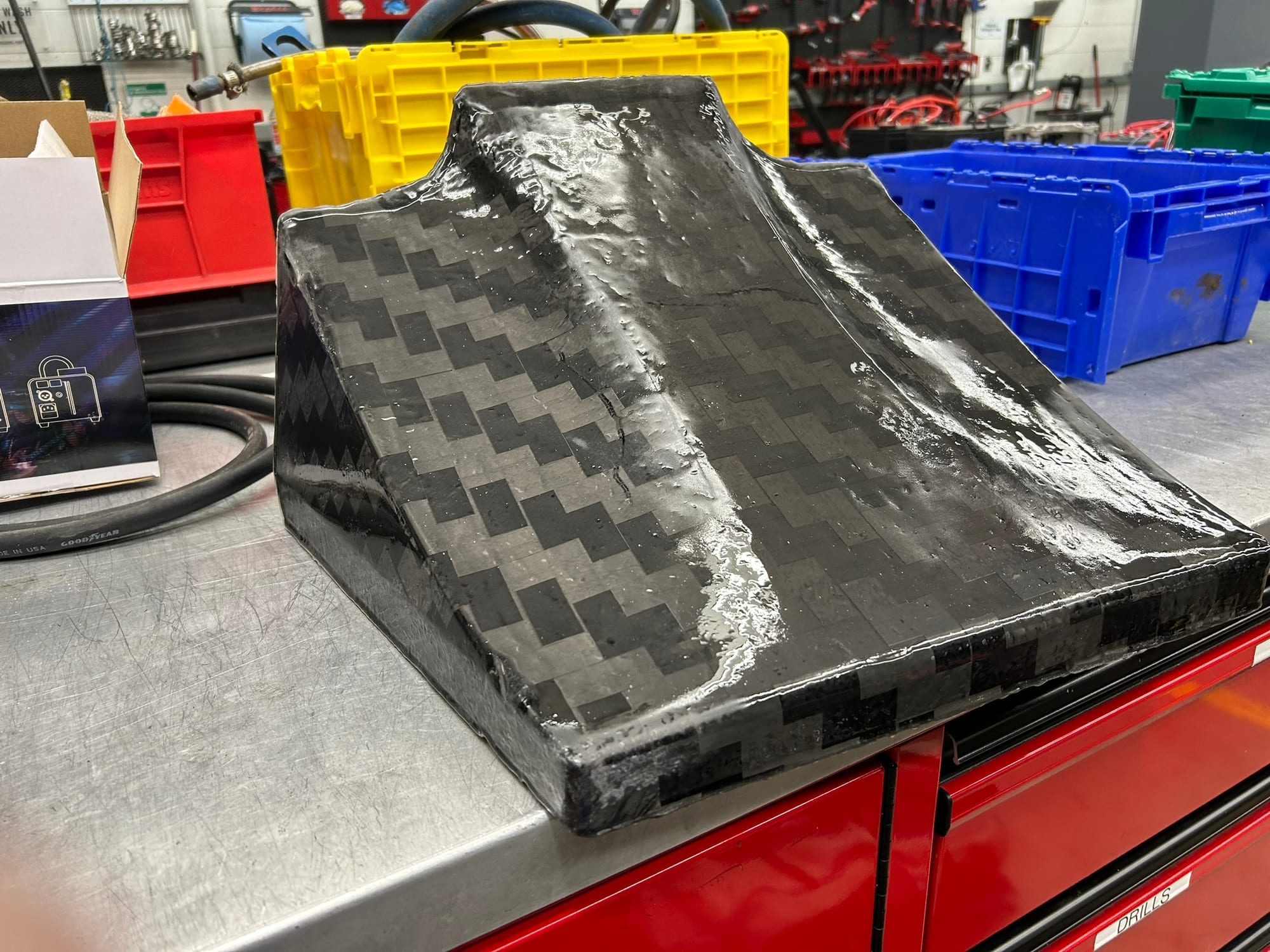
Sometimes you need the tooling FAST to get the actual part you need.
Why ABS and a 0.013-Inch Layer Height Fit the Job
We used ABS, acrylonitrile butadiene styrene, to print the hood mold. The immediate priority was producing usable tooling quickly. ABS gave us a familiar thermoplastic to run on the Fortus platform for this application.
The 0.013-inch setting is the thickness of each printed layer, about 0.33 millimeter. Layer height influences how long a build takes and the surface it produces. Compared with a finer setting, a thicker layer reduces the number of layers needed to build the same height, which can shorten printing time.
That choice also has to account for the mold surface. Layer lines and stair-stepping can require finishing before composite work begins. Stratasys guidance for FDM composite tooling identifies layer thickness, geometry, and build orientation as factors that affect the surface. The useful measure is the time it takes to get a mold ready for use, including any preparation.
Material selection also depends on what happens during the composite process. A tool has to suit the resin system, cure temperature, and other process conditions. ABS was used for this team’s hood mold. A different cure cycle could call for a different tooling material. The successful infusion the students reported is the evidence for this project.
From Printed Tooling to a Successful Resin Infusion
In early March 2024, members of the team emailed Sean with an update. They had used the printed mold the previous day and completed the resin infusion.
The resin infusion process went off without a hitch.
At the time of their message, the hood was curing in the mold below UW–Madison’s Mechanical Engineering Building. The team planned to remove the part that evening and share final product photographs afterward.
The collaboration gave Wisconsin Baja Racing a way forward when the original tooling timeline was too long. Evology manufactured the ABS mold, and the team used it to complete the infusion stage of its hood. A short-run composite project could progress because the tool was available when the students needed to put it to work.
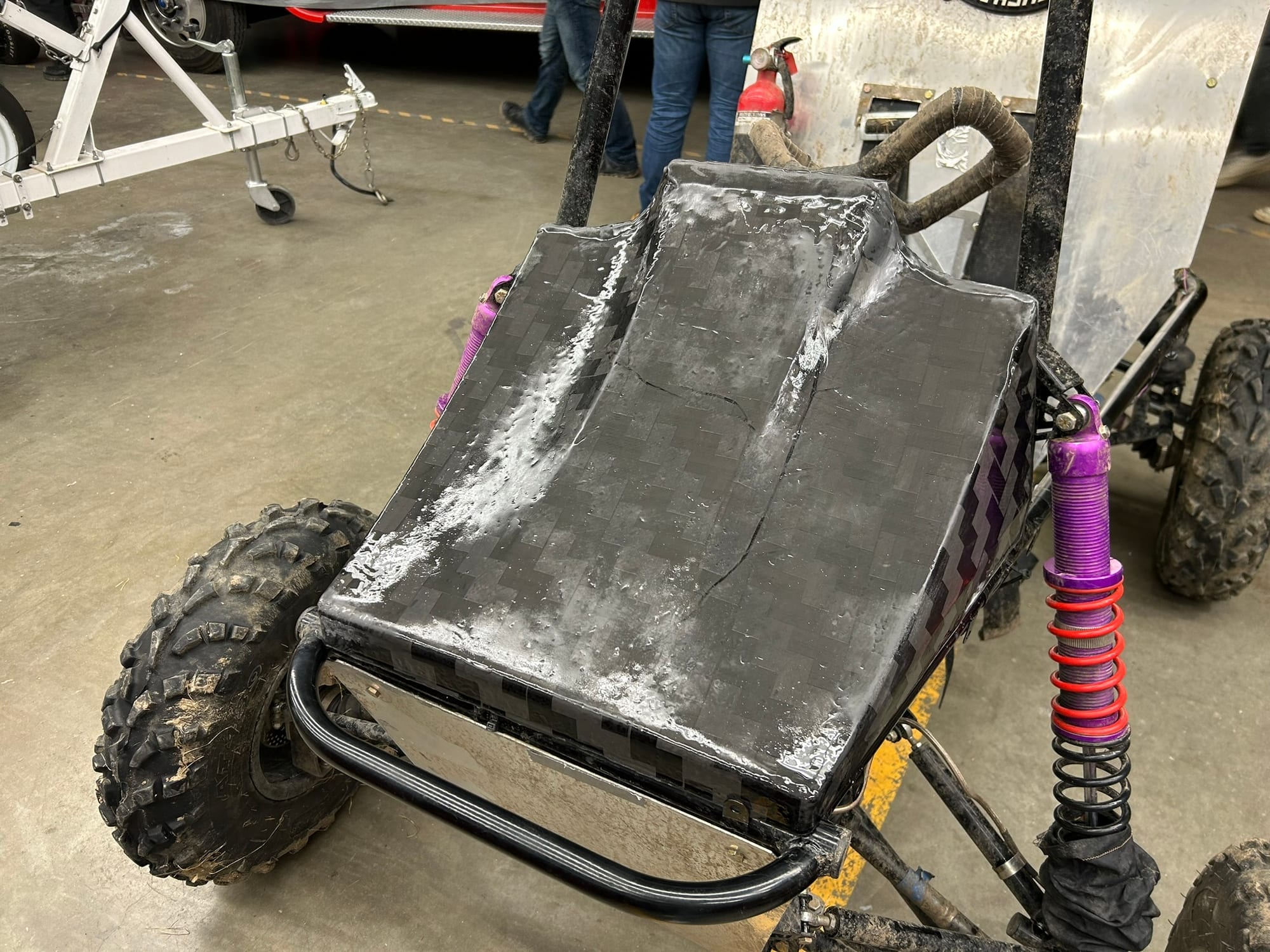
Wisconsin Baja Racing
Project Specs
- Team
- Wisconsin Baja Racing, UW–Madison
- Part
- Carbon fiber hood
- What Evology made
- FDM mold tooling
- Process
- FDM on Stratasys Fortus 900
- Material
- ABS
- Layer height
- 0.013 in (about 0.33 mm)
- Team process
- Carbon fiber layup and resin infusion
- Infusion
- Completed in early March 2024
Moving Forward
Have a composite part waiting on tooling? Talk with Evology’s manufacturing team about your geometry, resin system, cure conditions, surface requirements, and deadline. Those details help us determine whether a printed mold is a practical fit.
See how large-format FDM is used for tooling, and explore the automotive work we support.


Have a Part Like This?
Send us your files and we will scope the right process, recommend a material, and get you a quote. From a single prototype to a low-volume run, our team turns complex parts around fast.