





Corrosion Resistance in Chloride Service
316L adds molybdenum, which improves resistance in chloride-heavy environments. That is why it is common in marine, washdown, and process hardware.

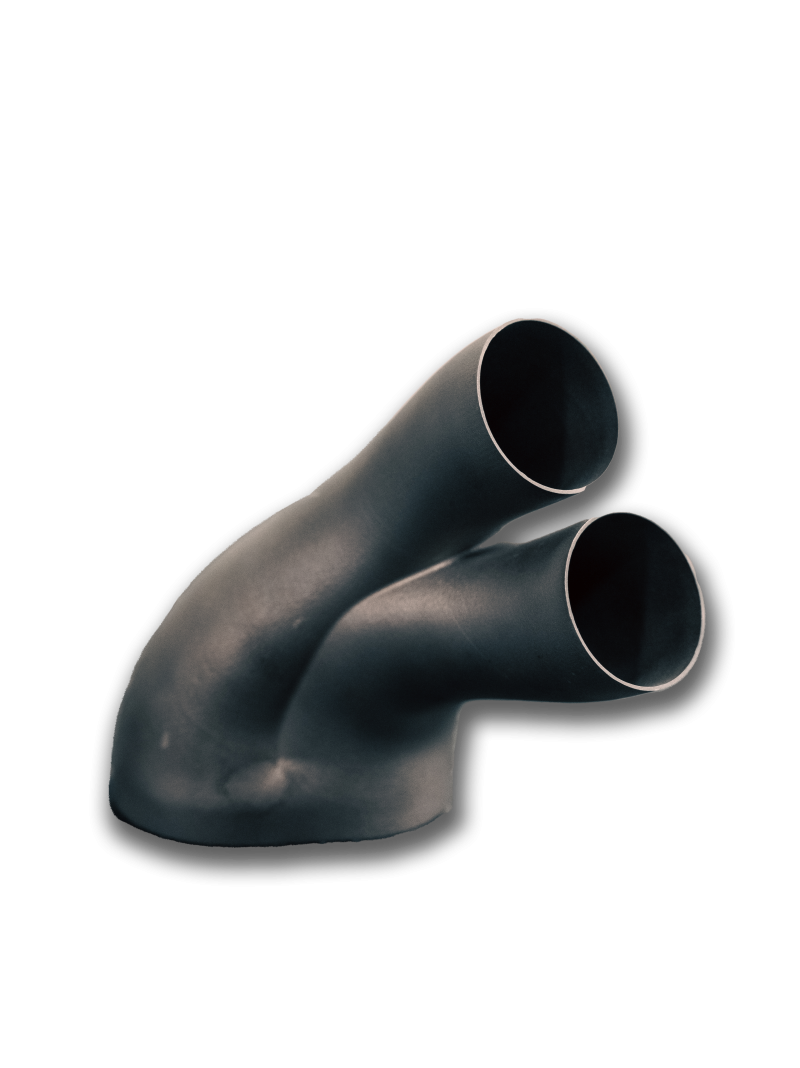
316L is a marine-grade austenitic stainless steel with molybdenum for better chloride corrosion resistance. It prints with high ductility and toughness, and its chemistry matches ASTM F138 surgical implant grade (UNS S31673).
Want these specifications on hand? Download the full 316L datasheet as a PDF to share with your team or attach to a drawing package.
Download Datasheet (PDF)316L is a low-carbon austenitic stainless steel widely used when corrosion resistance matters as much as strength. The molybdenum addition helps in chloride environments, which is why 316L appears so often in marine, chemical, and washdown service.
The EOS powder chemistry aligns with ASTM F138 / UNS S31673. That gives engineers a familiar chemistry baseline for medical and industrial work where 316L is already a known material family.
We print 316L on our direct metal laser sintering systems. As-built 316L already shows high elongation, so heat treatment is optional and typically driven by application-specific requirements instead of default process need.
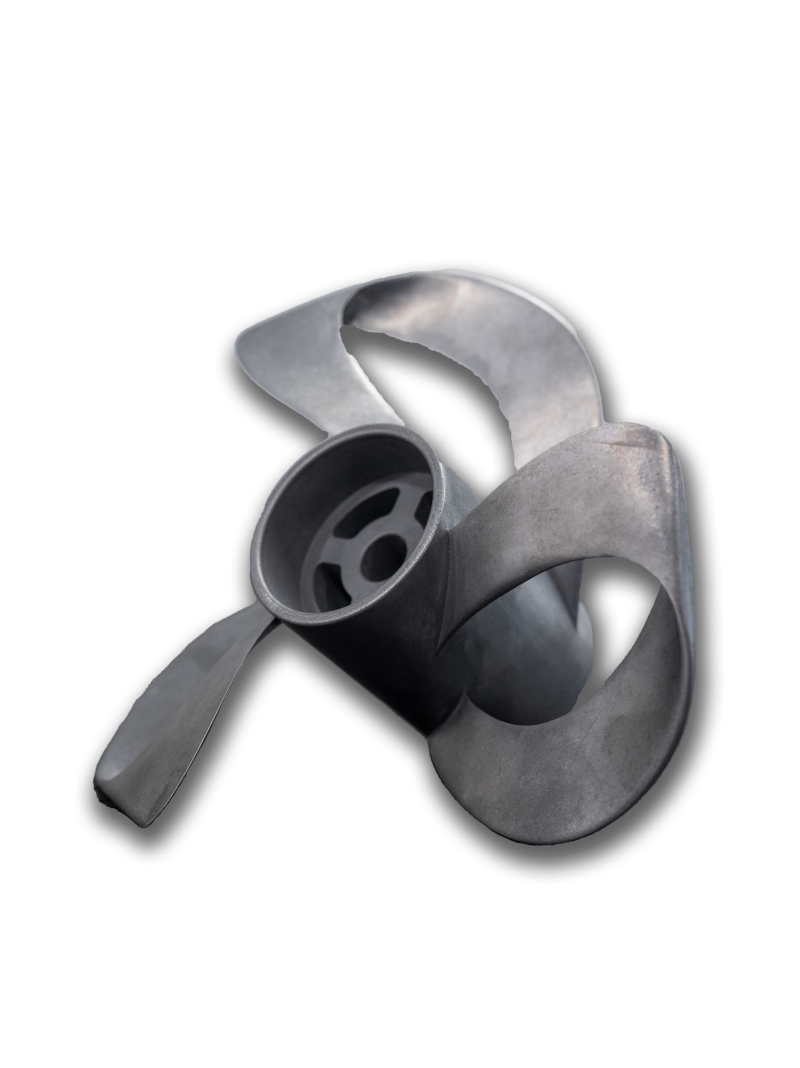
316L earns its place where parts have to resist corrosion in wet, chloride, or washdown service, not just carry load.
316L adds molybdenum, which improves resistance in chloride-heavy environments. That is why it is common in marine, washdown, and process hardware.
As-manufactured elongation is strong in both build directions, so parts are less brittle than many precipitation-hardening steels right out of the machine.
Published tensile values in the 560 to 670 MPa range make 316L practical for dense, load-bearing metal components where corrosion also matters.
Powder chemistry aligns with ASTM F138 / UNS S31673. If your team already works with implant-grade or corrosion-resistant 316L families, the alloy is familiar.
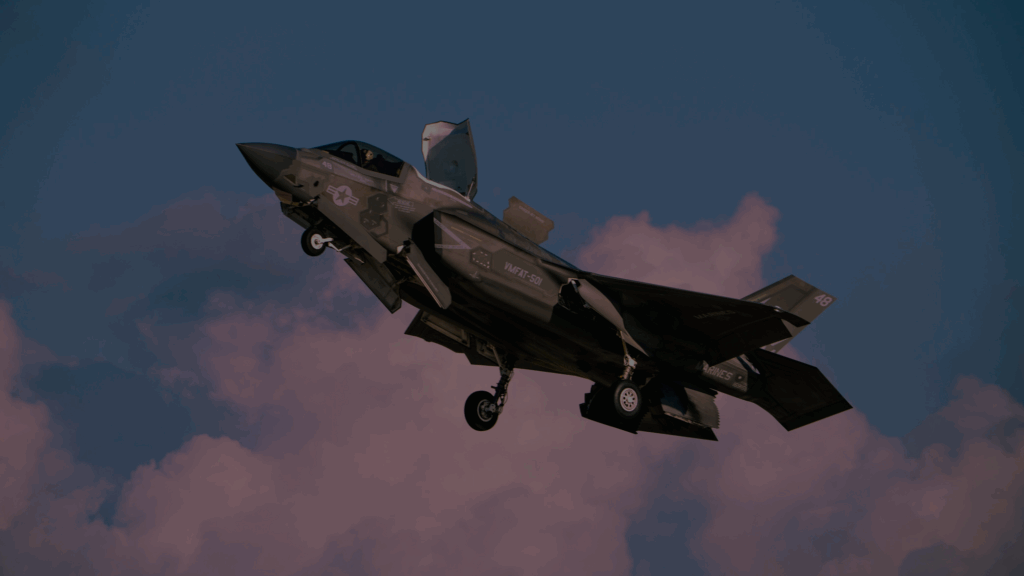
We print 316L for functional hardware in corrosive or wet service, often for medical, transportation, and heavy-use industrial environments.
Flow hardware, brackets, and tooling exposed to corrosive media where stainless performance is required from day one.
Custom metal parts for production environments that need corrosion resistance and routine cleaning without coating dependency.
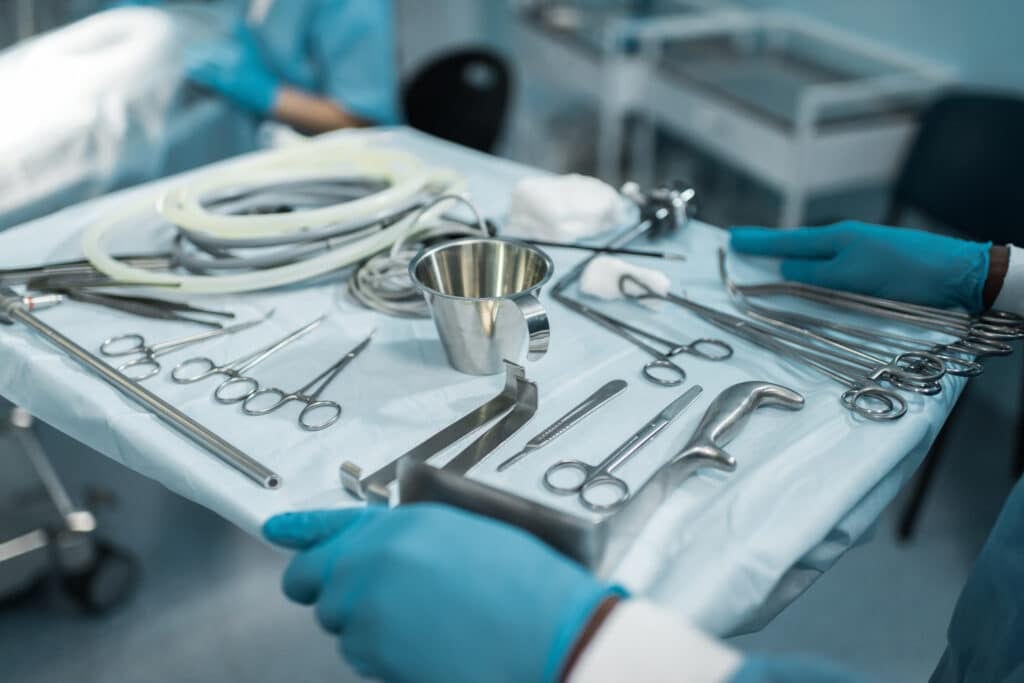
Functional components in material families medical teams already recognize, with high ductility and strong corrosion behavior.
Corrosion-resistant parts for wet or chloride-prone service where aluminum is not enough and hardened steels are overkill.
The values below come from the EOS StainlessSteel 316L material data sheet. We list the published process variants separately because properties change with system and layer thickness.
| Element | Min. | Max. |
|---|---|---|
| Fe | Balance | Balance |
| Cr | 17.0 | 19.0 |
| Ni | 13.0 | 15.0 |
| Mo | 2.25 | 3.00 |
| C | — | 0.03 |
| N | — | 0.10 |
| System | Layer thickness | Build rate | Min. wall thickness | Platform temp | Inert gas |
|---|---|---|---|---|---|
| EOS M 290 | 20 µm | 2.0 mm³/s | 0.3–0.4 mm | — | Argon |
| EOS M 290 | 40 µm | 3.7 mm³/s | 0.1 mm | — | Argon |
| EOS M 300-4 | 40 µm | — | — | — | — |
| EOS M 300-4 | 80 µm | — | — | — | — |
| EOS M 400-4 | 40 µm | — | — | — | — |
| EOS M 400-4 | 80 µm | — | — | — | — |
EOS publishes full process details for M 290 (20 µm and 40 µm), including build rate, defects, and minimum wall guidance. EOS also publishes mechanical values for M 300-4 and M 400-4 at 40 µm and 80 µm, shown below.
| Process | Orientation | Yield strength Rp0.2 [MPa] | Tensile strength Rm [MPa] | Elongation at break A [%] |
|---|---|---|---|---|
| EOS M 290, 20 µm | Vertical | 480 | 560 | 49 |
| EOS M 290, 20 µm | Horizontal | 540 | 645 | 38 |
| EOS M 290, 40 µm | Vertical | 490 | 580 | 49 |
| EOS M 290, 40 µm | Horizontal | 530 | 630 | 41 |
| EOS M 300-4, 40 µm | Vertical | 510 | 610 | 40 |
| EOS M 300-4, 40 µm | Horizontal | 580 | 670 | 35 |
| EOS M 300-4, 80 µm | Vertical | 490 | 620 | 40 |
| EOS M 300-4, 80 µm | Horizontal | 550 | 660 | 35 |
| EOS M 400-4, 40 µm | Vertical | 450 | 550 | 50 |
| EOS M 400-4, 40 µm | Horizontal | 500 | 600 | 35 |
| EOS M 400-4, 80 µm | Vertical | 450 | 550 | 45 |
| EOS M 400-4, 80 µm | Horizontal | 500 | 600 | 35 |
Values are reported as manufactured with test setup per ISO 6892-1. Orientation remains a meaningful factor, so we list vertical and horizontal results separately.
| Process | Avg. defect percentage | Density (ISO 3369) |
|---|---|---|
| EOS M 290, 20 µm | 0.018% | ≥ 7.97 g/cm³ |
| EOS M 290, 40 µm | 0.015% | ≥ 7.97 g/cm³ |
| Temperature | CTE |
|---|---|
| 25–100 °C | 15.72×10⁻⁶/K |
| 25–200 °C | 16.75×10⁻⁶/K |
| 25–300 °C | 17.27×10⁻⁶/K |
| 25–400 °C | 17.7×10⁻⁶/K |
Want these specifications on hand? Download the full 316L datasheet as a PDF to share with your team or attach to a drawing package.
Download Datasheet (PDF)Heat treatment is optional for DMLS 316L. As-built material already has high ductility, so we only add heat treatment when application requirements call for it.
Common routes aligned with AMS 2759-style practice include:
The quench needs to be fast enough to avoid chromium carbide precipitation, which can reduce corrosion performance. We confirm the exact route from your environment, geometry, and inspection requirements.
316L is a marine-grade austenitic stainless steel with molybdenum, which improves chloride corrosion resistance. It also prints with high as-built ductility, so it works well for functional parts that need both toughness and corrosion performance. The chemistry aligns with ASTM F138 / UNS S31673, so many teams already know the material family.
316L is usually the better choice when corrosion resistance and ductility matter most. 17-4 PH and maraging steel are often selected when higher hardness and higher heat-treated strength are the top priority. If your part runs in wet, chloride, chemical, or washdown environments, 316L is often where we start.
Not always. As-built 316L already has high elongation and good mechanical performance. Heat treatment is optional and depends on your application, inspection requirements, and service environment. When needed, common routes are stress relief or solution annealing with a fast quench to avoid chromium carbide precipitation.
DMLS tolerances can be as tight as +/- 0.005 in. (0.13 mm) in some cases. Final accuracy still depends on geometry, orientation, support strategy, and any post-machining. Share the CAD and call out fit-critical features, and we will confirm what is realistic for your part.
We see 316L used for chemical processing hardware, food processing equipment, medical devices and instruments, and marine or transportation components that need corrosion resistance with solid ductility. It is a practical choice for dense, functional metal parts that may face moisture, cleaning chemicals, or chloride exposure.
Send us your design and one of our estimators will review it for DMLS in 316L stainless steel. We will confirm alloy condition, tolerances, and timeline, then get you a quote.