







Strength and Toughness
ABS is a proven engineering plastic. ABS-M30 prints tougher than standard ABS, with better layer bonding, so parts hold up to handling, assembly, and real functional testing.

ABS-M30 is the thermoplastic we print most on our Stratasys Fortus machines. It is strong, tough, and dimensionally stable, and it costs less than the engineering and high-temp grades. When a part does not need high heat, chemical, or ESD performance, this is where we start.
Want these specifications on hand? Download the full ABS-M30 datasheet as a PDF to share with your team or attach to a drawing package.
Download Datasheet (PDF)ABS-M30 is a production-grade version of ABS (acrylonitrile butadiene styrene), the same plastic used in everything from automotive trim to power-tool housings. Stratasys tunes it for FDM, so it bonds better layer to layer and prints tougher than standard ABS while staying easy to run.
It holds its shape and size well. Heat deflection is right around 100 °C, so parts do not sag on a warm shop floor or in a closed car. The surface takes paint, glue, and sanding cleanly, and soluble support means we can print enclosed cavities and clear them out without damaging the part.
We print it on our fused deposition modeling systems. If a part needs to run hotter, resist chemicals, dissipate static, or carry more load, we will point you to a grade that fits, such as polycarbonate, a nylon, or ULTEM.
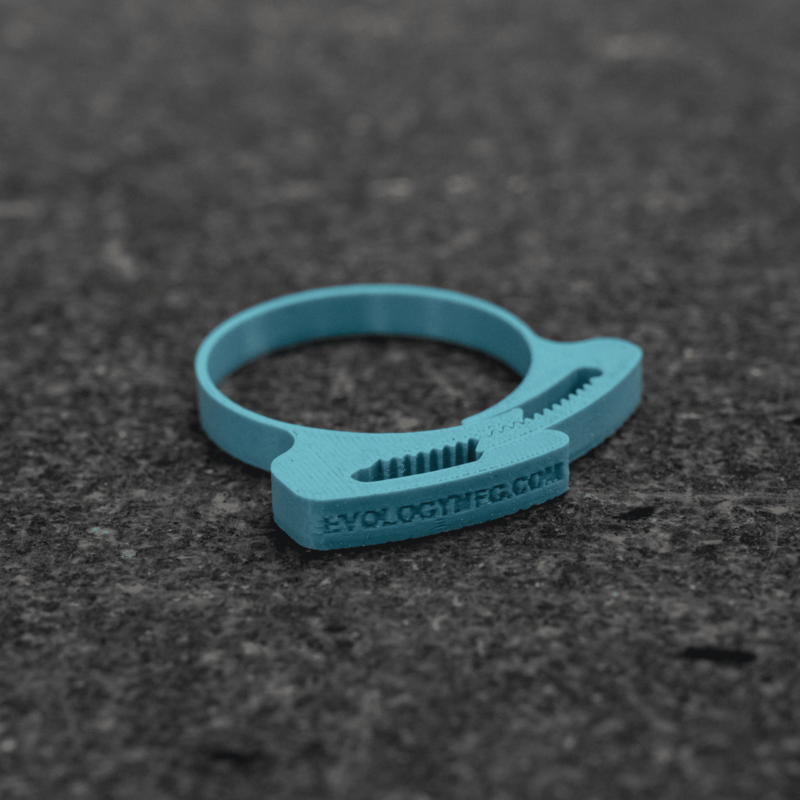
ABS-M30 earns its place as the default choice for functional plastic parts, where cost and turnaround matter as much as the numbers on the datasheet.
ABS is a proven engineering plastic. ABS-M30 prints tougher than standard ABS, with better layer bonding, so parts hold up to handling, assembly, and real functional testing.
Heat deflection sits near 100 °C at 264 psi and the glass transition is about 105 °C. Parts keep their shape on the bench, in a warm shop, and in a car interior in summer.
Stratasys stocks ABS-M30 in nine colors, from natural and white to black, gray, red, blue, green, yellow, and orange. Useful for color-coded fixtures or presentation models.
It is the material we reach for first when a part does not need high heat, chemical, or ESD performance. Good properties at a lower cost than the engineering and high-temp grades.
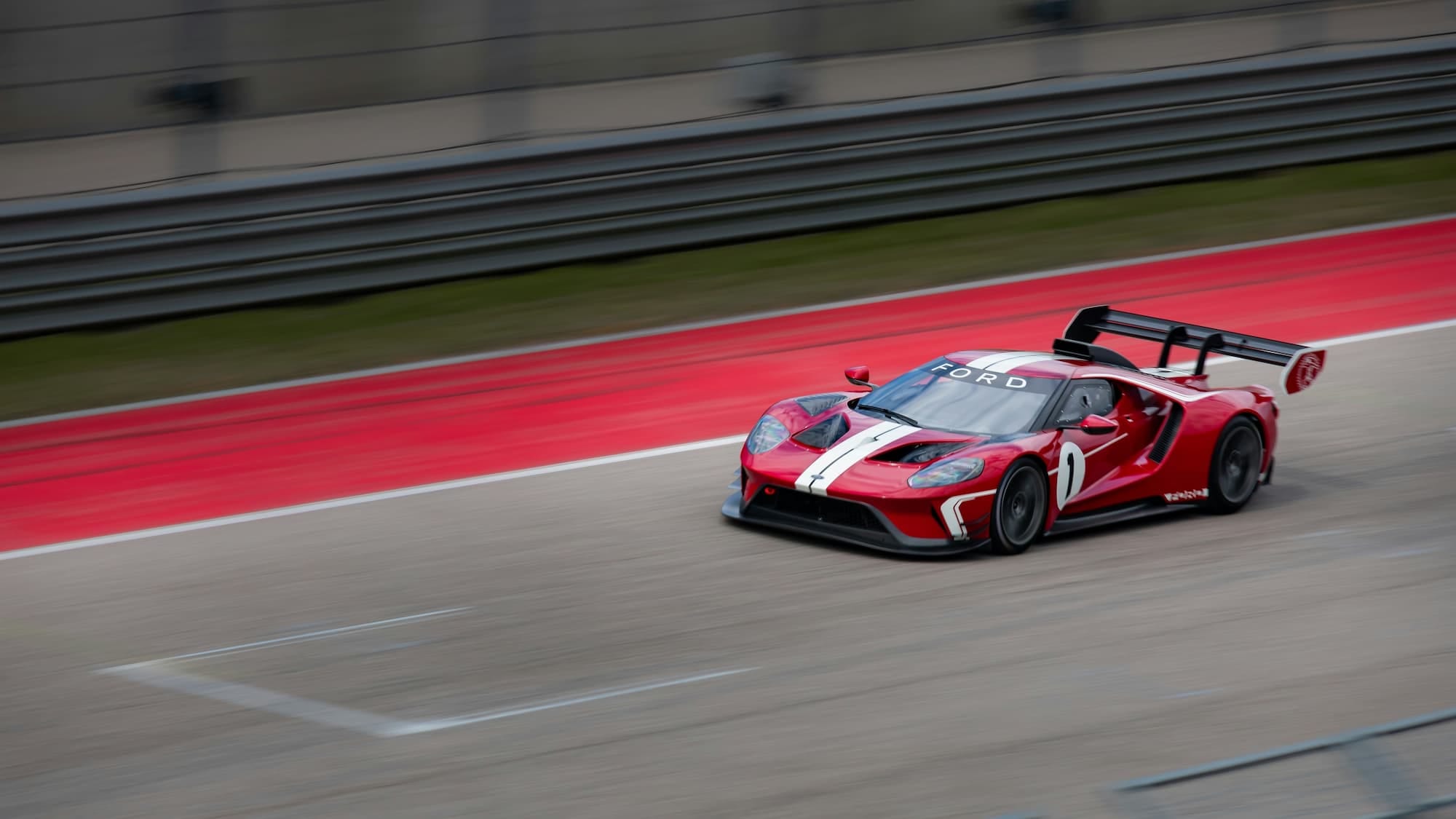
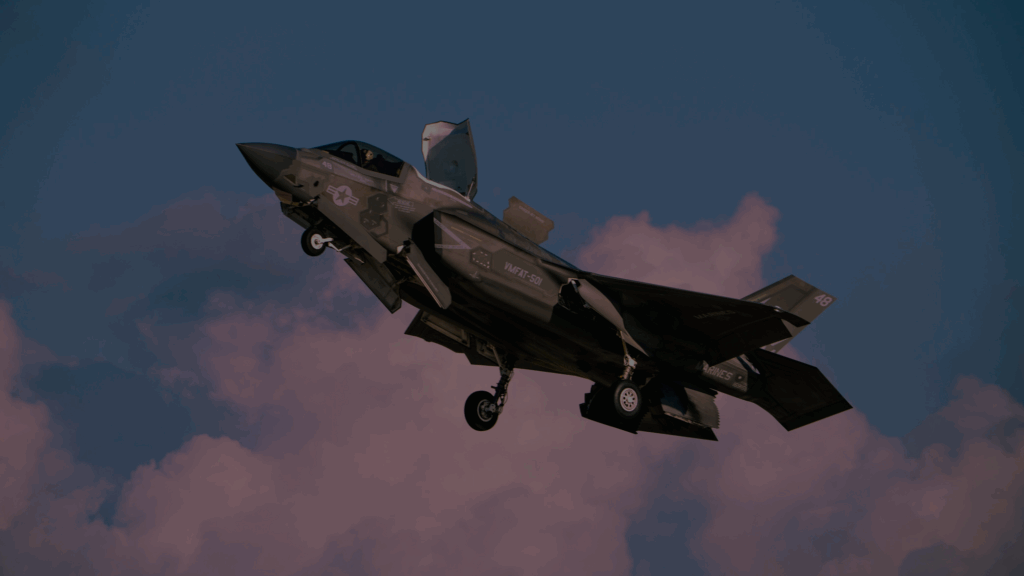
We print ABS-M30 for prototypes, shop-floor tooling, and short-run functional parts. Most of it ships into automotive, aviation, and consumer goods programs.
Parts you can bolt down, load, and test, not just look at. ABS-M30 survives fit checks and design iterations before you commit to tooling.
Assembly aids, locating fixtures, and drill guides for the shop floor, printed in a day and reprinted just as fast when the design changes.
Light-duty tooling, gauges, and holders that would cost more and take longer to machine from metal or plastic stock.
Short-run covers, housings, brackets, and ducts where ABS is already the right plastic and volumes do not justify an injection mold.
The numbers below come from the Stratasys ABS-M30 material data sheet. FDM parts are anisotropic, meaning strength depends on how the part is oriented on the build, so Stratasys tests more than one orientation and we list them separately rather than quoting a single figure.
XZ (also called on-edge) and ZX (upright) describe how the tensile bar sat on the build plate. XZ runs the layers along the load and prints stronger and more ductile. ZX stacks the layers across the load, so it is weaker and breaks with little stretch. We orient your part to put its strength where the load is. Values are typical, printed at a 0.25 mm (0.010 in.) layer height in black.
| Property | Typical value | Test method |
|---|---|---|
| Specific gravity | 1.05 (at 23 °C) | ASTM D792 |
| Heat deflection (HDT) at 66 psi | 104.4 °C (220 °F) | ASTM D648, Method B |
| Heat deflection (HDT) at 264 psi | 100.0 °C (212 °F) | ASTM D648, Method B |
| Glass transition (Tg) | 105.2 °C (221.4 °F) | ASTM D7426 |
| Mean CTE (40–140 °C) | 60.77 µm/m·°C (33.76 µin/in·°F) | ASTM E831 |
| Mean CTE (40–80 °C) | 58.65 µm/m·°C (32.58 µin/in·°F) | ASTM E831 |
| Volume resistivity | > 6.75 × 10¹⁴ Ω·cm | ASTM D257 |
| Dielectric constant (1 kHz) | 2.64 (XY) / 2.78 (ZX) | ASTM D150 |
| Dissipation factor (1 kHz) | 0.003 (XY) / 0.005 (ZX) | ASTM D150 |
| Property | F900 XZ | F900 ZX | F770 XZ | F770 ZX |
|---|---|---|---|---|
| Yield strength [MPa] | 30.8 | 27.5 | 32.5 | 23.1 |
| Elongation at yield [%] | 1.8 | 1.7 | 2.1 | 1.6 |
| Strength at break [MPa] | 28.1 | 26.8 | 27.6 | 22.9 |
| Elongation at break [%] | 8.1 | 1.8 | 4.5 | 1.6 |
| Tensile modulus [GPa] | 2.40 | 2.30 | 2.00 | 1.78 |
Yield strength runs about 27–33 MPa (roughly 3,900–4,700 psi) depending on system and orientation. The datasheet lists imperial equivalents for every value.
| Property | F900 XZ | F900 ZX | F770 XZ | F770 ZX |
|---|---|---|---|---|
| Strength at break [MPa] | No break | 47.7 | No break | 37.8 |
| Strength at 5% strain [MPa] | 58.7 | — | 58.1 | — |
| Flexural modulus [GPa] | 2.22 | 1.96 | 2.17 | 1.84 |
"No break" means the XZ bars bent to the test limit without fracturing, which is why those cells report strength at 5% strain instead.
| Property | XZ orientation | ZX orientation |
|---|---|---|
| Compressive yield strength [MPa] | 88.3 | 208 |
| Compressive modulus [GPa] | 2.20 | 2.16 |
| Izod impact, notched [J/m] | 101 | 32.2 |
| Izod impact, unnotched [J/m] | 291 | 103 |
Compression per ASTM D695, Izod impact per ASTM D256. Notice compression is higher in ZX while tensile is higher in XZ, another reason orientation is a design decision, not an afterthought.
Want these specifications on hand? Download the full ABS-M30 datasheet as a PDF to share with your team or attach to a drawing package.
Download Datasheet (PDF)A few things worth knowing before you send an ABS-M30 part. Most of them come down to orientation and finishing.
Orientation drives strength. A part is strongest along the layers and weakest across them, so we point the layers to carry the load and keep them out of any bending plane that matters. If a feature has to be strong in every direction, tell us and we will plan for it.
Layer height trades finish for speed. We commonly print ABS-M30 between 0.005 and 0.013 in. (0.127 to 0.330 mm). Thinner layers give a smoother surface and finer detail; thicker layers build faster. We pick the layer height from the part's detail and your timeline.
Finishing is straightforward. ABS-M30 sands, primes, paints, and bonds well, and it can be vapor smoothed for a sealed, glossy surface. Soluble support washes out of internal channels and pockets, so enclosed features are on the table.
ABS-M30 is a production-grade ABS that Stratasys developed for FDM. Compared with standard ABS, it bonds better between layers and prints tougher, with higher tensile strength and better part-to-part consistency. It is the everyday workhorse for functional plastic parts that do not need high heat, chemical, or ESD performance.
In its strongest orientation, ABS-M30 has a tensile yield strength around 30 to 33 MPa (about 4,500 to 4,700 psi) and a tensile modulus near 2.4 GPa. Because FDM is anisotropic, strength drops when the load runs across the layers instead of along them, so we orient the part to put its strength where it is needed.
Heat deflection is about 100 °C (212 °F) at 264 psi and 104 °C (220 °F) at 66 psi, with a glass transition near 105 °C. That covers most shop, indoor, and vehicle-interior conditions. If your part will run hotter or sit near a heat source, we would look at polycarbonate, a nylon, or a high-temp grade like ULTEM instead.
FDM builds a part one layer at a time, and the bond between layers is not quite as strong as the plastic within a layer. A part loaded along its layers (XZ) is stronger and more ductile than the same part loaded across its layers (ZX). We plan orientation around how the part is loaded, so tell us where the stress goes and we will build accordingly.
Yes. ABS-M30 sands, primes, paints, and bonds well with common ABS adhesives, and it can be vapor smoothed for a sealed, glossy finish. We print it with soluble support, so enclosed cavities and internal channels can be cleared out without damaging the part.
Stratasys stocks ABS-M30 in nine colors: natural/ivory, white, black, gray, dark gray, red, blue, green, yellow, and orange. That is handy for color-coded fixtures or presentation models. For an exact color match, painting a natural or white part is usually the better route.
Move up from ABS-M30 when a part needs more heat resistance (polycarbonate, ULTEM), chemical resistance or fatigue life (the nylons), static dissipation (ABS-ESD7), or biocompatibility (ABS-M30i, PC-ISO). If you are not sure, describe the load, temperature, and environment and we will recommend the right grade from our FDM lineup.
Send us your design and one of our estimators will review it for FDM in ABS-M30. We will confirm the material, orientation, build size, and timeline, then get you a quote.