



From CAD to Metal: FDF Raceshop’s Generatively Designed Handbrake & Clutch Pedal
How Evology metal-printed a hydraulic handbrake assembly and a BMW E46 clutch pedal for Formula Drift’s Josiah Fallaise, turning generative-design files into structural, race-ready aluminum parts.
- Customer
- FDF Raceshop
- Process
- DMLS Metal 3D Printing
- Material
- AlSi10Mg Aluminum
- Design
- Generative Design
The Builder Behind the Parts
Josiah Fallaise runs FDF Raceshop, drives professionally in Formula Drift, and reverse-engineers automotive parts for a living. He designs his own parts too, using generative design so the software can work out the shape, structure, and material for the loads each part actually sees.
For his race car he wanted two parts built from scratch: a hydraulic handbrake assembly and a replacement clutch pedal. Both are structural, and both had to hold up to hard use. What he needed was a way to get those models into metal without giving up strength, quality, or control over how they were made.
Why FDF Came to Evology
There is a lot of variation in metal 3D printing, and the cheapest quote rarely gives you the best part. Send a file overseas and you will get a low price, but it often comes back printed and oriented the cheapest way to run, which is usually the wrong way for a part that carries load. It can look fine and still fail where it counts.
Josiah came to us for parts printed in North America, built to take structural loads, and reproduced with enough resolution to keep every detail his design work put in. That is the kind of job our DMLS metal 3D printing is built for.
Designed in CAD First
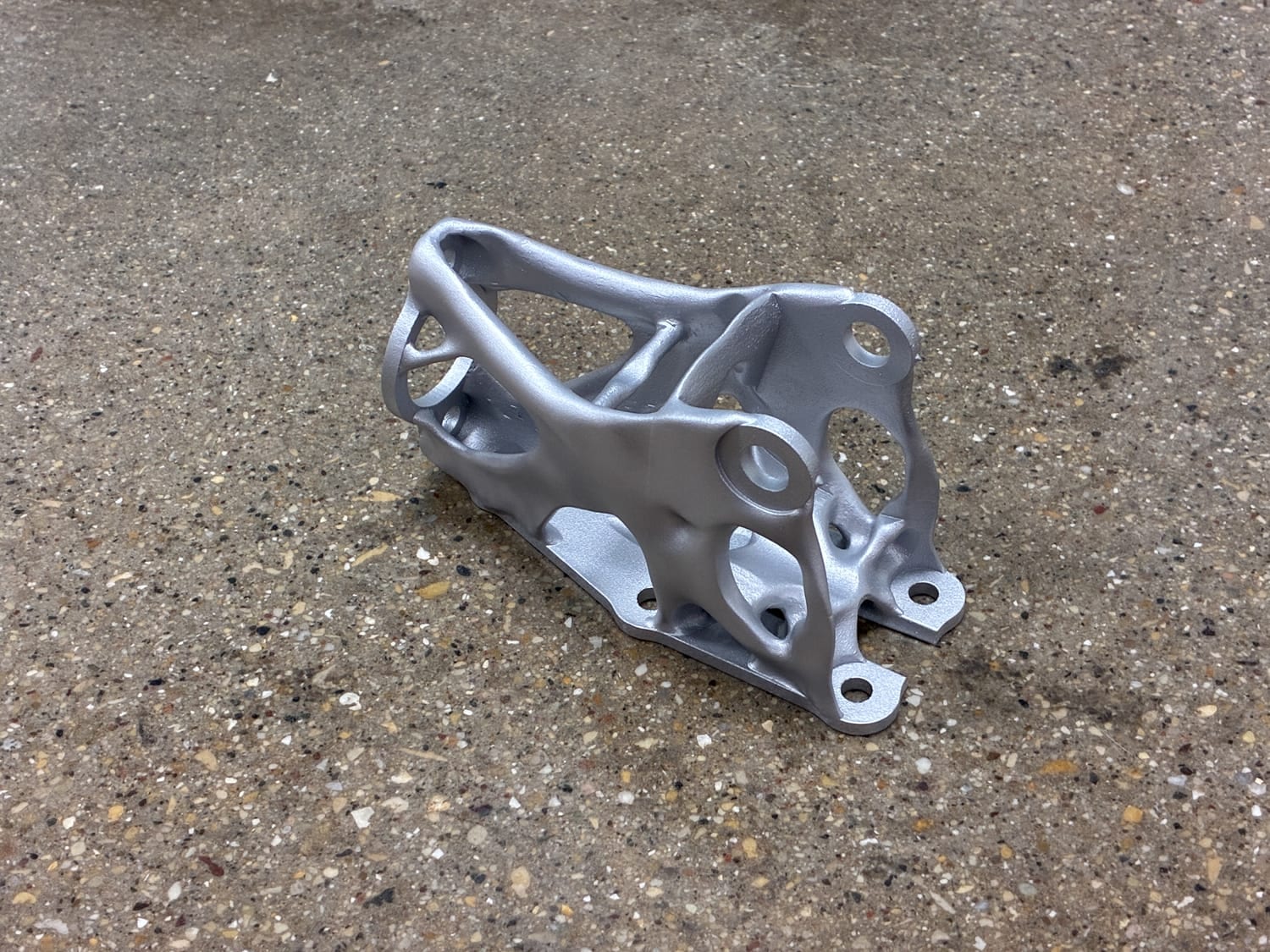
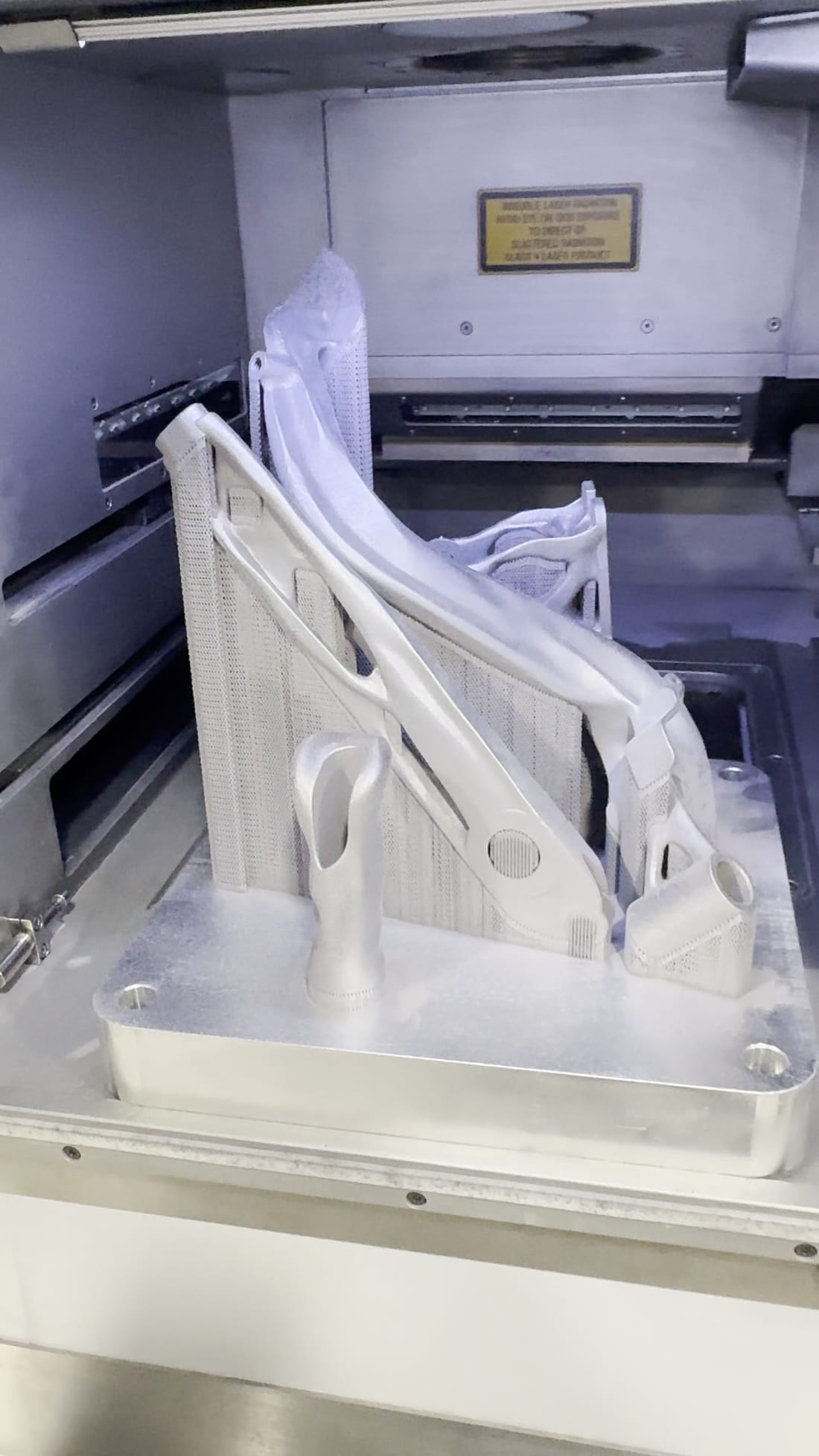
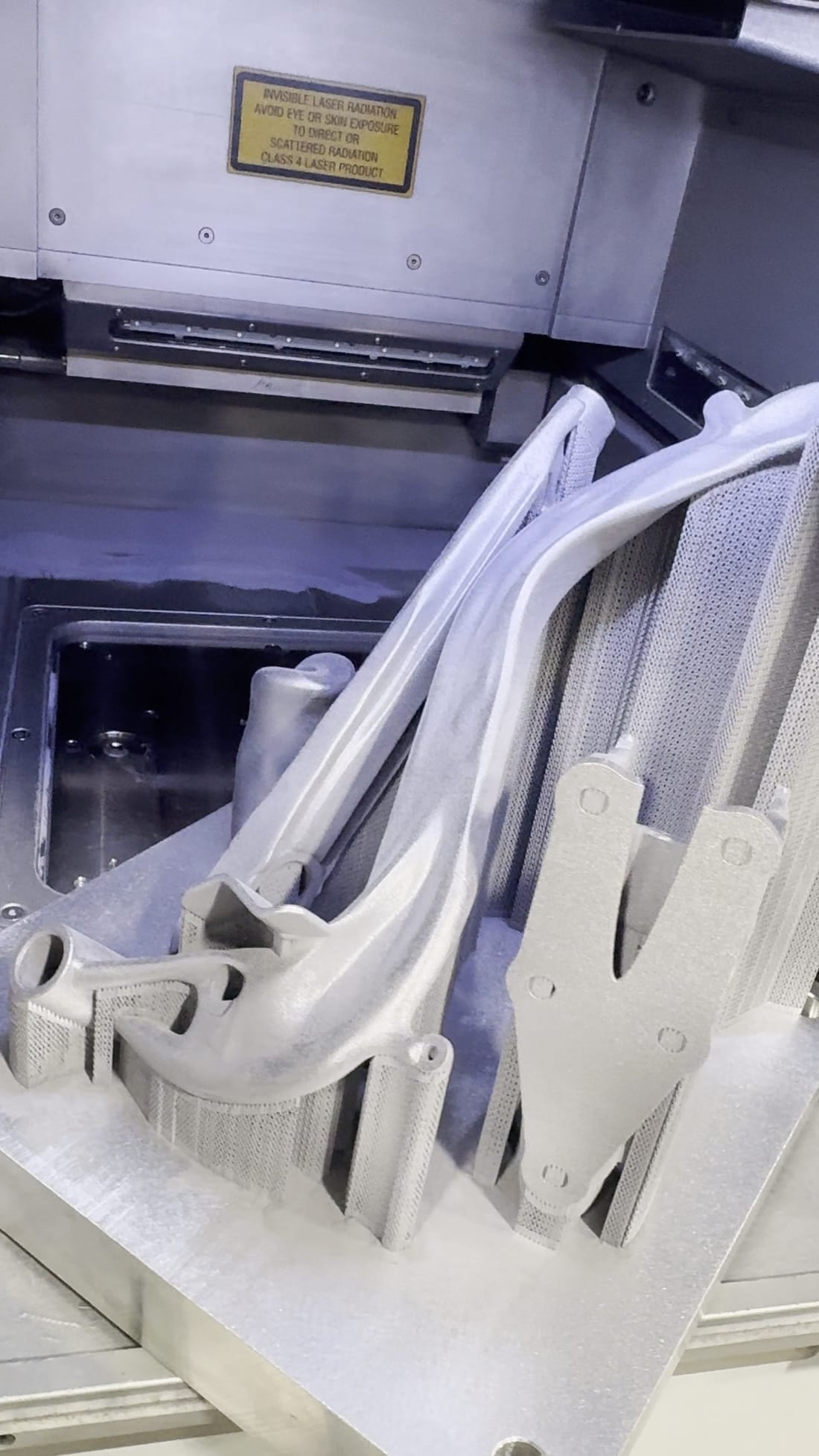
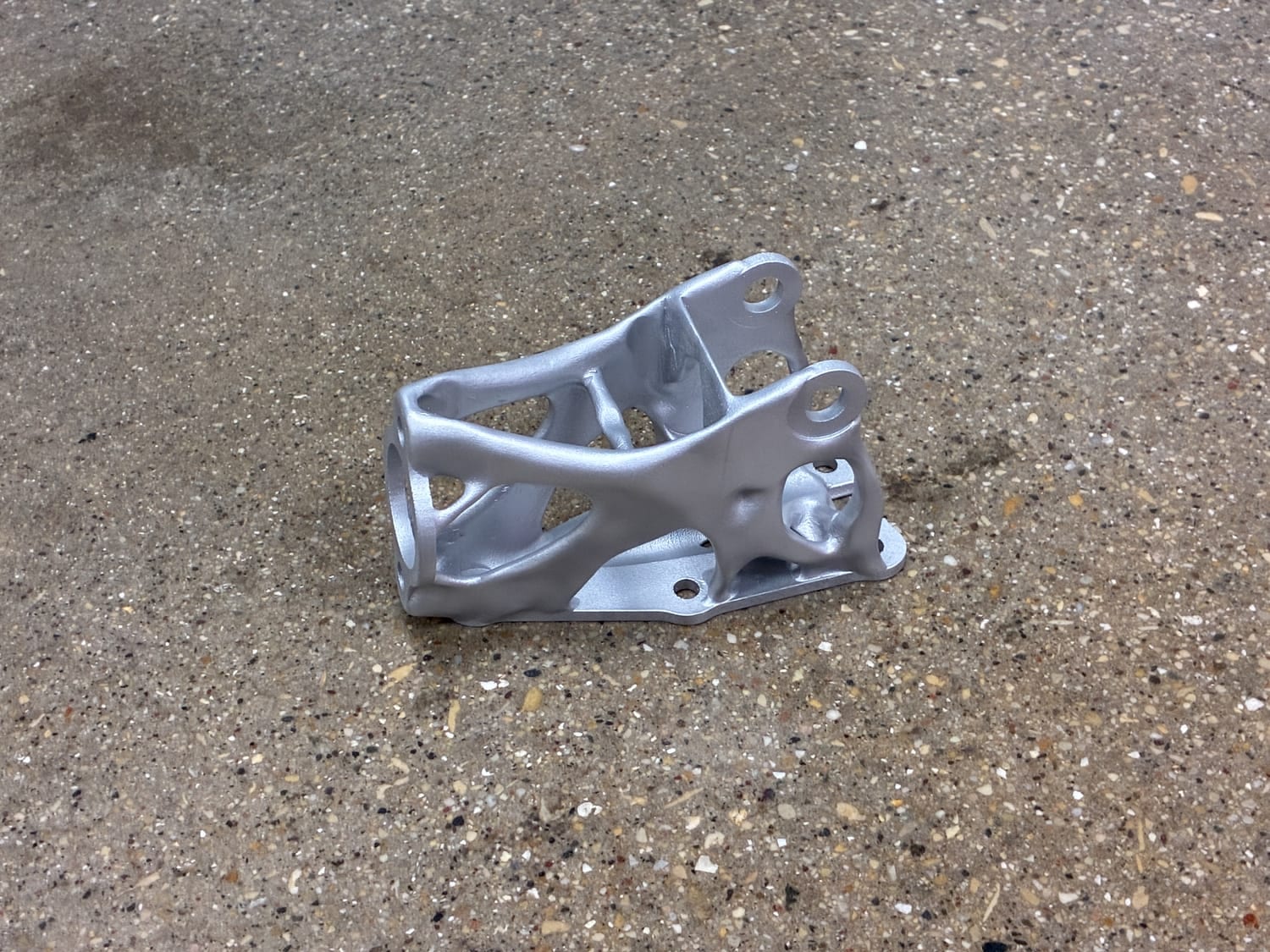
Every part started as an optimized model. Using generative design, Josiah defined the loads, the mounting points, and the regions the geometry had to avoid, then let the software resolve the most efficient shape and structure for the job. The result is organic, load-path-driven geometry that would be difficult or impossible to machine conventionally.
Because the design work happens up front, the printed part matches the model instead of a simplified version of it. Our job was to reproduce that geometry in dense metal and hold the tolerances that matter on bearing bores, bolt holes, and mating faces.
The quality’s going to be sick, and I can’t wait to use this, put it to the test, see if we can honestly make these parts fail. And luckily, if they don’t, then they surpass whatever the standard is, and that means you can genuinely use these in structural applications.
The Hydraulic Handbrake
The handbrake uses an in-front-of-handle layout, with the master cylinder mounted ahead of the lever. Load studies drove the shape: the master is pushed forward, and the two M8 bolts at the flange are what react that force, so the geometry concentrates material where the bolts connect and thins out everywhere it is not needed.
From any angle there is clear tool access to each fastener and clearance around every hole. Josiah marked those spaces as avoidance regions, keep-out zones the generative design had to build around, so the geometry never blocks a socket or an extension, and that access carried straight through to the printed part.
From a Clay Model to Metal
The handle grip began as a clay model Josiah shaped by hand. That organic form was captured and printed one-to-one in metal, and it came out with an even matte finish, the look of a bead- or media-blasted surface.
Supports You Machine Off
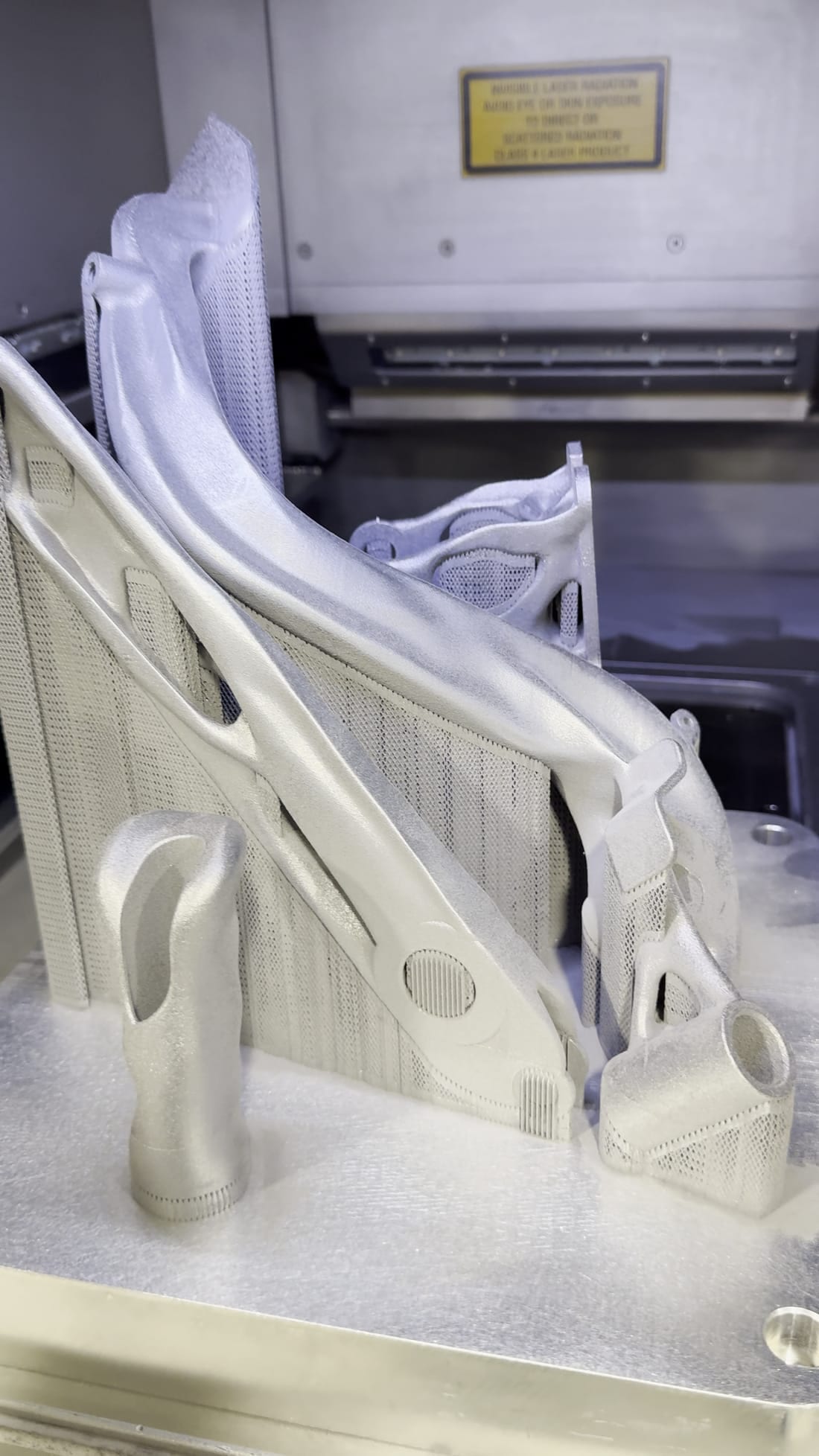
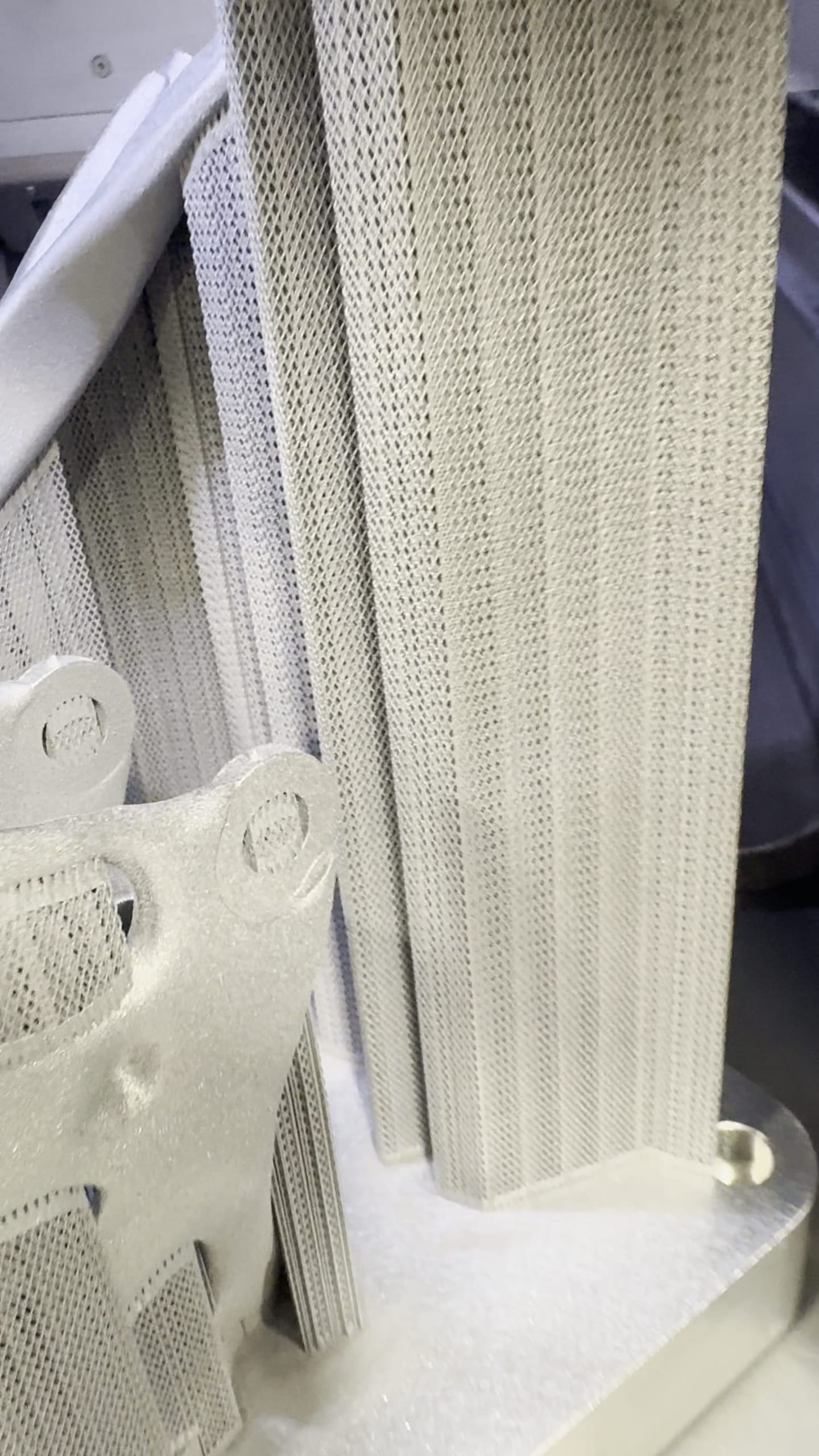
Where the print needed supports, metal worked in his favor. On the plate every part stands in a dense lattice of the same alloy, holding the geometry down and pulling heat out of it as it builds.
Rather than prying and snapping off plastic, that leftover material grinds, mills, and machines away with the same tools any metalworker already has on the bench.
Printed Threads and a Perfect Fit
The handle bolts to the body with two M6 socket-head screws, and the threads were printed directly into the part, so assembly meant chasing them and installing hardware, nothing more. A recess in the body mechanically locks the top of the handle in place, and the fit came together perfectly on the first try.
The assembly also takes bearings and bushings in a couple of bores. Those are tolerance-critical fits, so we planned them with Josiah before the build, printing the bores close and finishing them to size so the hardware seats the way it should.
How We Steered the Build: Fill the Plate
When Josiah first reached out, the job was the clutch pedal. On its own it did not come close to filling the build plate, and because the machine recoats powder across the entire plate on every layer no matter what, that open space was effectively already paid for.
So we suggested using it. Rather than save the handbrake for a separate build, those parts went onto the same plate and came out of machine time that was already committed. It is how we like to work: figure out what you are after and by when, then use what we know about the process to get you more out of a single run.
The BMW E46 Clutch Pedal
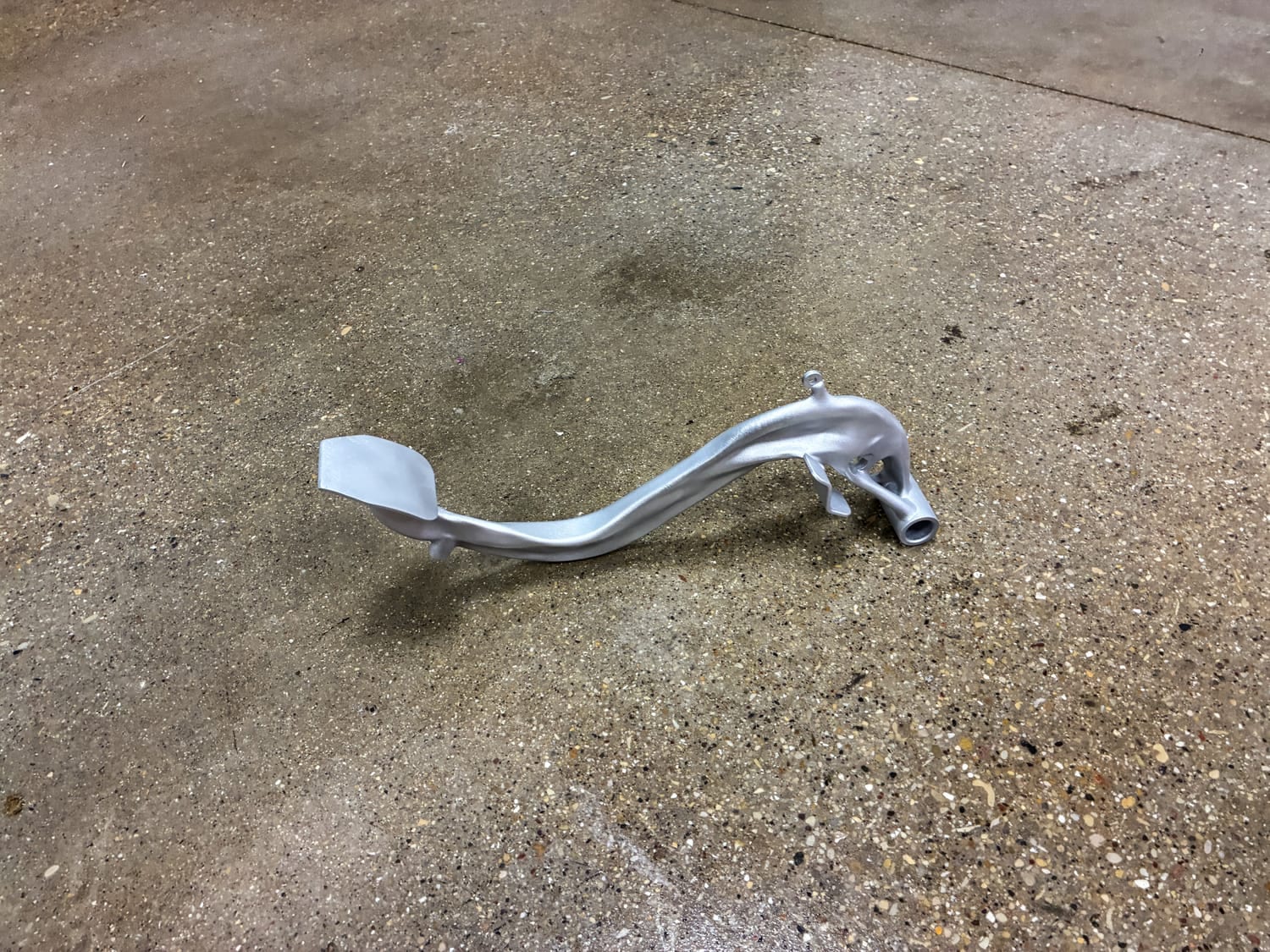
The clutch pedal is where the project started, and it is a direct OEM replacement for the BMW E36 and E46. As Josiah applied different load cases in the design, the software added structure only where it was needed, leaving the sensor pad minimal because the loads proved it did not need more.
It is engineered to drop straight into the factory system. There is a printed M8 threaded hole for the bump stop against the firewall, and the pedal accepts the factory rubber boot, the OEM BMW pin, and the OEM spring clip, no adapters required.
~0.9 lb
Handbrake, printed weight
~0.64 lb
Clutch pedal, printed weight
100%
Dense metal, the only option in DMLS
1:1
Hand clay model to metal print
Designing for Metal Additive
Part of our job was guiding these parts to print well the first time. Where it mattered, we helped Josiah design for the process:
- Fully dense parts, because DMLS cannot use hollow infill patterns, trapped powder has nowhere to escape between fused layers
- Smart print orientation, including steep angles, to balance surface quality, strength, and support
- Metal supports positioned so they clean up with conventional grinding and machining
- Tolerances scoped up front for bearing bores, bushings, and bolted joints
- Threads printed into the parts and simply chased to final size
The payoff is parts that are light, fully dense, and strong enough to trust in structural, load-bearing use.
More From the Build
Resolution You Can See
The print quality shows up in a small detail. On the finished parts you can read every decision the generative-design software made, down to two little nubs of material the algorithm added that Josiah never took out of the model. They came through clear as day in the metal.
That is the resolution we hold on these builds, so the part that comes off the machine carries the strength, fit, and finish of the model he designed.
Watch the Build
Josiah unboxed and assembled the parts on camera. Watch the full breakdown to see the fit, finish, and detail up close.
Moving Forward
Whether you design your own parts or hand us a concept, we bring the same rigor to a one-off race component that we bring to production work. Explore our DMLS metal 3D printing and the automotive work we support, and see how the right process turns an optimized model into a part you can actually run.

Have a Part Like This?
Send us your files and we will scope the right process, recommend a material, and get you a quote. From a single prototype to a low-volume run, our team turns complex parts around fast.