



High Heat Resistance
Heat deflection reaches about 140 °C at 264 psi, well above ABS, ASA, or PC-ABS. When a part sees sustained warmth, PC gives you real headroom.

PC is the strongest and most heat-resistant of our standard FDM thermoplastics. With heat deflection around 140 °C and tensile strength near 94 MPa, it is what we print when a part needs to carry real load or take heat that would soften ABS or ASA.
Want these specifications on hand? Download the full PC datasheet as a PDF to share with your team or attach to a drawing package.
Download Datasheet (PDF)Polycarbonate is a true industrial engineering plastic, and FDM PC brings its signature properties to 3D printing: high strength, high impact resistance, dimensional stability, and heat resistance. It is the material you move up to when ABS or ASA cannot keep up.
Heat is where PC really separates itself. Heat deflection lands near 140 °C at 264 psi, roughly 40 °C higher than the ABS family, so parts hold their shape in warm environments. It is also the strongest of our standard grades, with tensile yield strength of 93.9 MPa in the strong orientation.
We print PC on our fused deposition modeling systems. White is the standard color, with black and red available as validated materials. For prolonged outdoor exposure we would steer you toward ASA, since PC loses some strength under sustained UV.
PC is our answer when strength and heat resistance are the priority and a commodity plastic will not do.
Heat deflection reaches about 140 °C at 264 psi, well above ABS, ASA, or PC-ABS. When a part sees sustained warmth, PC gives you real headroom.
Tensile yield strength hits 93.9 MPa in the strong orientation with a modulus near 3 GPa. It is the strongest of our standard FDM thermoplastics.
PC holds tight tolerances and stays stable under load and heat, which is why it is a proven choice for tooling and demanding functional parts.
Unnotched impact is high, so PC parts absorb energy rather than shattering. It carries the toughness people expect from industrial polycarbonate.
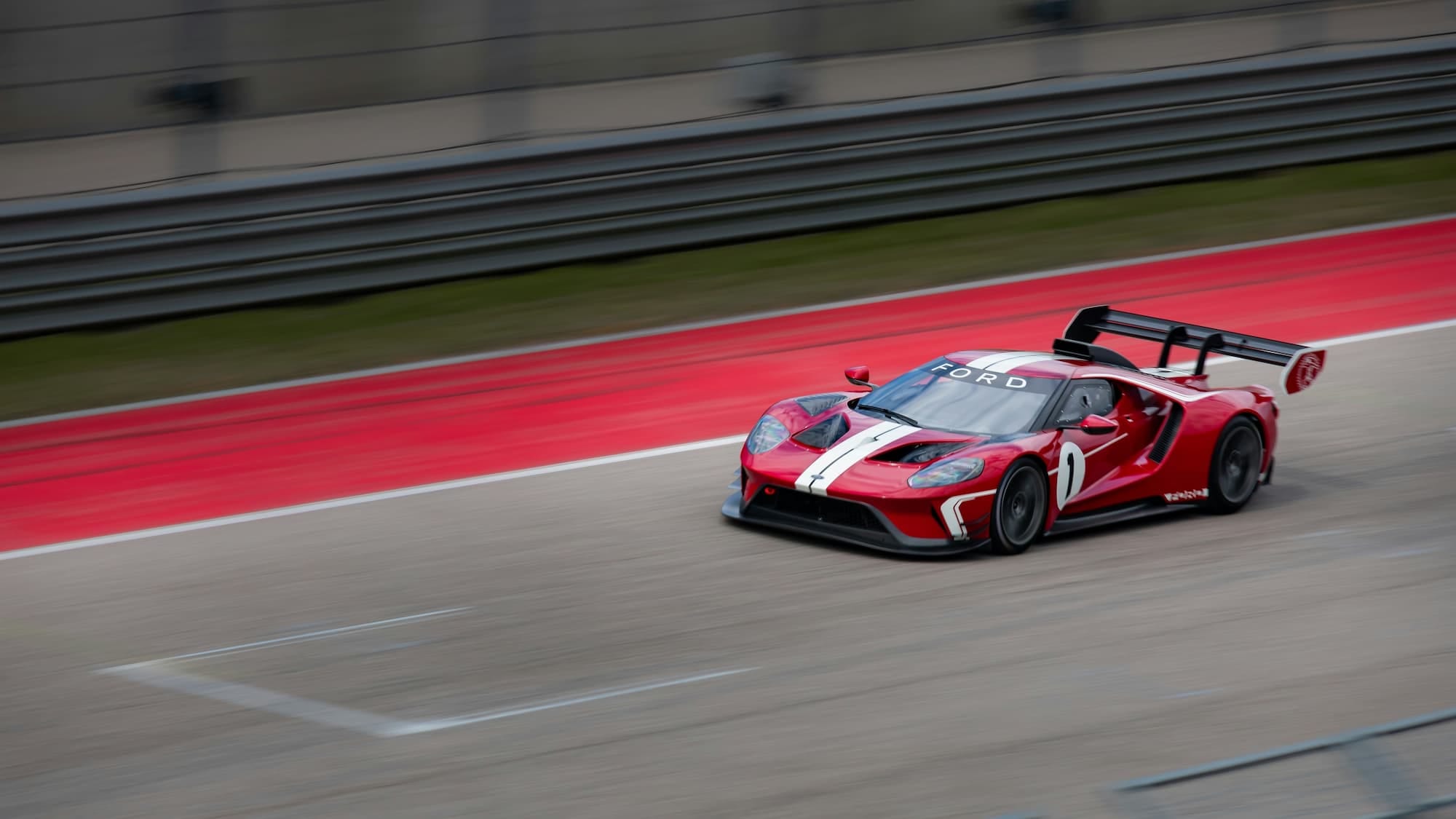
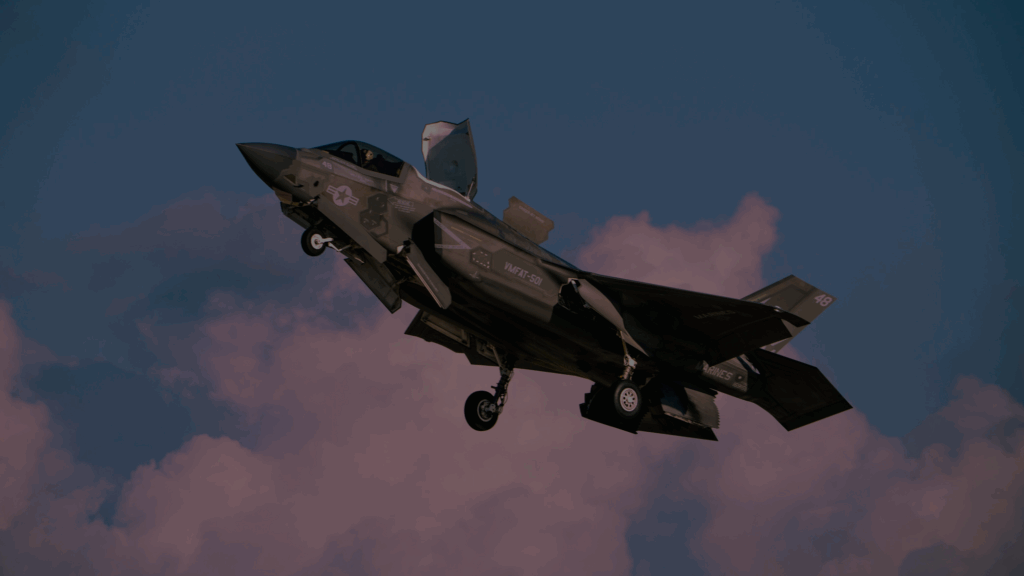
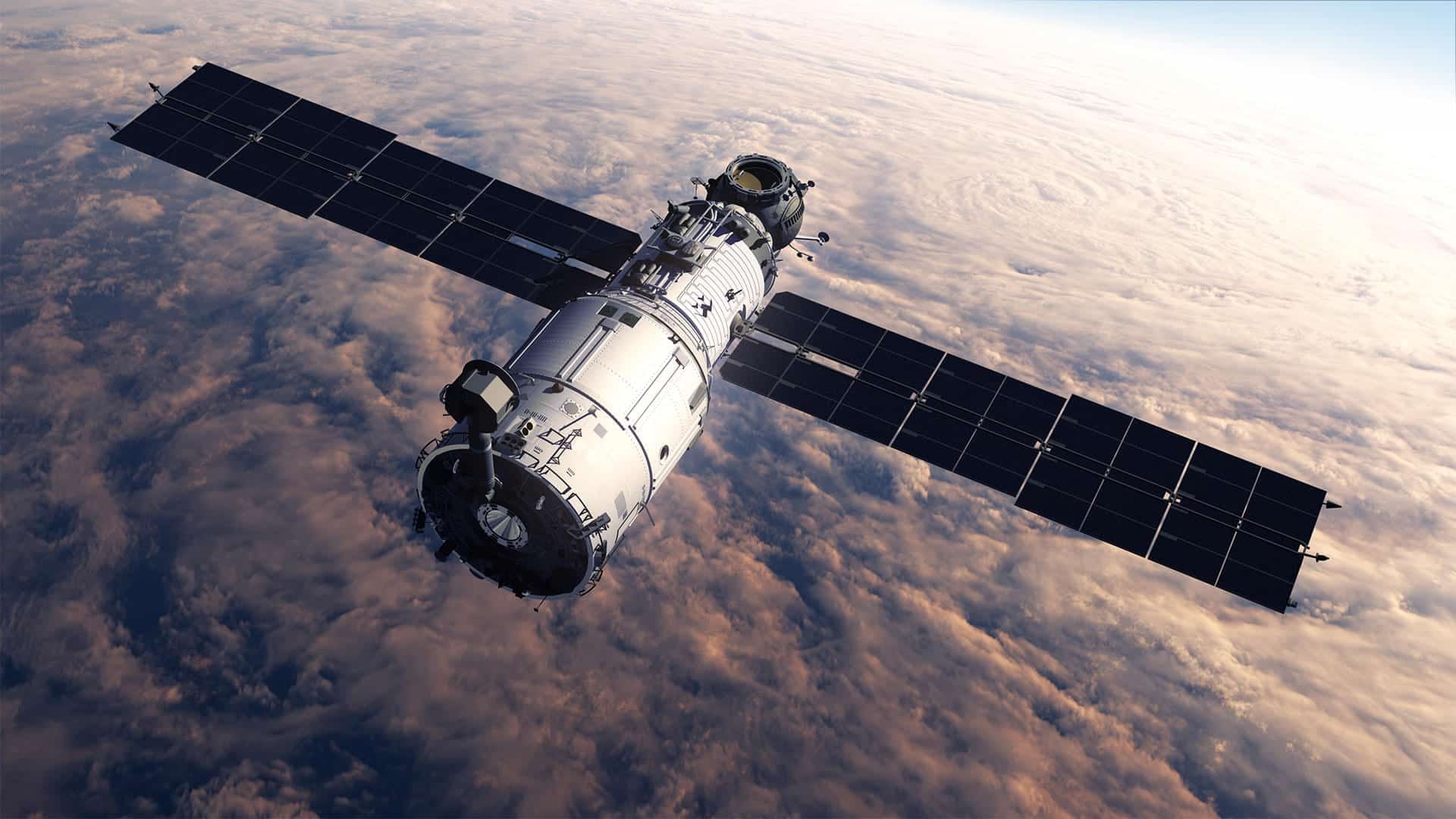
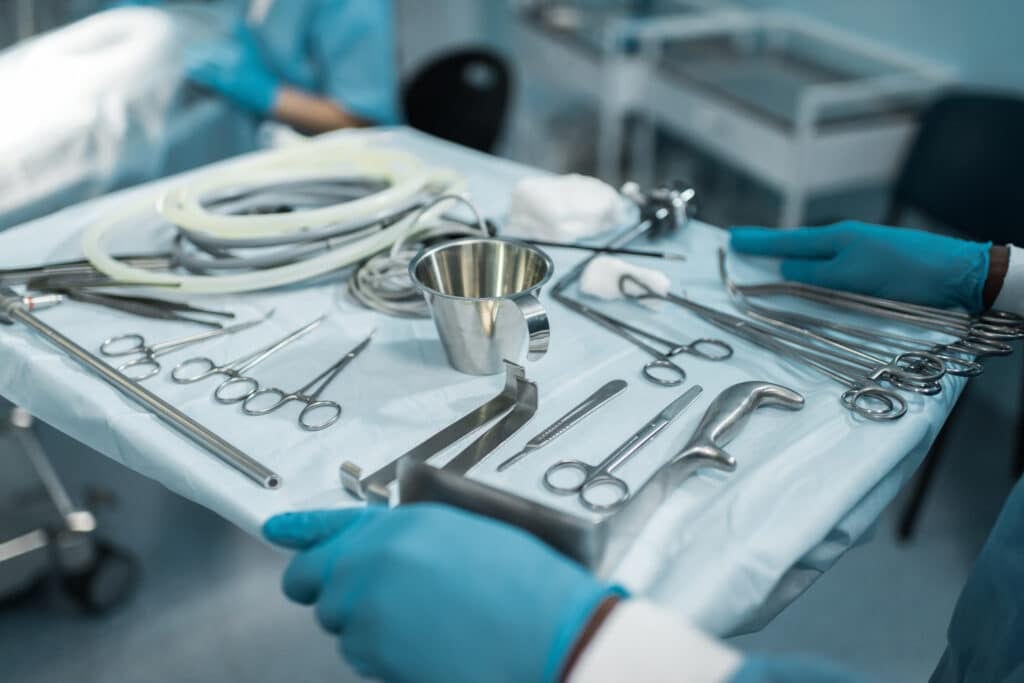
PC shows up across aviation, automotive, and defense work, wherever strength and heat both matter.
Components and fixtures that operate in warm environments where ABS or ASA would soften.
Prototypes that need to carry real load and validate strength before production.
Jigs, fixtures, and tools that demand higher strength and heat resistance than commodity plastics provide.
Brackets and mounts where stiffness and dimensional stability matter under load.
The numbers below come from the Stratasys PC material data sheet. FDM parts are anisotropic, so strength depends on orientation, and Stratasys tests more than one. We list them separately rather than quoting a single figure.
XZ (on-edge) runs the layers along the load and prints stronger and more ductile. ZX (upright) stacks the layers across the load, so it is weaker. We orient your part to put its strength where the load is. Values are typical for PC white, printed on the F900 at a 0.25 mm (0.010 in.) layer height.
| Property | Typical value | Test method |
|---|---|---|
| Specific gravity | 1.20 (at 23 °C) | ASTM D792 |
| Heat deflection (HDT) at 66 psi | 144.0 °C (291.2 °F) | ASTM D648, Method B |
| Heat deflection (HDT) at 264 psi | 140.7 °C (285.3 °F) | ASTM D648, Method B |
| Glass transition (Tg) | 142.5 °C (288.6 °F) | ASTM D7426 |
| Mean CTE (−50–120 °C) | 49.19 µm/m·°C (XZ) | ASTM E831 |
| Volume resistivity | > 6.78 × 10¹⁴ Ω·cm | ASTM D257 |
| Thermal conductivity (at 30 °C) | 0.285 W/m·K | ASTM E1952 |
| Flammability | UL 94 HB (UL Blue Card) | UL 94 |
| Property | XZ orientation | ZX orientation |
|---|---|---|
| Yield strength [MPa] | 93.9 | 53.1 |
| Elongation at yield [%] | 4.8 | 1.9 |
| Strength at break [MPa] | 54.1 | 52.6 |
| Elongation at break [%] | 12 | 1.9 |
| Tensile modulus [GPa] | 2.94 | 2.88 |
| Property | XZ orientation | ZX orientation |
|---|---|---|
| Strength at break [MPa] | No break | 85.3 |
| Strength at 5% strain [MPa] | 144 | — |
| Flexural modulus [GPa] | 3.43 | 2.80 |
| Property | XZ orientation | ZX orientation |
|---|---|---|
| Compressive yield strength [MPa] | 106 | 106 |
| Compressive modulus [GPa] | 2.60 | 2.56 |
| Izod impact, notched [J/m] | 45.8 | 30.7 |
| Izod impact, unnotched [J/m] | 1930 | 143.2 |
Compression per ASTM D695, Izod impact per ASTM D256.
Want these specifications on hand? Download the full PC datasheet as a PDF to share with your team or attach to a drawing package.
Download Datasheet (PDF)A few things worth knowing before you send a PC part. Most of them come down to orientation, environment, and finishing.
Orientation drives strength. A part is strongest along its layers and weakest across them, so we point the layers to carry the load and keep them out of any bending plane that matters. If a feature has to be strong in every direction, tell us and we will plan for it.
Watch the sun. PC is excellent for heat but loses roughly 29% of its stress at break after prolonged UV exposure in Stratasys testing. For parts that live outdoors, ASA is the better fit. For a UL 94 HB flammability rating, PC carries a UL Blue Card at qualifying wall thicknesses.
Finishing is straightforward. PC sands, primes, paints, and bonds well, and soluble support washes out of internal channels and pockets, so enclosed features are on the table.
Heat deflection lands near 140 °C at 264 psi, roughly 40 °C higher than the ABS family. That makes PC the standard grade to choose when a part sees sustained warmth that would soften ABS, ASA, or PC-ABS.
Among our standard thermoplastics, yes. Tensile yield strength reaches 93.9 MPa in the strong orientation with a modulus near 3 GPa, along with high impact resistance and dimensional stability. If you need still more stiffness, our carbon-fiber-filled Nylon 12CF goes further, but PC is the strongest unfilled standard grade.
It can, but it is not the best choice for prolonged sun. In Stratasys testing PC lost about 29% of its stress at break after 1,000 hours of accelerated UV. For outdoor parts we recommend ASA, which is formulated to resist UV. Use PC where heat and strength matter and sustained sunlight is not a factor.
White is the standard, preferred color. Black and red are available as validated materials. It also sands, primes, paints, and bonds well if you need a specific finish.
Yes. FDM PC carries a UL Blue Card with a UL 94 HB rating at qualifying wall thicknesses, tested on Stratasys systems with soluble or breakaway support. If your part has a flammability requirement, tell us and we will confirm the build parameters needed to meet it.
Choose PC when you need maximum strength and heat resistance; it handles about 140 °C versus 125 °C for PC-ABS and is stronger in tension. Choose PC-ABS when you want higher impact toughness and easier printing at lower cost, and the extra heat and strength of full PC are not required.
Send us your design and one of our estimators will review it for FDM in PC. We will confirm the material, orientation, and timeline, then get you a quote.