






DMLS Formula SAE Oil Pan: How UW-Platteville Reduced Weight by 37%
How UW-Platteville Pioneer Racing used Direct Metal Laser Sintering and AlSi10Mg aluminum to create a 2.14-pound structural dry-sump oil pan for its PR26 Formula SAE car.
- Industry
- Formula SAE
- Process
- DMLS Metal 3D Printing
- Material
- AlSi10Mg Aluminum
- Result
- 37% Lighter Than PR25
2.14 lb
Final PR26 oil pan weight
37%
Lighter than the PR25 DMLS pan
57%
Lighter than the machined concept
>5
Factor of safety under FEA loading
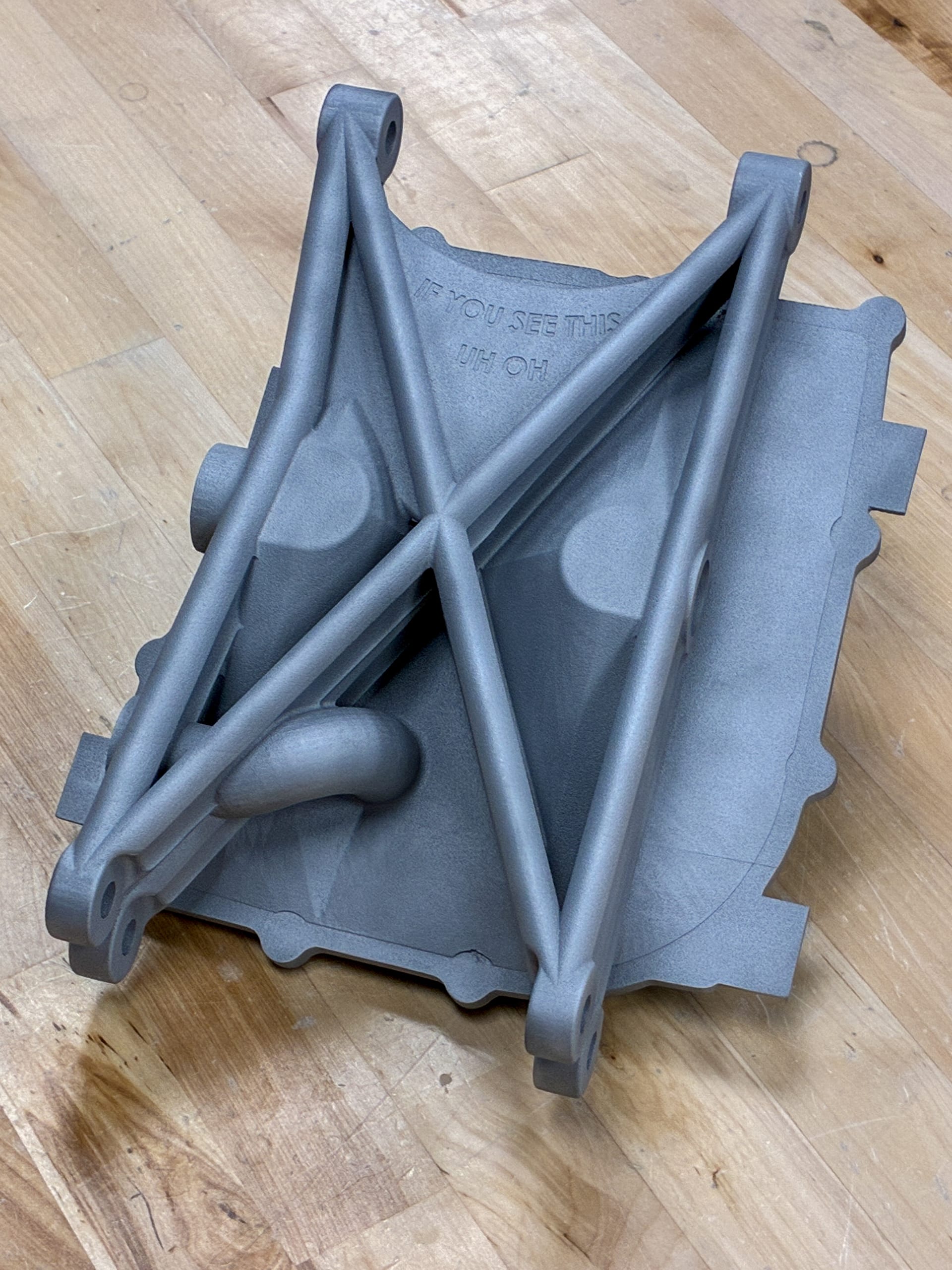
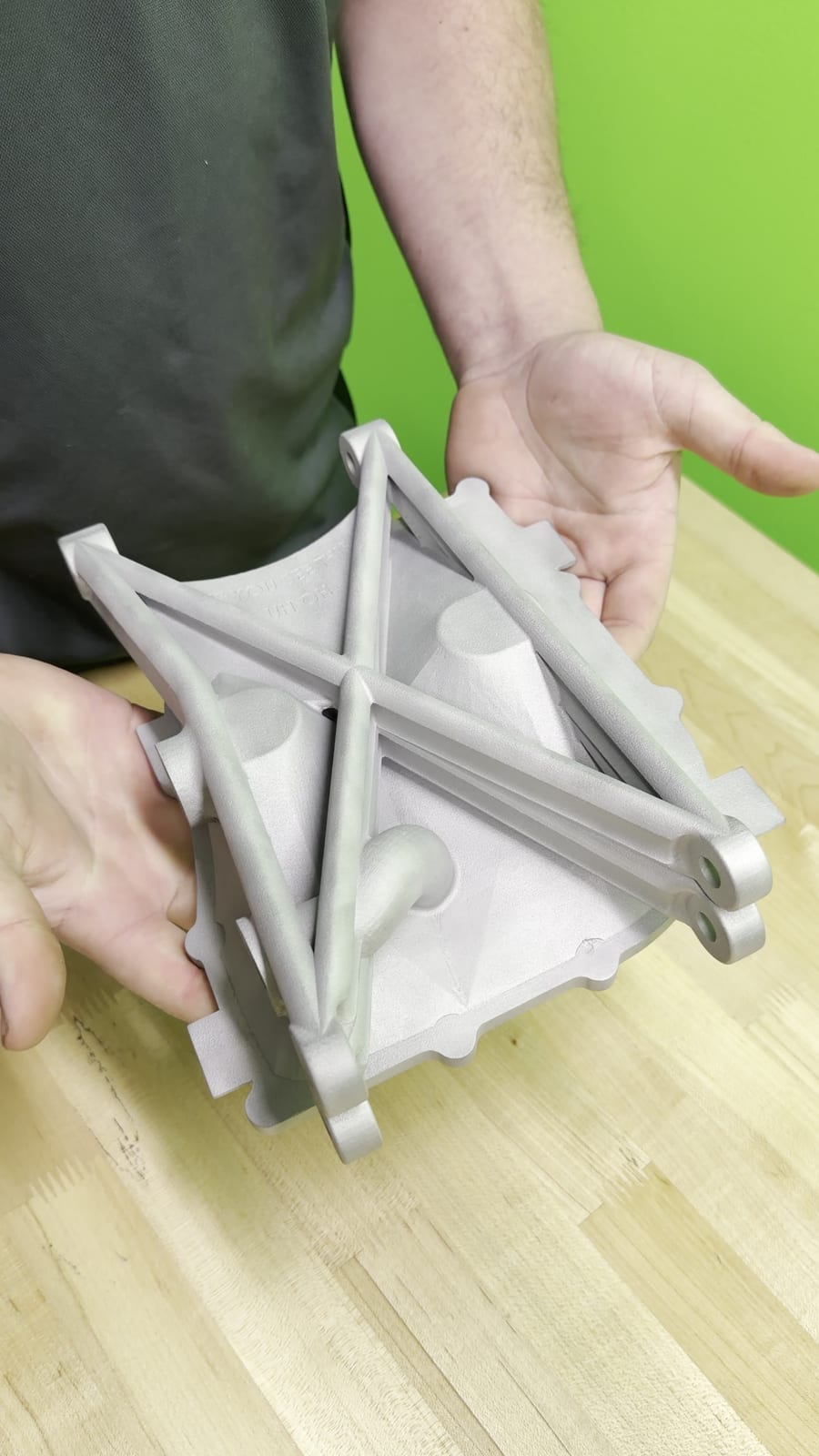
UW-Platteville Pioneer Racing used DMLS metal 3D printing and AlSi10Mg aluminum, printed on an EOS M 290, to manufacture a 2.14-pound structural dry-sump oil pan for its PR26 Formula SAE car. By designing specifically for additive manufacturing, the team reduced oil pan weight by 37% compared with PR25 and 57% compared with its original conventionally machined concept, while maintaining a factor of safety above five under comparable simulated loading.
The part is the latest evolution in a multi-year collaboration between Pioneer Racing and Evology, and a clear example of what becomes possible when engineers design around additive manufacturing from the beginning.
Building on Three Seasons of DMLS Collaboration
For the 2025-2026 Formula SAE season, Pioneer Racing returned to Evology to develop the successor to the structural oil pan used on PR25.
This was not simply another version of the same part. After multiple seasons of designing and manufacturing DMLS aluminum components with Evology, the students had a much clearer picture of what the process can and cannot do.
For PR26 they put that experience to work from the start. The objective was straightforward: maintain the structural integrity and stiffness of the previous oil pan while removing as much unnecessary weight as possible. Achieving that meant shifting from a part that could be additively manufactured to a part designed specifically for additive manufacturing.
The Challenge: A Structural Formula SAE Oil Pan
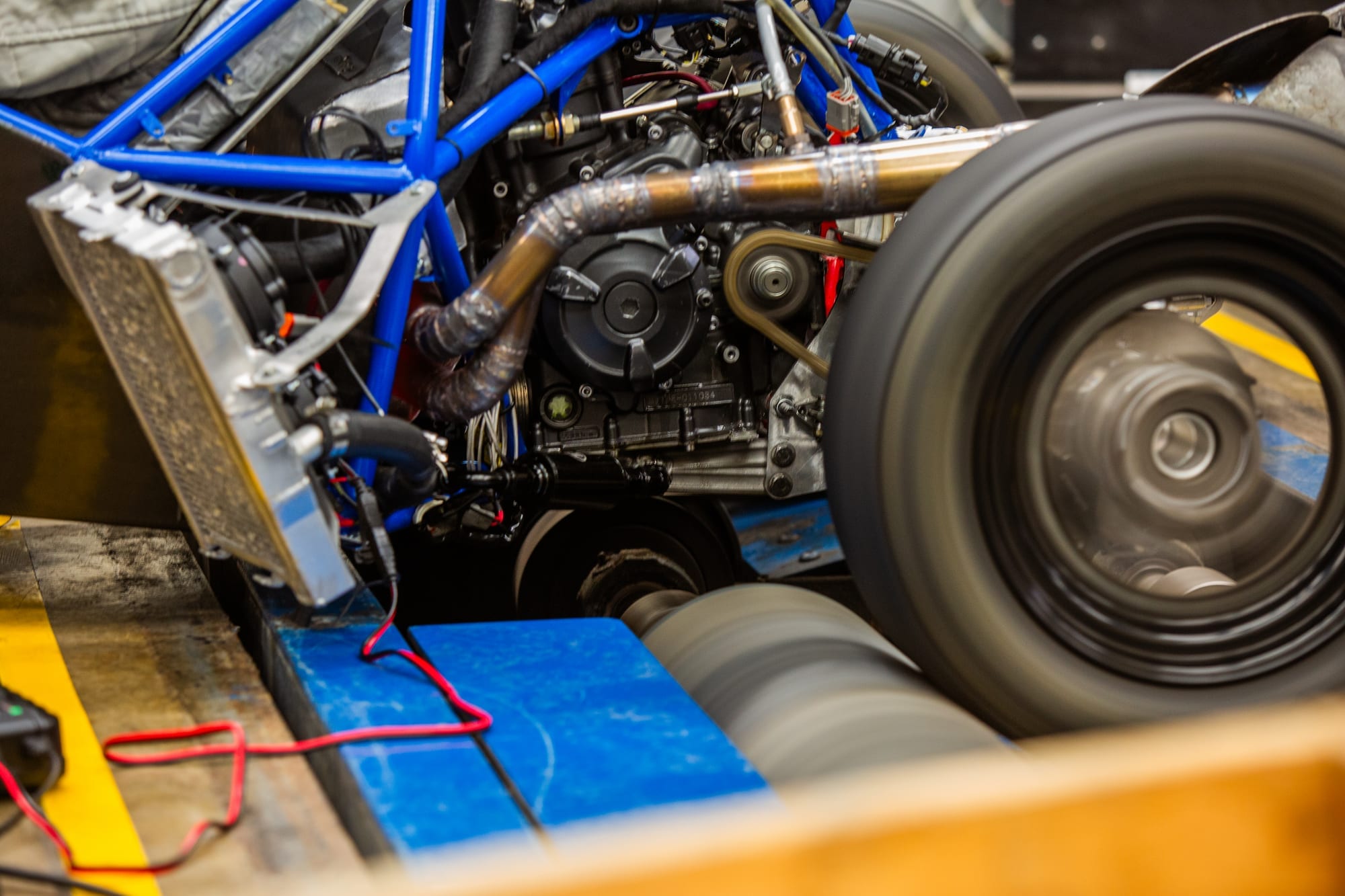
The oil pan on PR26 does far more than manage engine lubrication. The team’s Yamaha MT-07 engine remains an integral structural component of the vehicle. With little ability to modify the engine casting itself, Pioneer Racing uses the oil pan as part of the structural connection between the engine, rear section, suspension loads, and tube chassis.
That creates several competing requirements:
- Manage the vehicle’s dry-sump oil system
- Carry significant structural loads
- Maintain stiffness under suspension loading
- Minimize component weight
- Fit tightly around existing engine geometry
- Provide machinable sealing and gasket surfaces
- Support reliable oiling connections
- Remain practical to manufacture and post-process
The PR25 design proved DMLS could manufacture a structural oil pan that met these requirements. For PR26, the team wanted to see how much further the design could be pushed.
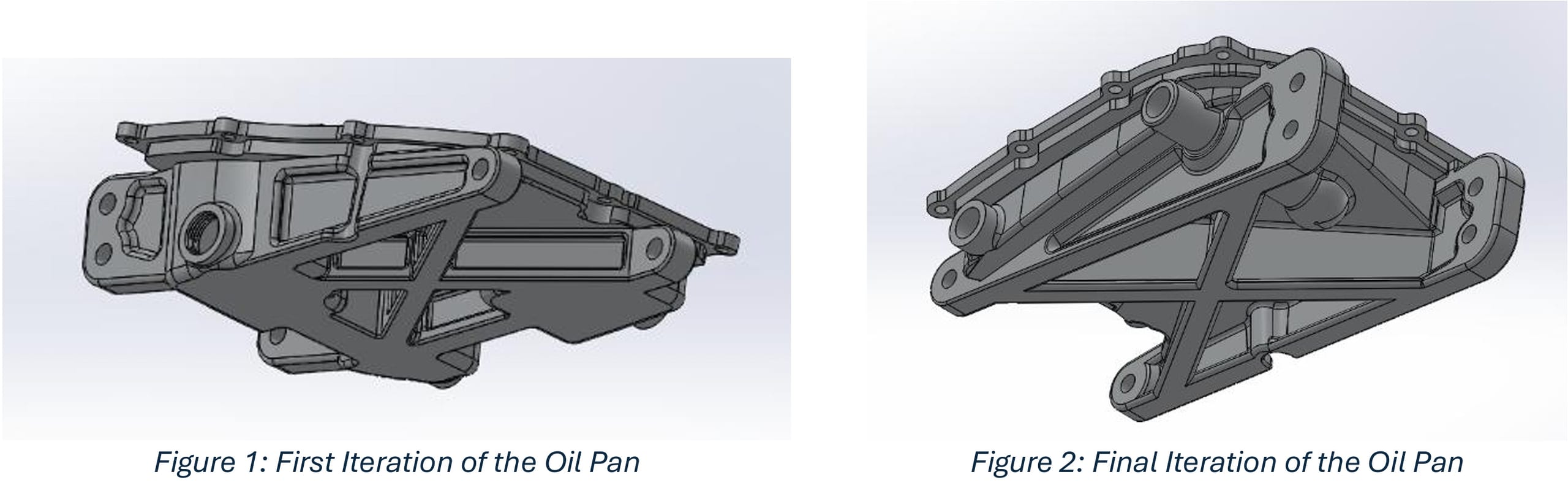
Designing the Formula SAE Oil Pan for DMLS
One of the biggest differences between PR25 and PR26 was not the printer, the material, or the manufacturing partner. It was the design philosophy.
The PR25 oil pan originally began with conventional subtractive machining in mind. Its geometry relied heavily on two-dimensional contours extruded into a larger solid form. Although the design was later adapted for DMLS, some of the limitations of traditional machining remained baked into the part. PR26 started differently.
The team began by designing the structure connecting the rear of the vehicle to the tube chassis. From there, the oil pan’s internal geometry, sealing surfaces, and supporting features were created around that load-bearing structure. Complex three-dimensional surfaces could be placed only where material was needed.
That made Direct Metal Laser Sintering a natural fit. The approach is design for additive manufacturing, or DFAM: engineers design around the capabilities of the process instead of adapting a conventionally designed part after the fact. For Pioneer Racing, that change unlocked one of the largest performance improvements in the project.
37% Lighter Without Sacrificing Structural Performance
Reducing weight is easy if strength does not matter. The challenge is removing material without compromising the component.
Pioneer Racing evaluated the PR26 design using finite element analysis under the same general maximum suspension loading conditions used on previous oil pans. Despite the aggressive lightweighting, there was little variation in overall stiffness and stress compared with the previous designs. None of the evaluated designs fell below a factor of safety of five under the team’s comparable FEA setups.
The biggest difference appeared on the scale. The original oil pan intended for conventional subtractive machining weighed 4.925 pounds. The final PR25 DMLS oil pan weighed 3.403 pounds, already a roughly 30% reduction from that conventional concept. PR26 brought the weight down to 2.14 pounds.
That is a 37% reduction compared with PR25 and a 57% reduction compared with the conventionally manufacturable design. For a Formula SAE vehicle, where engineers scrutinize nearly every gram of unnecessary mass, removing more than a pound from a single structural component can have a meaningful impact on overall vehicle performance.
Designing for DMLS, Machining, and Post-Processing
Design for additive manufacturing does not stop when the printer finishes the build. Pioneer Racing incorporated several lessons from previous seasons into PR26 to improve the complete manufacturing workflow.
Sacrificial material was intentionally added to gasket surfaces and other critical interfaces. Those areas could then be machined after printing to achieve the final surface finish, dimensions, and tolerances required for assembly.
The team also incorporated dedicated machining tabs directly into the CAD model. Those tabs provided more effective clamping locations during post-processing and made it easier to align the oil pan with the correct bolt pattern during machining. It is a small design decision that makes a significant difference once a complex additive part moves from printing into secondary operations.
Improving Reliability Through Design
The oiling connections also evolved from previous generations. Earlier pans used fittings that required welding to the relatively coarse as-printed DMLS surface. That approach contributed to oil leaks in previous seasons, and it was something the team wanted to solve for this year’s build.
PR26 incorporated an NPT-to-AN adapter instead of welded bungs. A simple change, but one that made a world of difference in how the pan is used. Once fully seated, the threaded connection proved significantly more reliable and eliminated the leakage issue from earlier seasons.
Build it. Test it. Learn from it. Make the next version better.
What PR26 Demonstrates About Design for Additive Manufacturing
The PR26 oil pan is a strong example of why additive manufacturing creates the most value when engineers understand the process before they begin designing. Pioneer Racing did not take an existing oil pan and decide to 3D print it. The students designed the component around DMLS from the beginning, which allowed them to:
- Place material where structural loads required it
- Use complex three-dimensional supporting surfaces
- Reduce unnecessary mass
- Integrate machining allowances directly into the design
- Improve post-processing and workholding
- Address reliability issues identified in previous seasons
- Maintain structural performance while reducing weight
The result was not simply a lighter 3D-printed oil pan. It was a better-engineered component because the design and manufacturing process were developed together.
Supporting the Next Generation of Engineers
This project is also why Evology continues to support collegiate programs like Pioneer Racing. We are proud of the parts we manufacture, but the students are the ones doing the engineering.
They are developing CAD, running simulations, evaluating materials, testing components, troubleshooting failures, refining designs, and learning how manufacturing decisions affect real-world performance. Our role is to give them access to industrial manufacturing technology, practical experience, and engineering support that helps turn those ideas into functional parts.
By the time these students enter the professional engineering workforce, they are not just learning what DMLS is. They have designed for it, manufactured with it, and seen how it performs on a real race car.
A Historic Season for Pioneer Racing
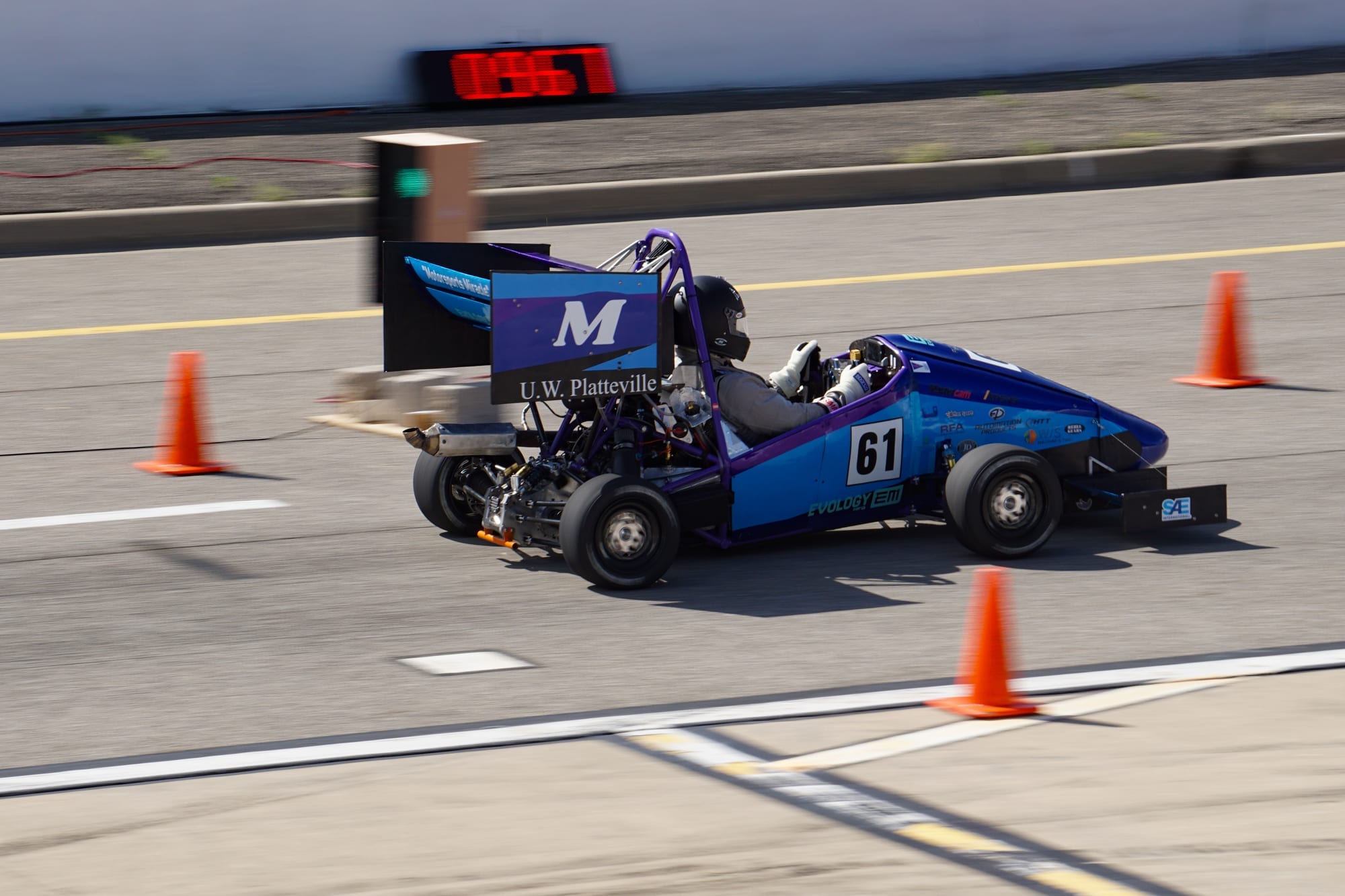
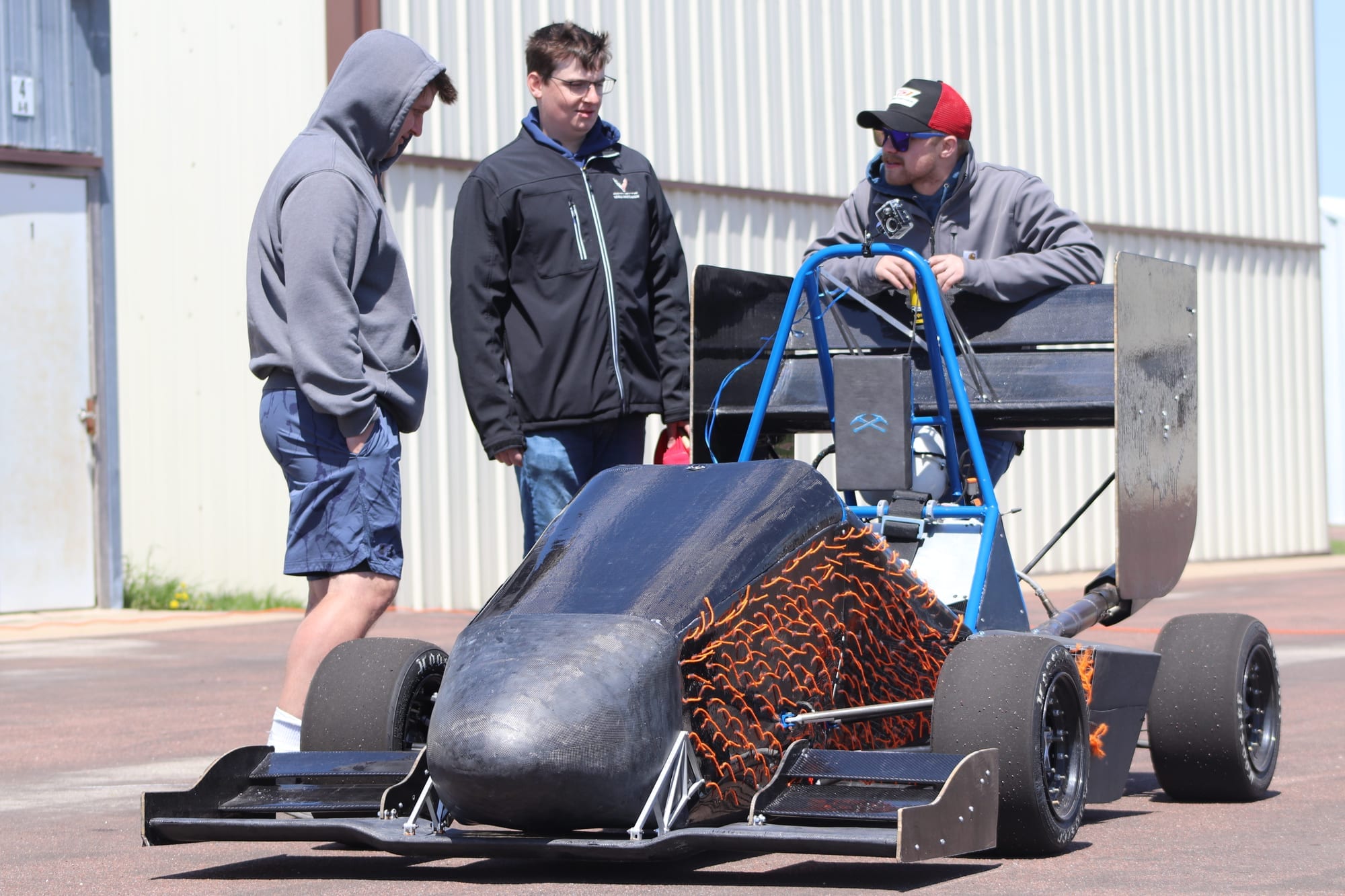
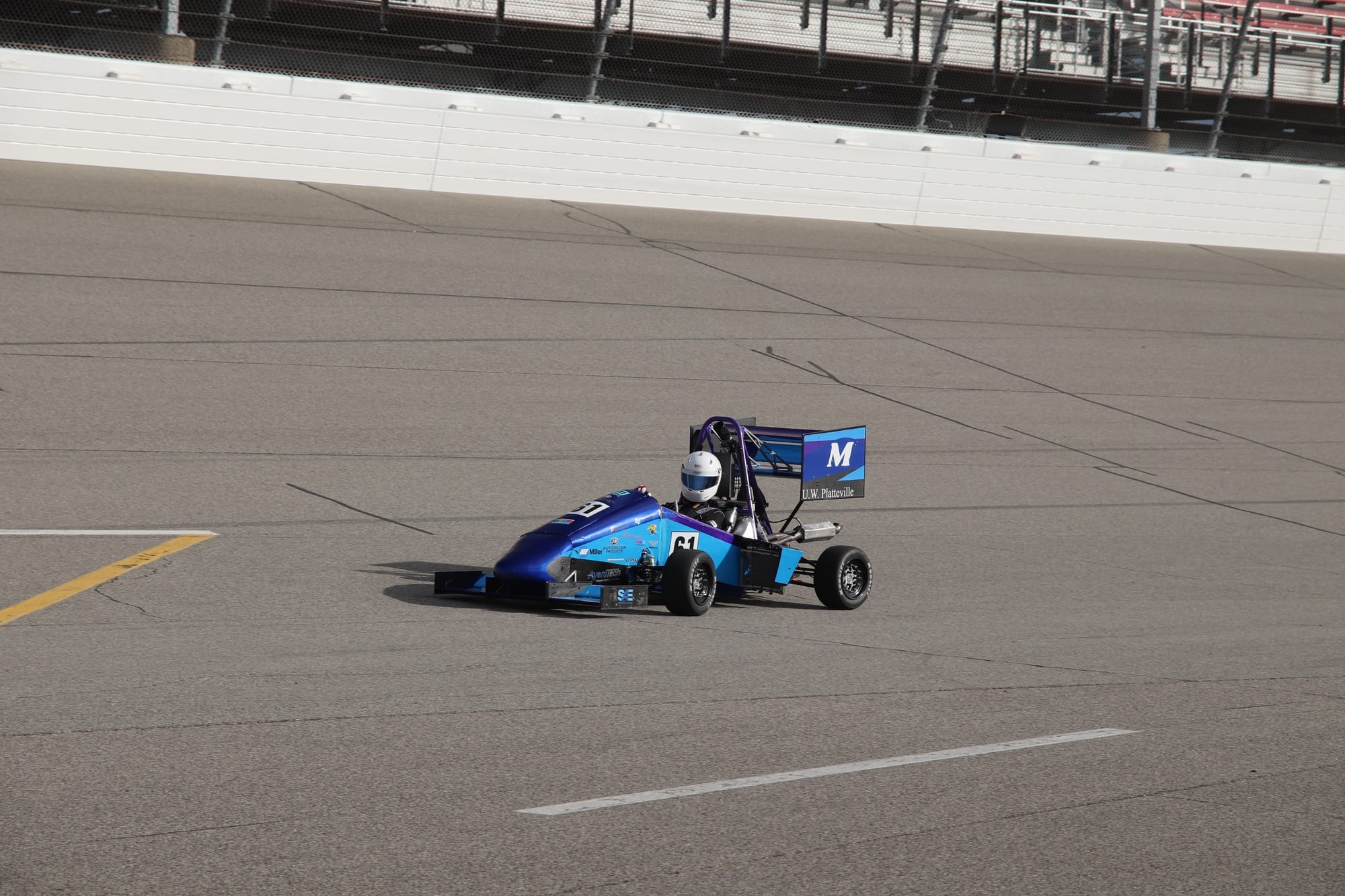
The oil pan was only one part of a successful 2025-2026 season for UW-Platteville Pioneer Racing. At the 2026 Formula SAE Michigan competition, PR26 helped the team earn its best finish in program history, placing 16th out of 111 teams and finishing as the highest-ranked non-research university in the competition.
The progression from PR24 to PR25 and now PR26 also demonstrates something we see with professional engineering teams every day. The more closely design and manufacturing work together, the better the parts become. Three seasons of collaboration have not simply produced three generations of oil pans. They have given Pioneer Racing’s students hands-on experience with metal additive manufacturing, AlSi10Mg aluminum, DfAM, finite element analysis, CNC post-processing, component testing, and iterative product development.
For PR26, that experience resulted in the lightest and most refined structural oil pan the team has produced yet. That is exactly the kind of progress we are proud to support.
More From the Build
Project Specs
- Project
- Pioneer Racing PR26 structural dry-sump oil pan
- Team
- UW-Platteville Pioneer Racing
- Technology
- DMLS metal 3D printing
- Material
- AlSi10Mg aluminum
- Final weight
- 2.14 lb
- Vs. PR25
- 37% lighter (PR25 was 3.403 lb)
- Vs. machined concept
- 57% lighter (original concept was 4.925 lb)
- Structural performance
- Factor of safety above 5 under comparable FEA loading
- Competition result
- 16th of 111 at 2026 Formula SAE Michigan
Have a Lightweight or Complex Metal Part?
Sometimes the biggest opportunity is not changing the material or finding a bigger machine. It is rethinking the design around how the part will actually be manufactured.
If you are developing a lightweight structural component, consolidating complex geometry, or wondering whether your current design is taking full advantage of metal additive manufacturing, send us the project. We can evaluate the geometry, recommend the right process and material, and determine whether DMLS, another additive process, or a traditional method makes the most sense. The same approach shows up across the automotive work we support.


Have a Part Like This?
Send us your files and we will scope the right process, recommend a material, and get you a quote. From a single prototype to a low-volume run, our team turns complex parts around fast.